My Morning with Elena
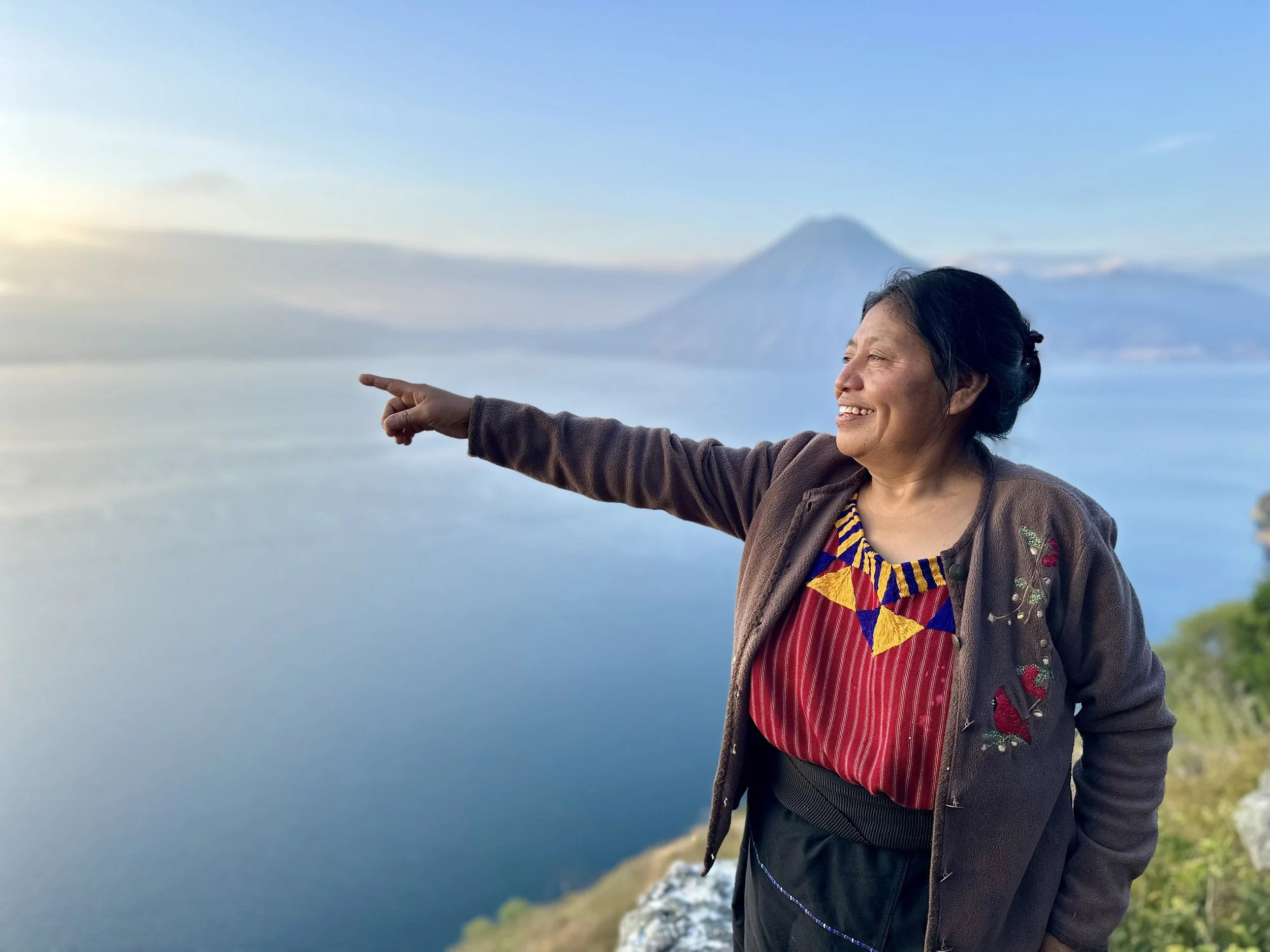
Santa Cruz Sunrise Hike with Elena
Day 7 - This is a long read.
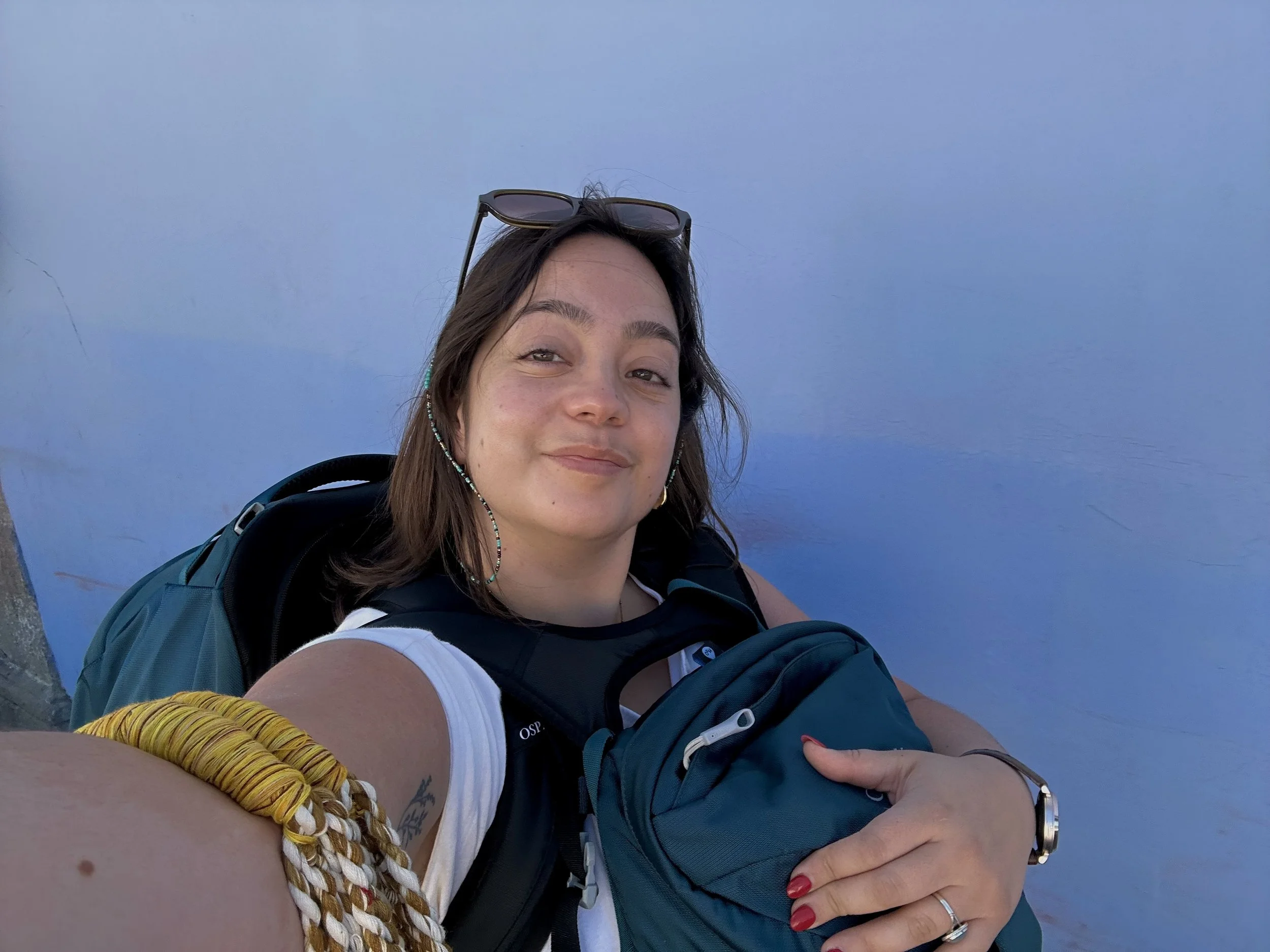
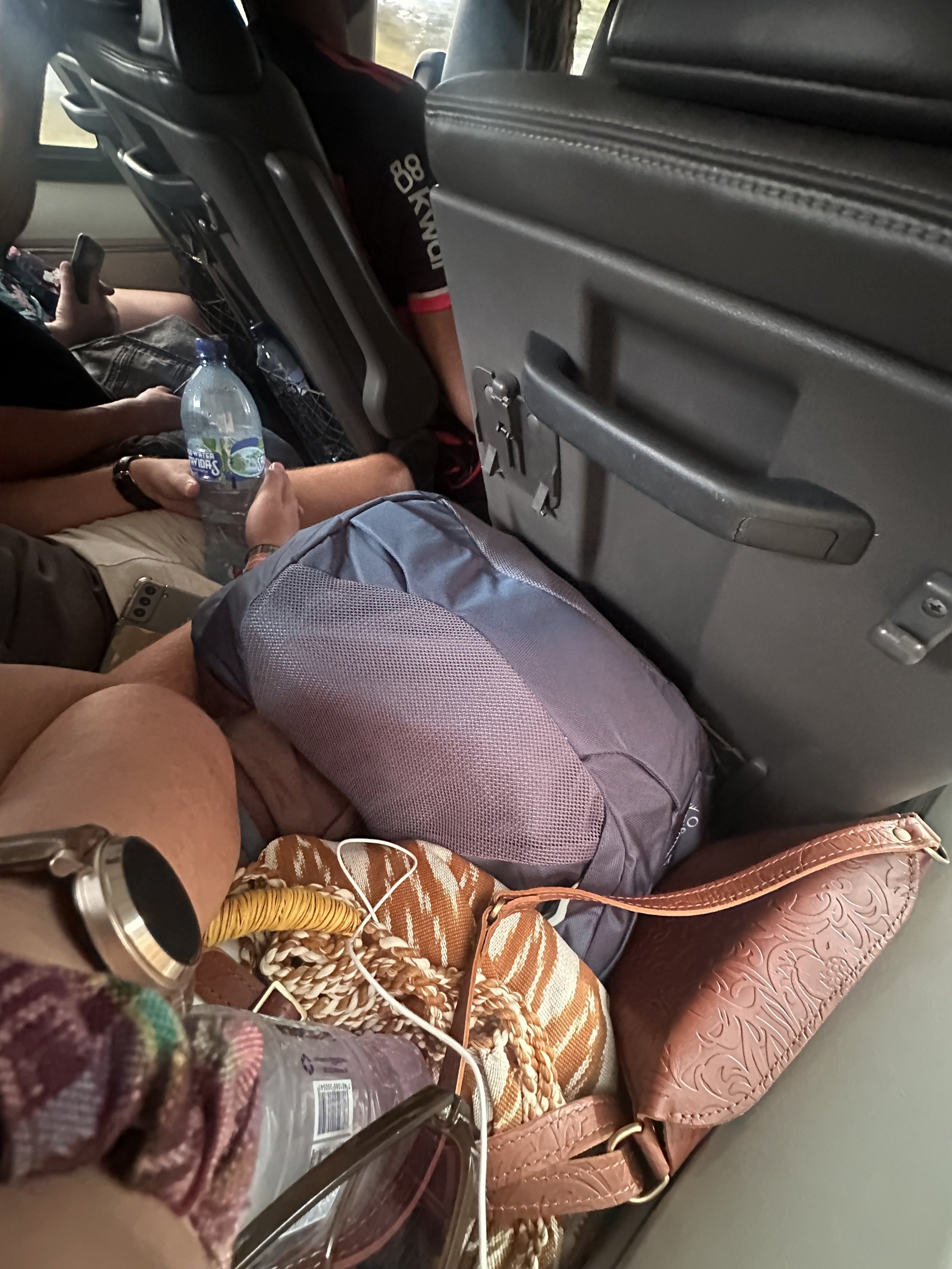
It was time to say goodbye to Antigua and head to my next destination: Lake Atitlán. I walked to the edge of the city to catch my shuttle and, of course, I was the last one on. That meant I got the seat everyone had been avoiding—way in the back, perched over the wheel, with absolutely no legroom. It was uncomfortable, but it didn’t put me in a bad mood. I couldn’t be happier to be uncomfortable, on my way to my next destination. After a long 2.5-hour shared shuttle ride, I finally arrived in Panajachel, the main town on the lake. But I was only passing through.
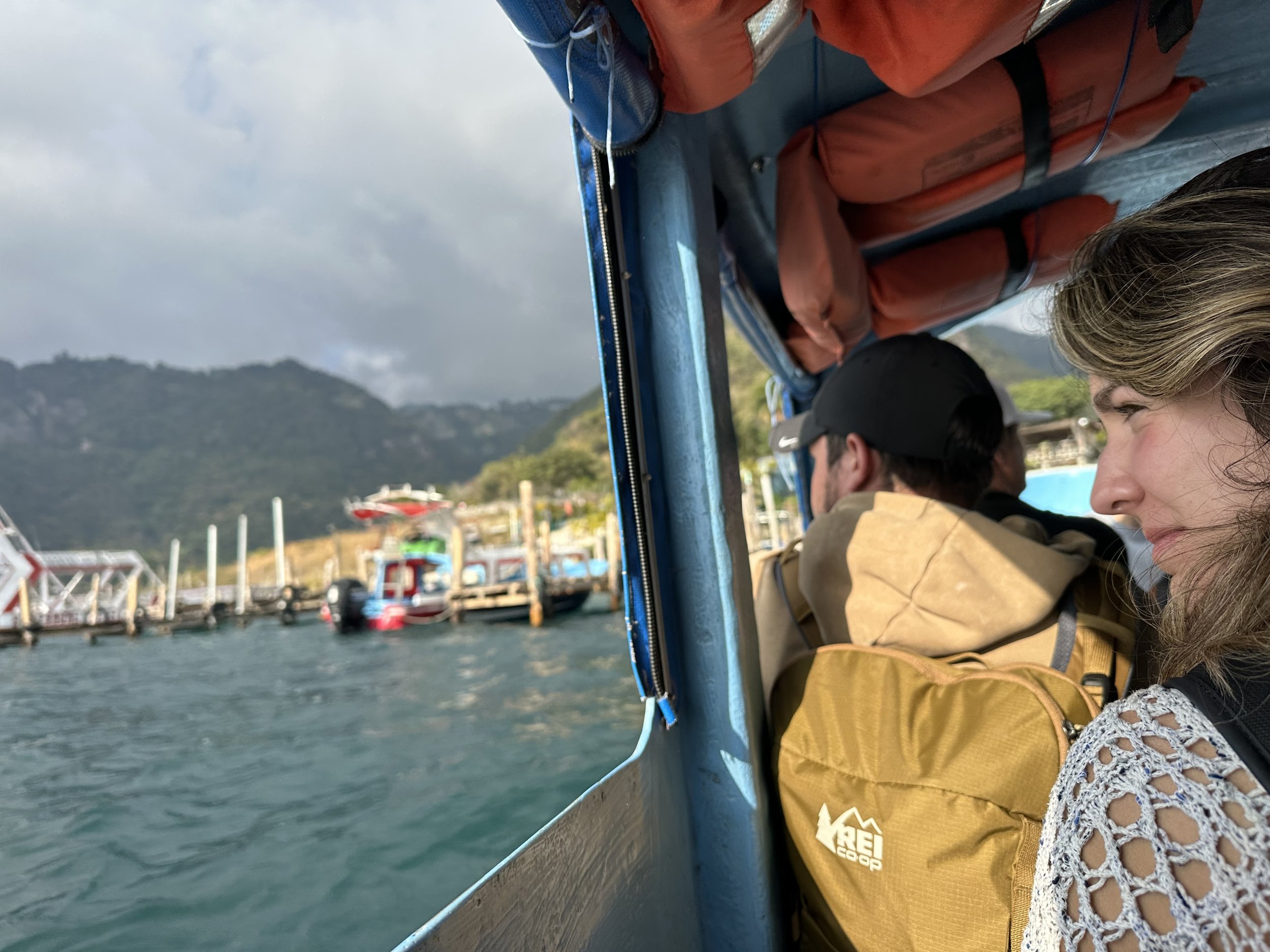
I went straight to the port and told them I was traveling to Santa Cruz, one of the many towns surrounding the lake. I had done a lot of research beforehand because each town has its own distinct vibe. I chose Santa Cruz for my first two nights - a very quiet town known for its stunning sunrises and easy lake access for swimming - and San Pedro for the following two nights, often described as a backpacker paradise. Other popular lake towns include San Marcos, San Juan, and Santiago.
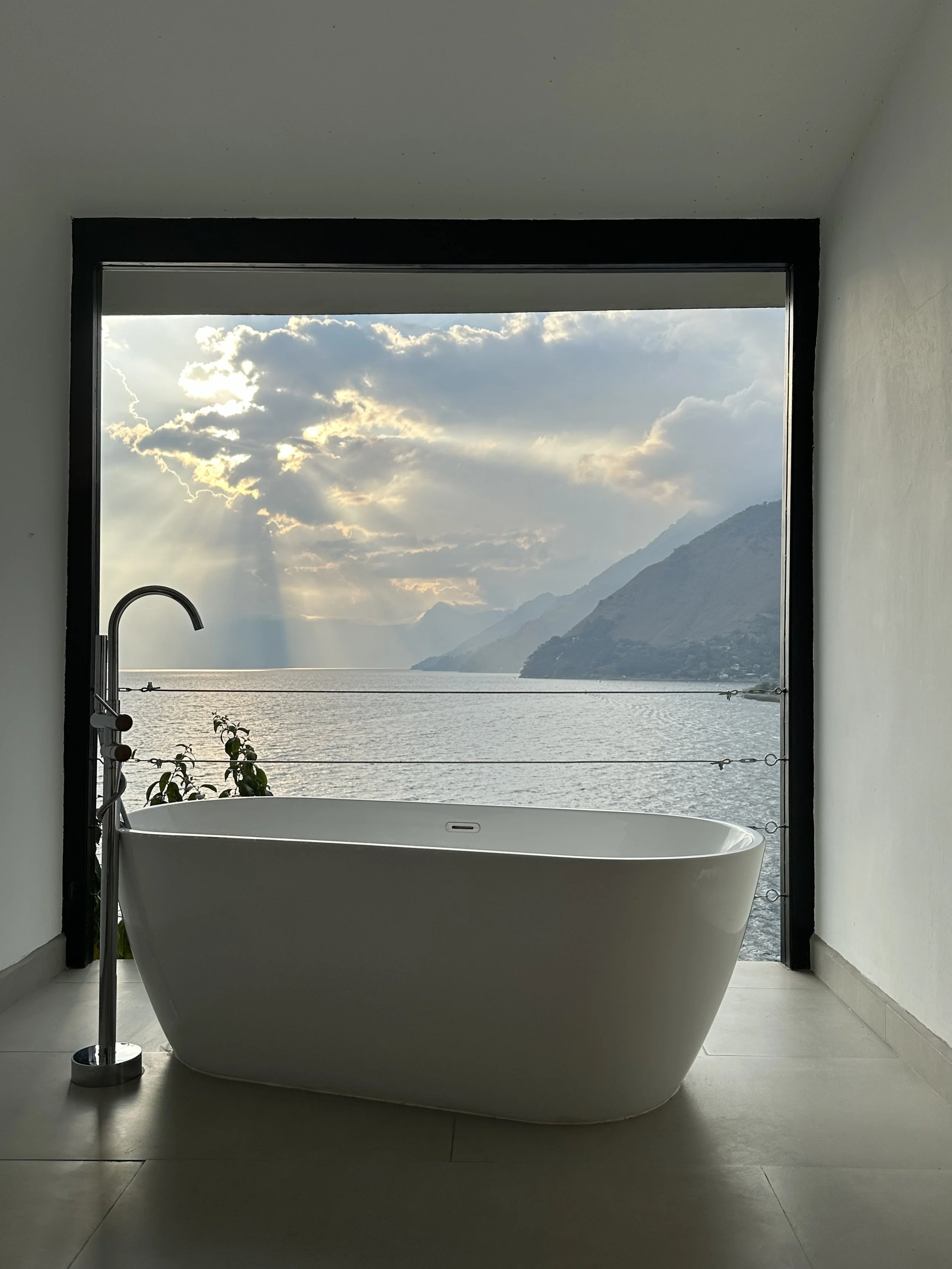
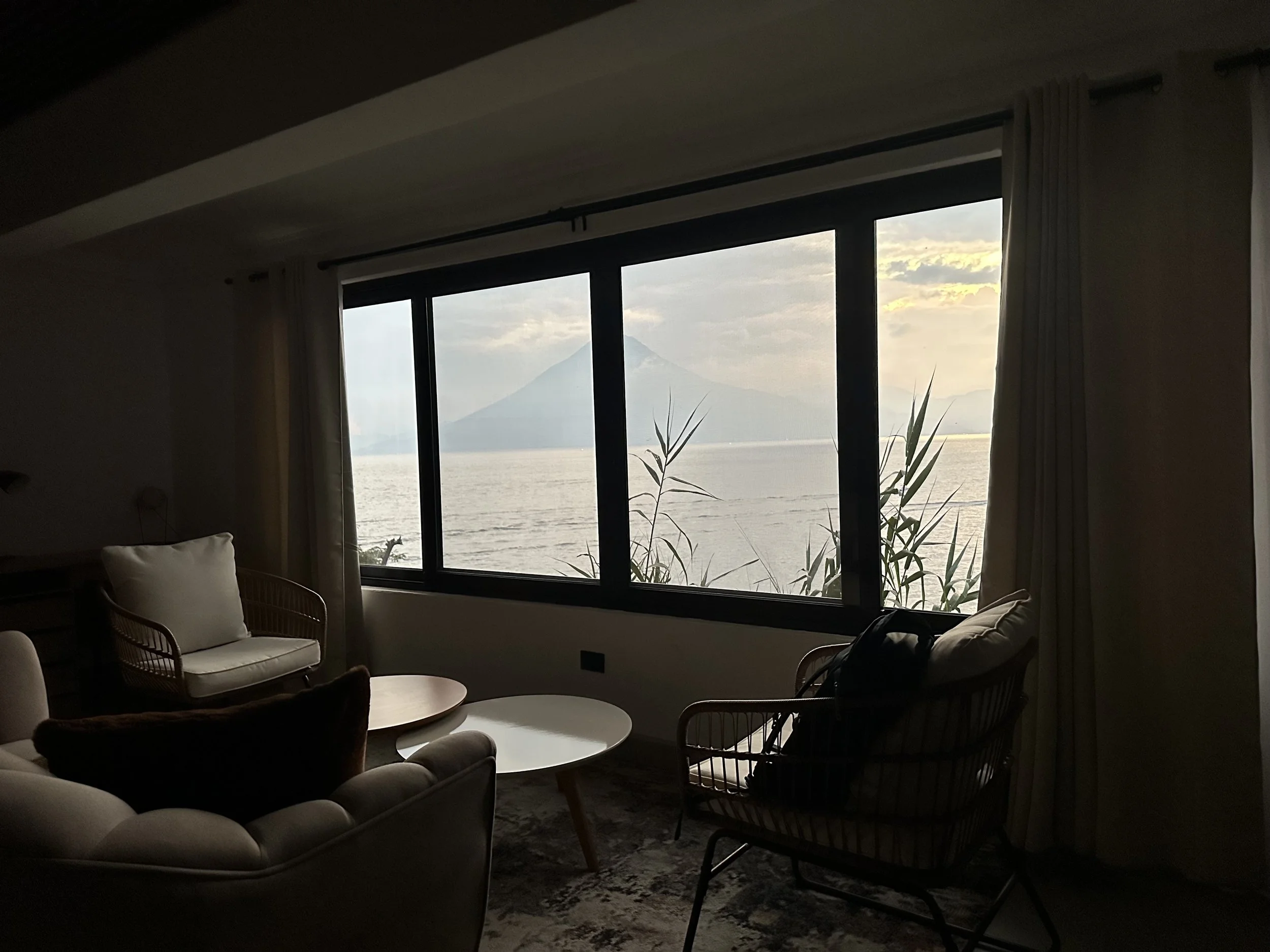
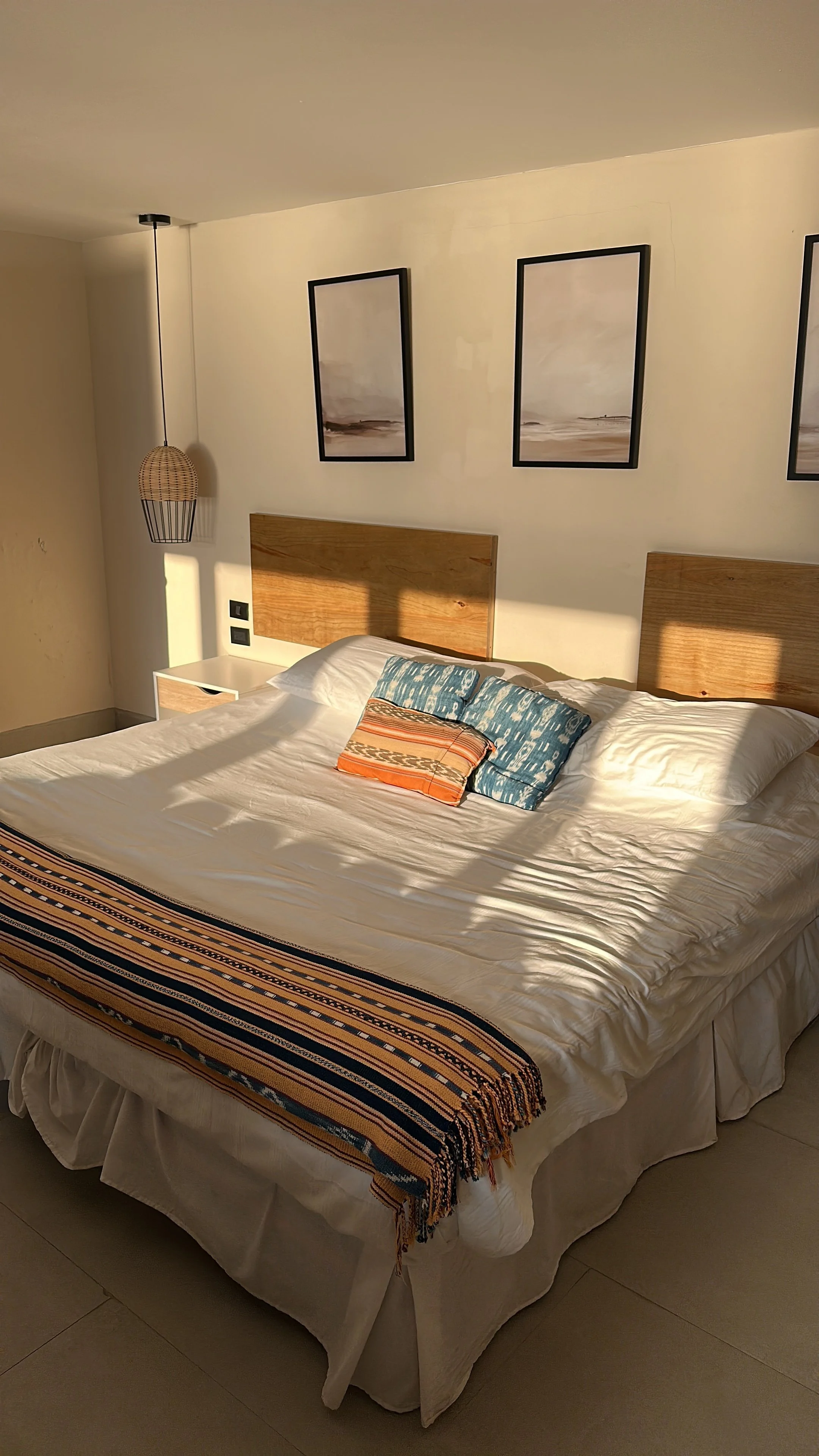
The boat ride from Panajachel to Santa Cruz was quick. As the boat approached my hotel’s pier, I was almost embarrassed by how beautiful it was. It was the fanciest stay of the trip, and I was thrilled to have a room to myself. The room was massive, with a soaking tub on my private terrace overlooking the lake. I think I was the only solo traveler there; everyone else seemed to be on a couples’ getaway. I was clearly on a honeymoon with myself. I was so excited by how vacation-y everything felt that I danced around the room and took an excessive number of photos.
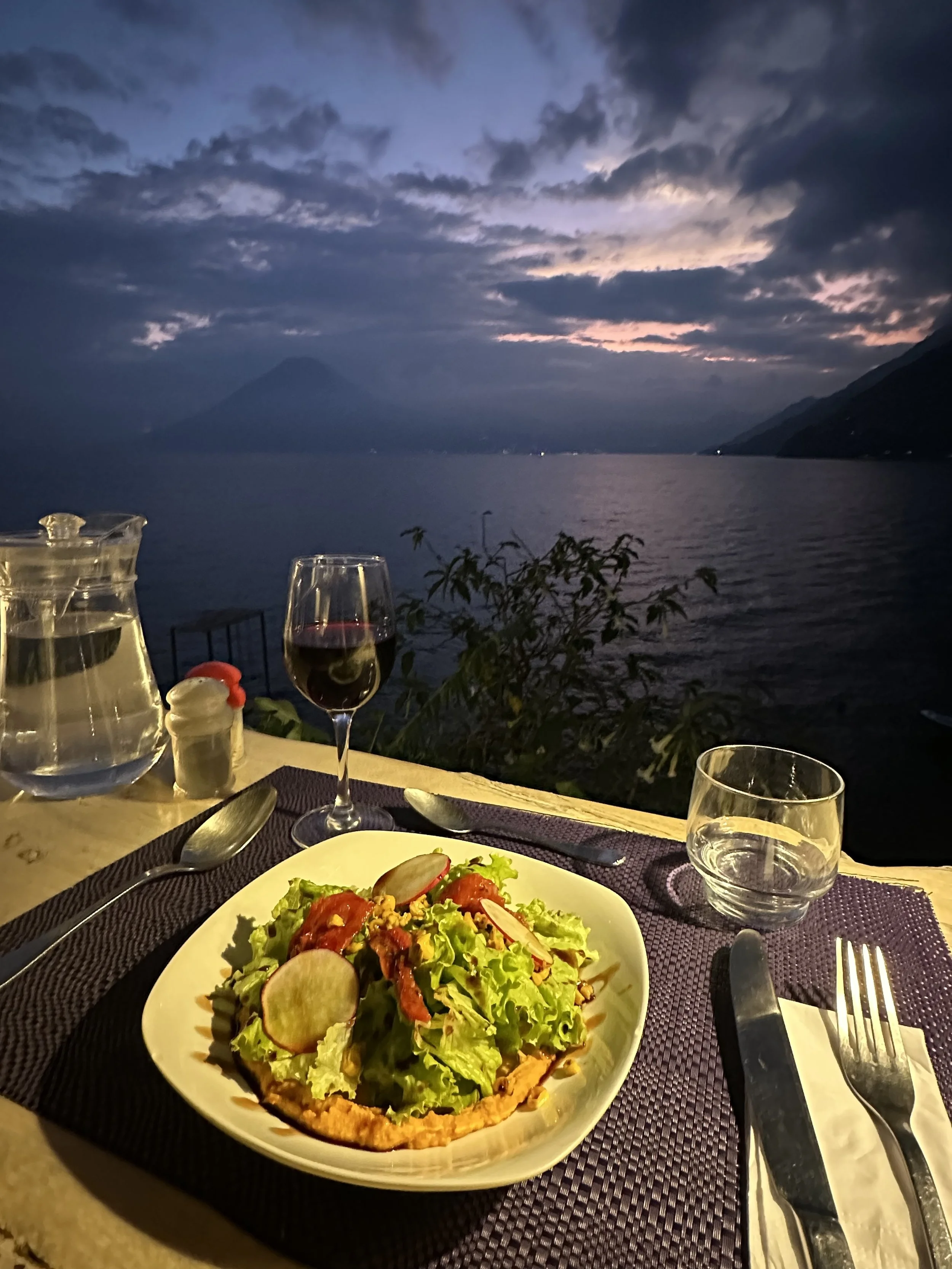
There was a restaurant on site that served dinner at either 6:00 or 7:30 p.m. I opted for the 6:00 p.m. seating, knowing I’d want an early night since I had signed up for a sunrise hike that required a 4:30 a.m. wake-up. I ordered a glass of wine, a salad, and pesto pasta and genuinely felt like I was in heaven, sitting there overlooking the lake, completely content. At one point, a restaurant staff member asked if they could take photos and videos of me having dinner for the hotel’s Instagram. I said yes, why not? It felt fun and perfectly on brand for this little solo-travel honeymoon.
I woke up at 4:30 a.m. to meet my guide, Elena, who was picking me up at the hotel at 5. It was pitch black outside, and I used my phone light to guide me down to the hotel pier. I sat on a chair and turned my light off, settling into the silent darkness. Just the moon, the stars, and what looked like a small fishing boat glowing out on the water. It was so peaceful. I discovered Elena and her tours by using Google Maps to explore the area around my hotel a few days prior.
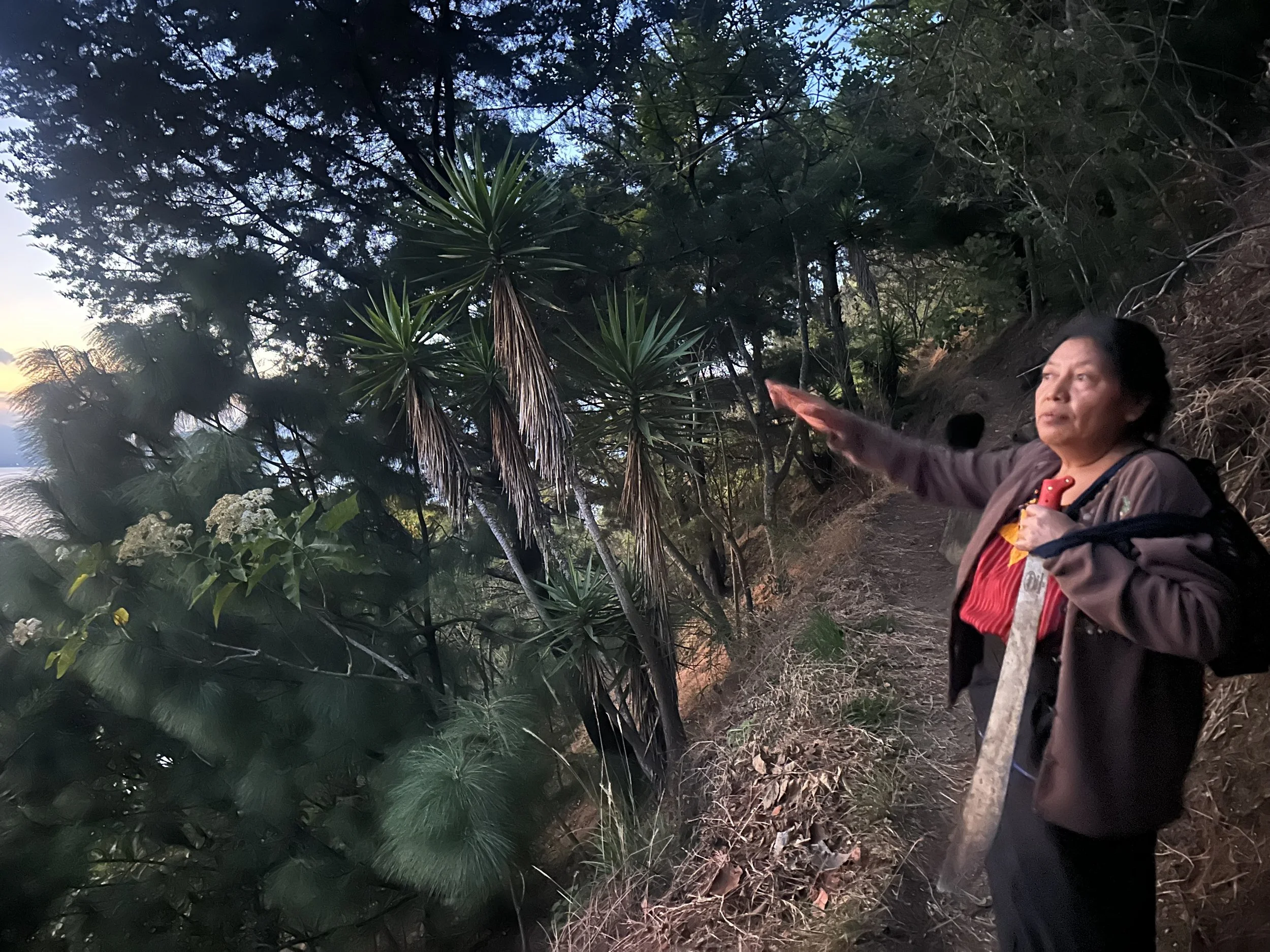
Then, out of the corner of my eye, I saw a flash moving toward me. Before I saw anything, I heard panting. Suddenly, a big, furry black dog came right up to my face, smiling, and went straight in for cuddles. This was Negra, Elena’s 22-year-old dog. “Hola, Carmen. Soy Elena.” Elena was about 4’5”, wearing a long black skirt and flats. She held a flashlight in one hand and a machete in the other, which I immediately wondered what that was for. “Vamos,” she said.
We walked in silence along the lake, with me trailing closely behind her and her three dogs. Along the way, stray dogs barked loudly at us from the darkness. I was impressed by Elena’s dogs, who were mostly unfazed, calm, and loyal, sticking close to us. They reminded me of my parents’ dog, Grace. I always felt so proud of her when she didn’t react to other dogs barking, even though it was probably just because she is deaf. Every so often, Elena stopped. “¿Estás bien?” “Sí,” I’d say.
We hadn’t begun ascending yet, just walking in darkness along the piers of other hotels for what felt like 45 minutes. I was barely awake, but I loved this. Before starting the climb, we took a break, and I put on bug spray. She pointed to the top of the mountain ahead. “Vamos allá.” I knew this was coming, but as we entered the woods in total darkness, guided only by barking dogs and the sounds of the jungle, I briefly questioned my choices. But her confidence made me trust her. And her happy dogs calmed me. I imagined they were excited to show me their favorite morning spot.
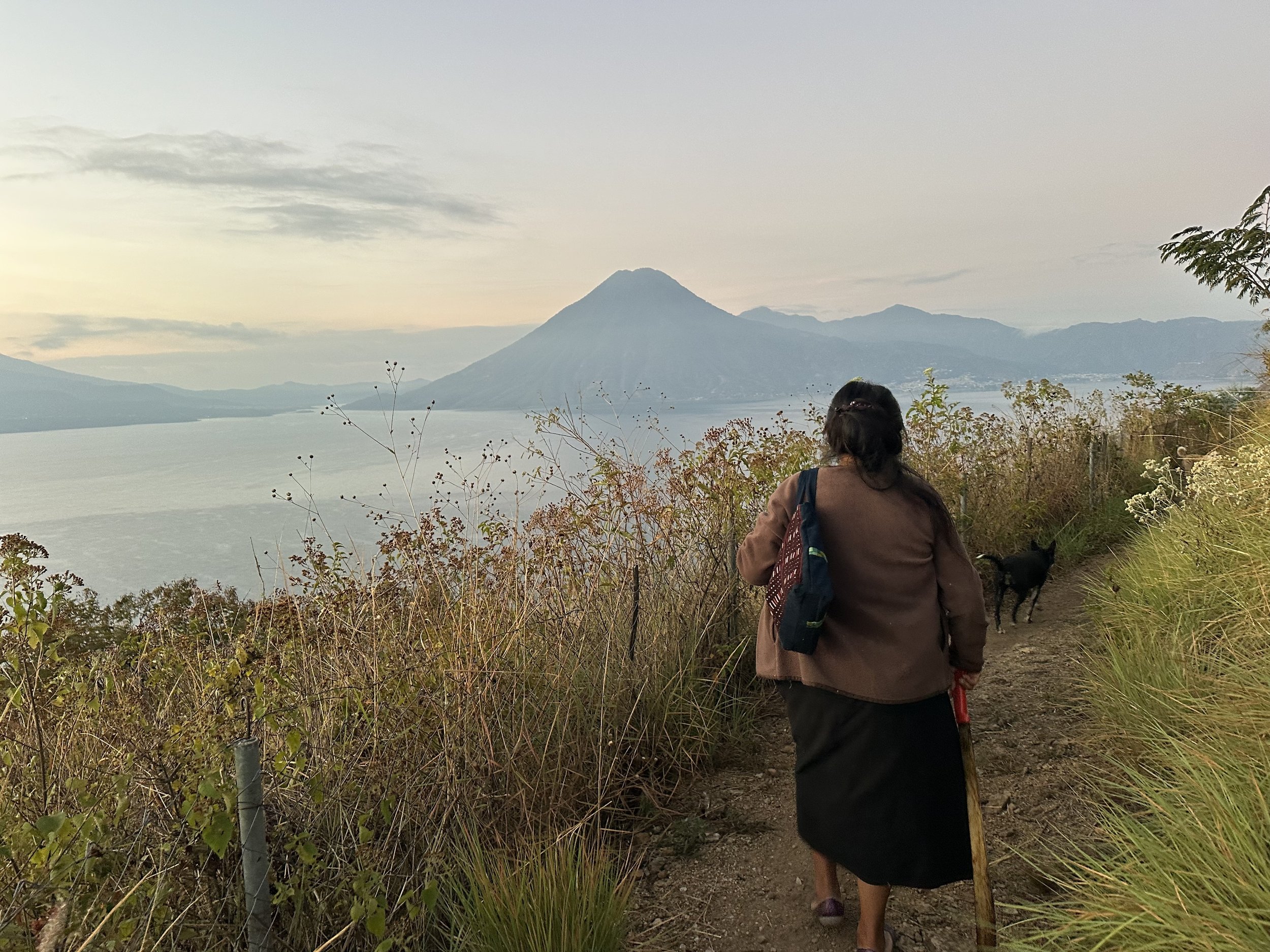
A man passed us, and Elena stopped to greet him in what I later learned was Kaqchikel, her first language. She told me she had only recently learned Spanish for tourism. She turned off her flashlight much earlier than I would have. It was barely light, and I still couldn’t see much at all. But she grew up in these mountains. This was home.
She walked quickly uphill, and I struggled to keep up, wanting to stay close behind her. She’d glance back. “¿Estás bien?” “Sí, gracias”, I lied. Am I extremely out of shape? I thought. She could probably run circles around me, and she was likely twice my age. One of her dogs would always stop to wait for me. I’d pat him to let him know I was okay, and we’d continue.
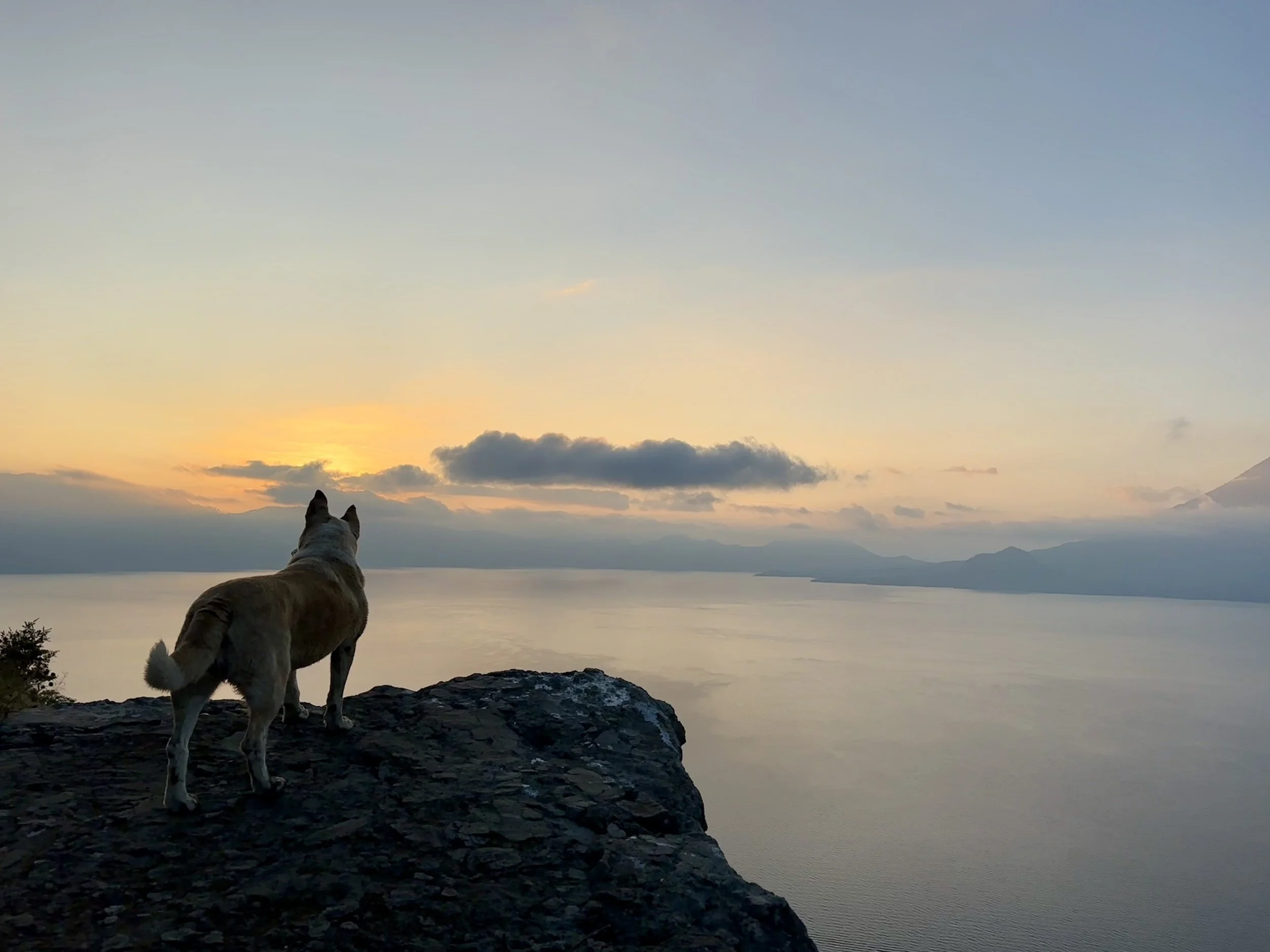
Eventually, we emerged from the woods into open fields of tall grass. For the first time, I could see how high up we really were. It was high. Birds glided past us. The sun was coming, and I no longer needed my light. We arrived at a large rock overlooking the town and the lake. “Aquí estamos. Mi roca.” We sat and waited for the sun to rise. The dogs settled beside us patiently.
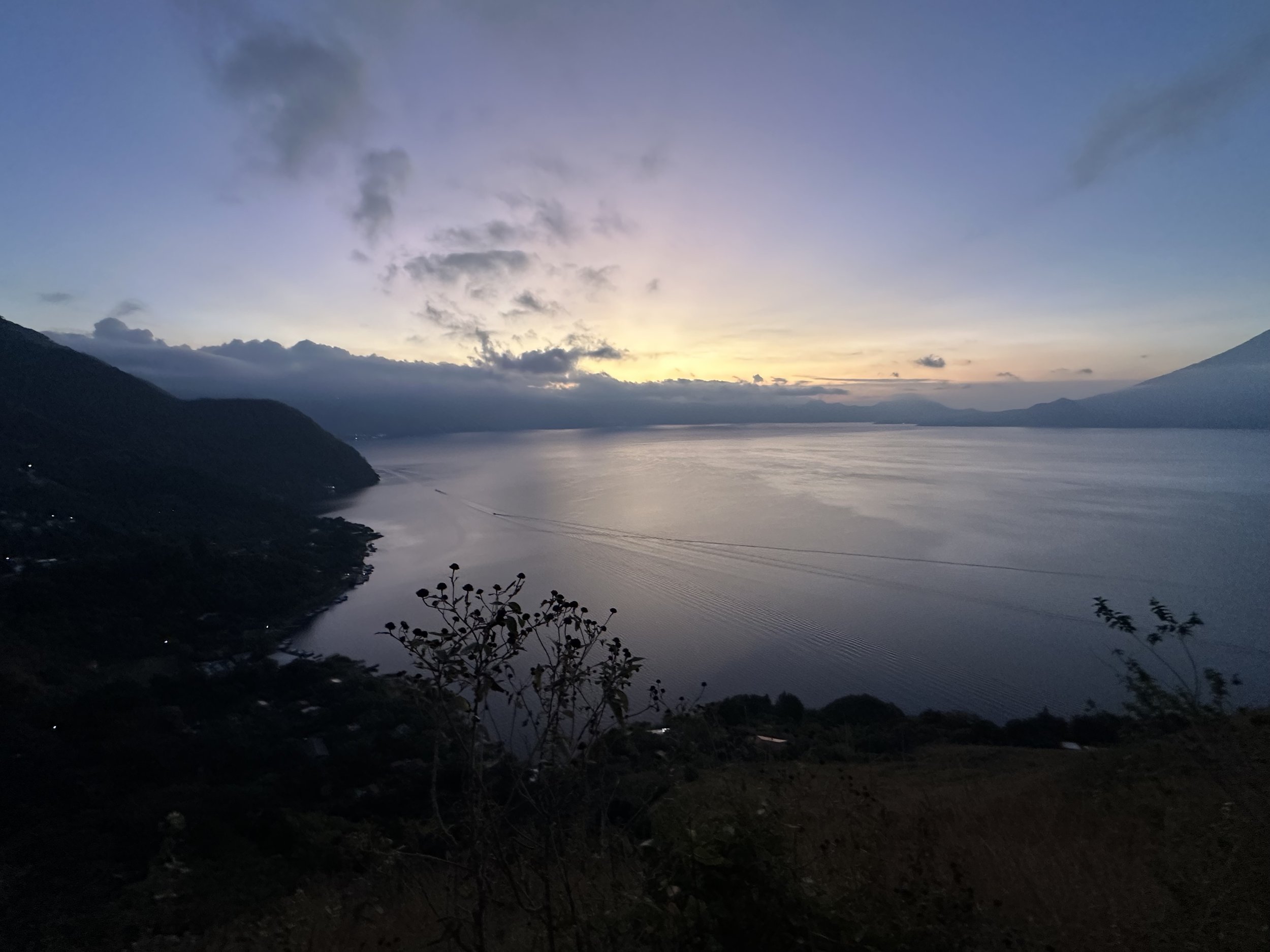
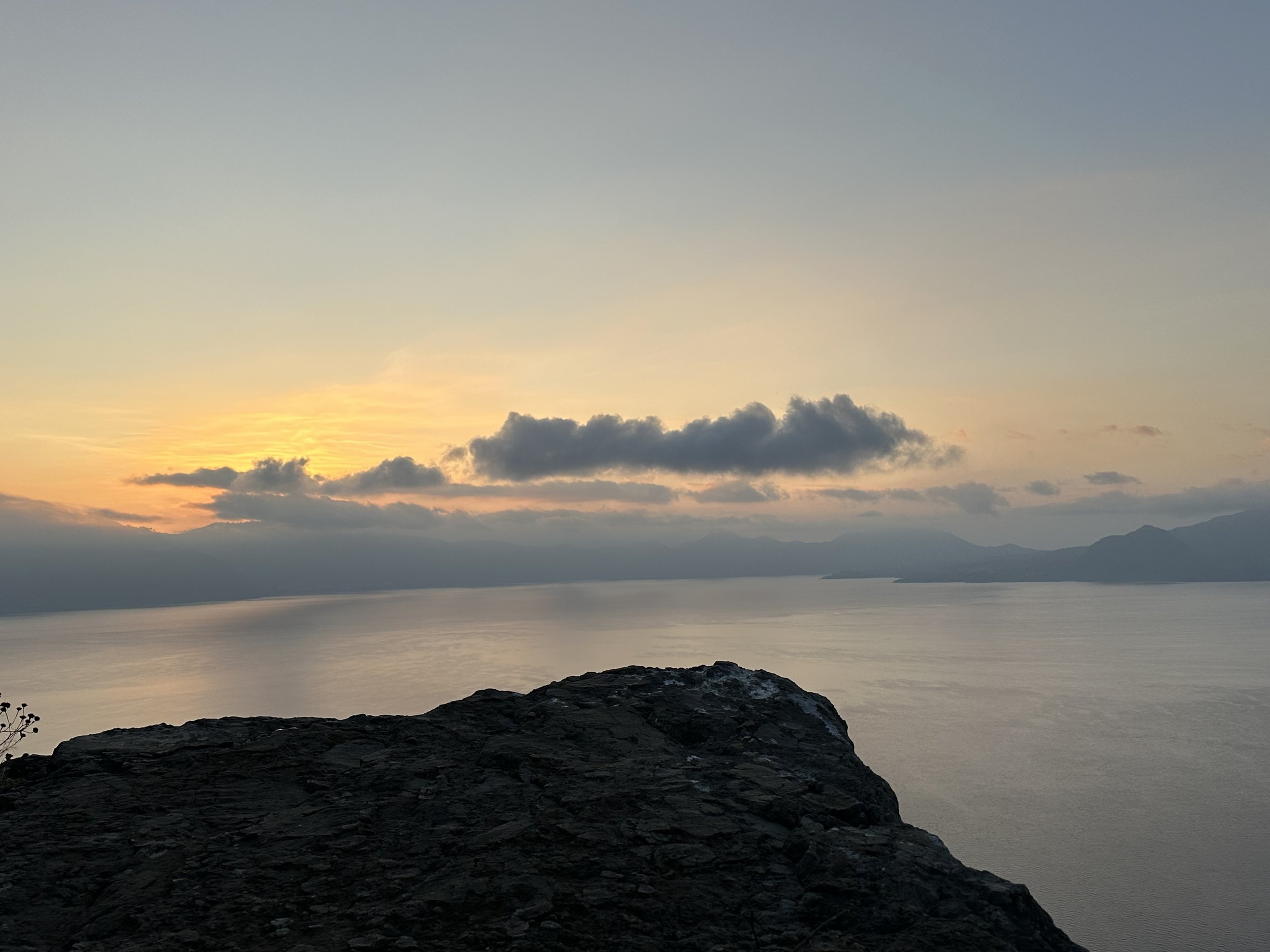
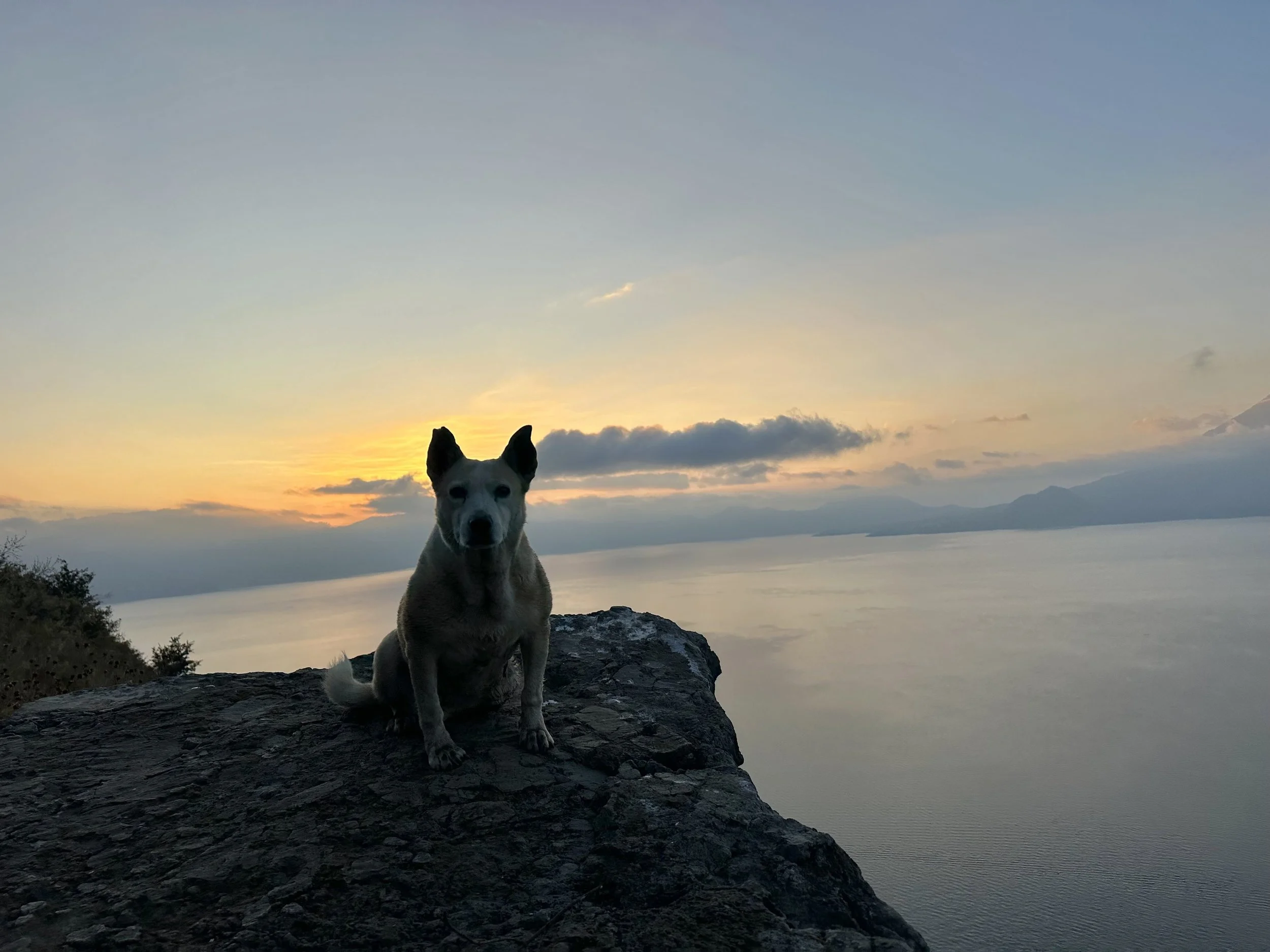
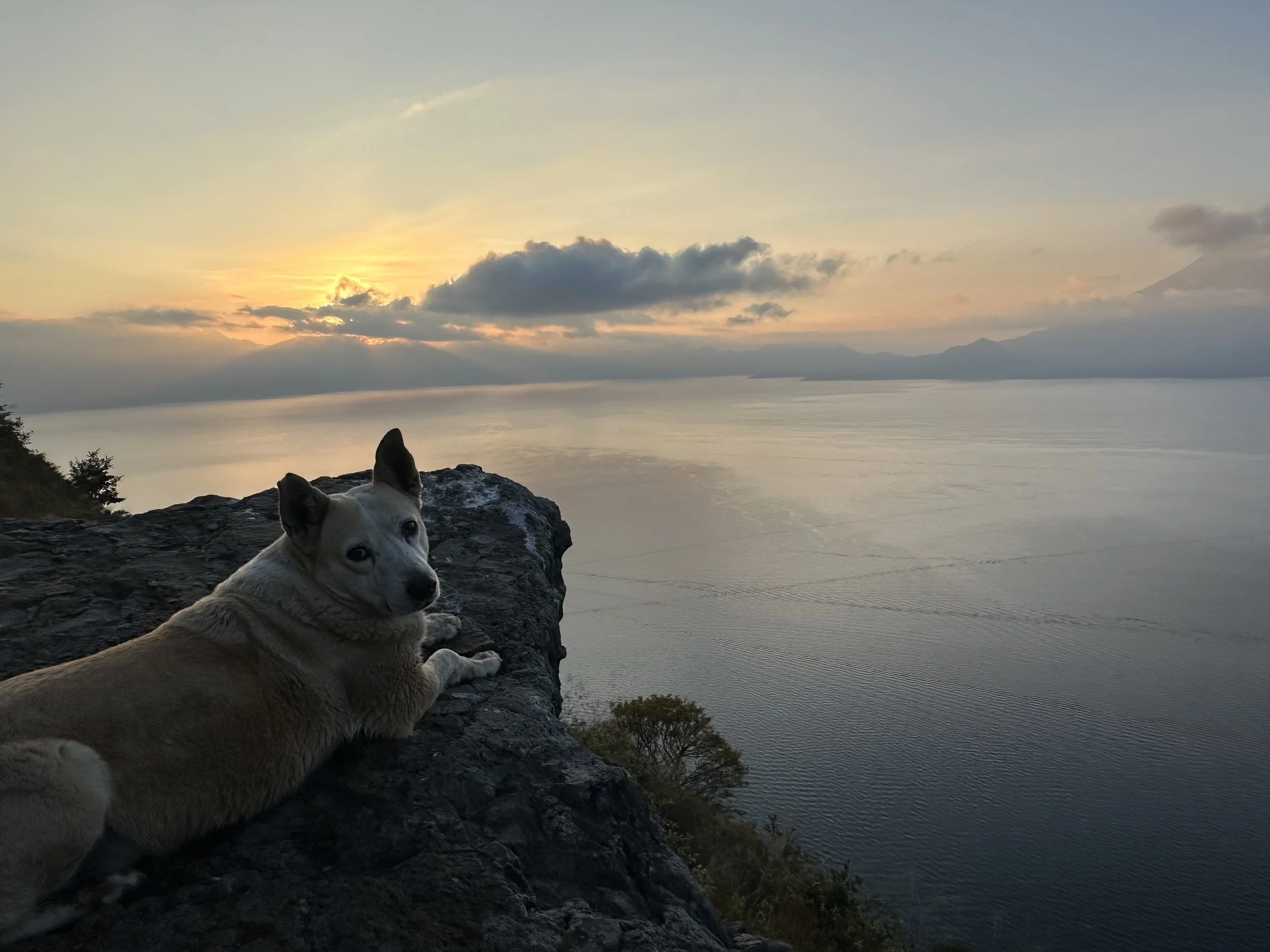
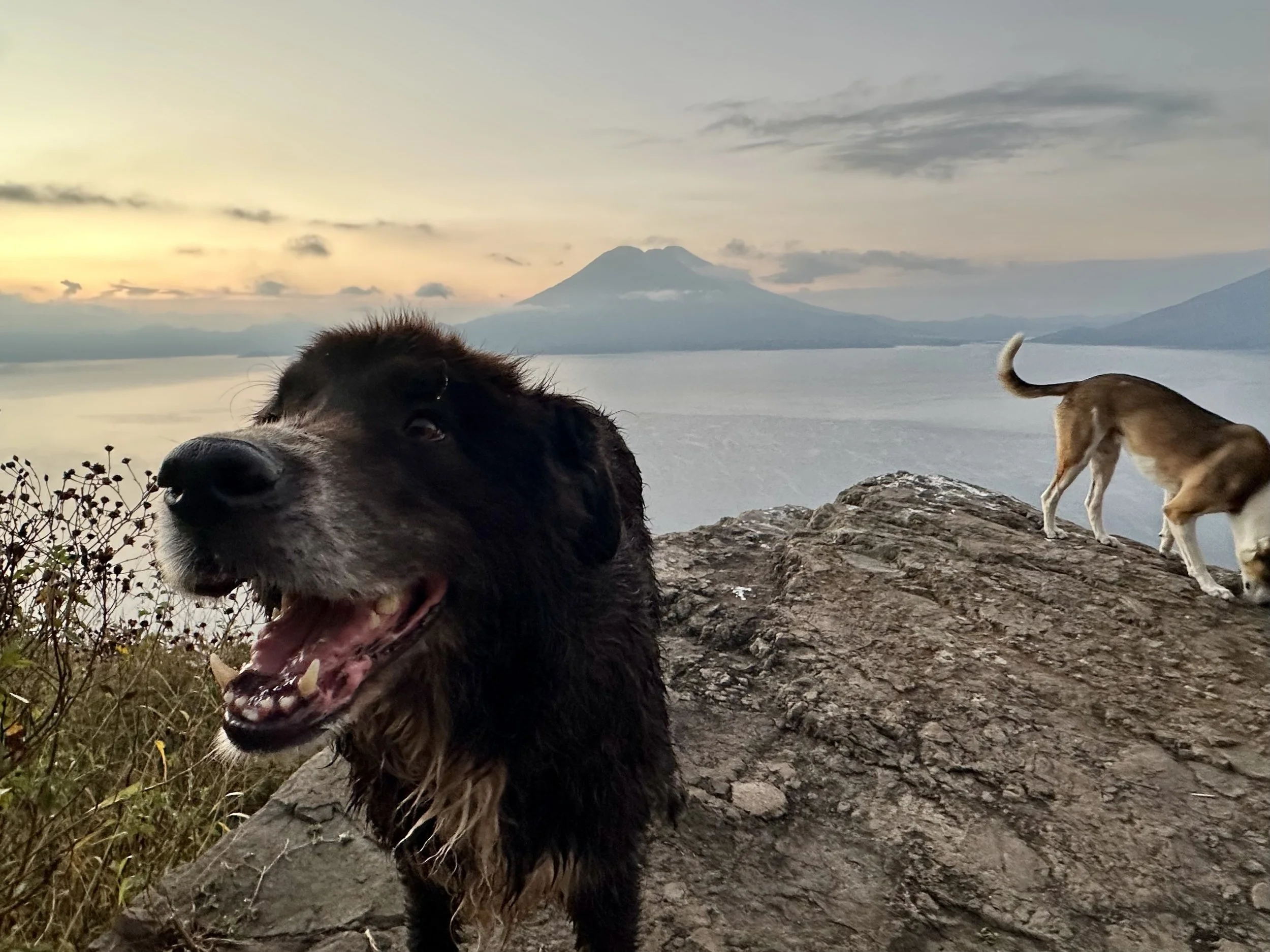
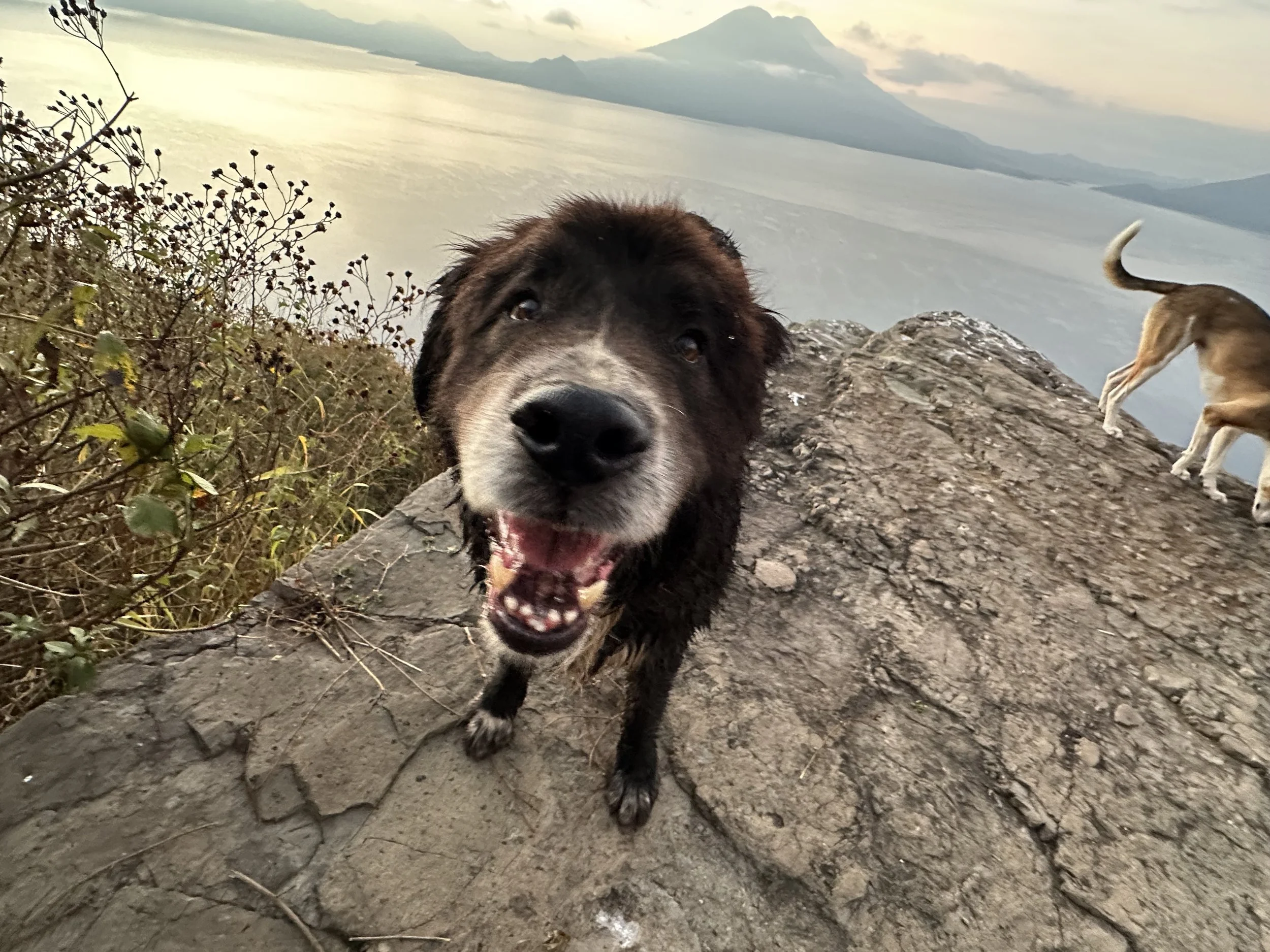
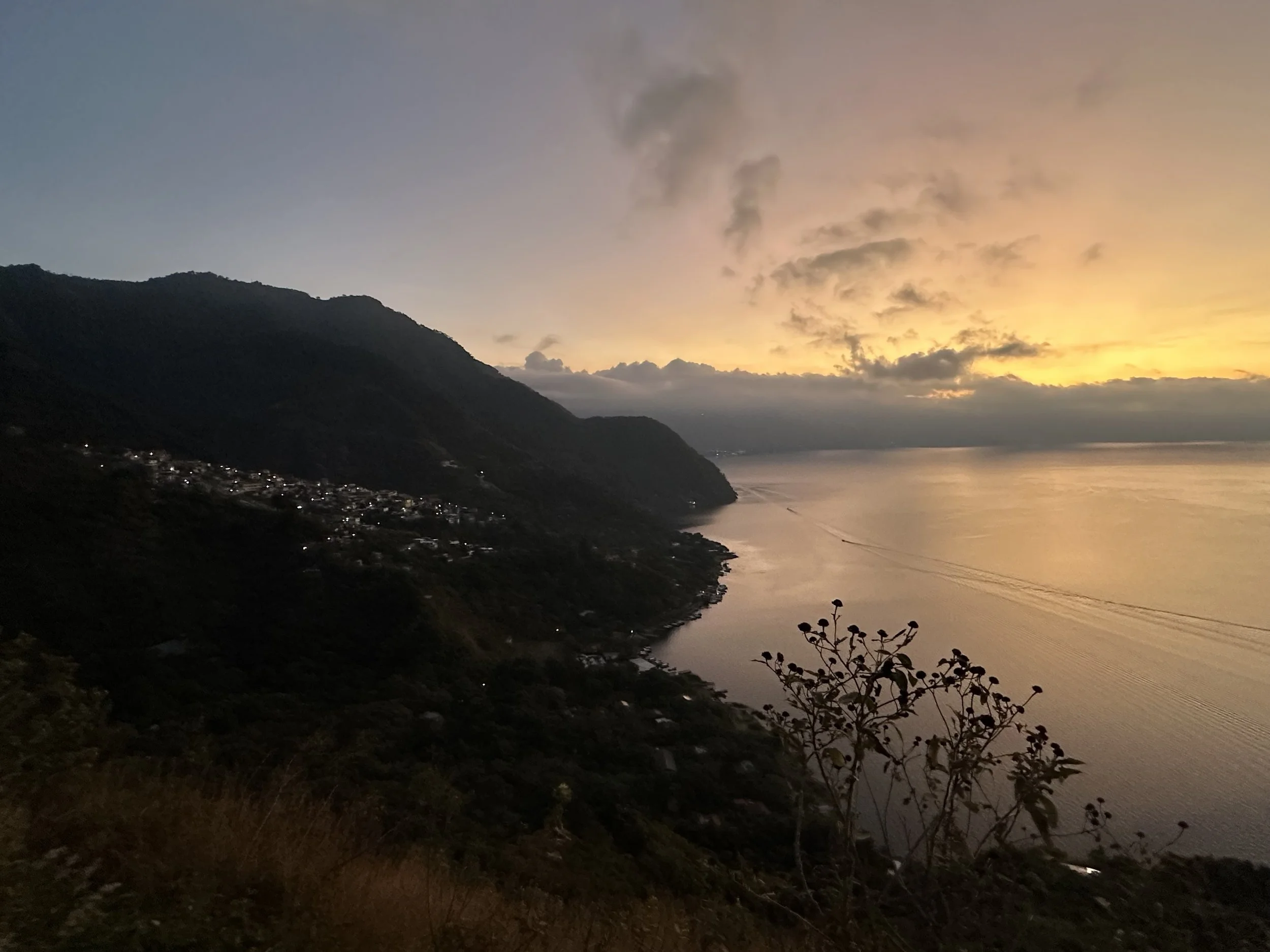
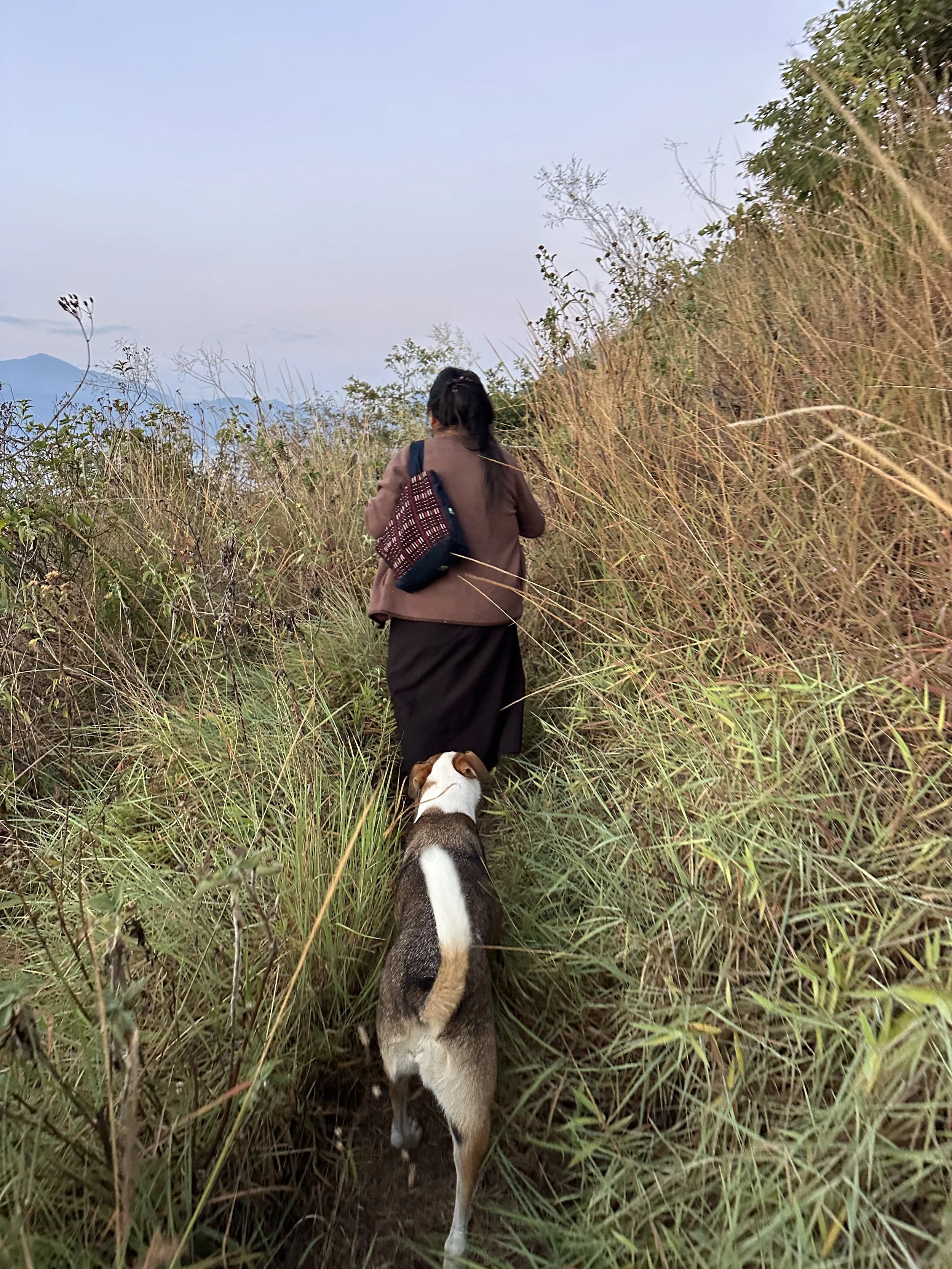
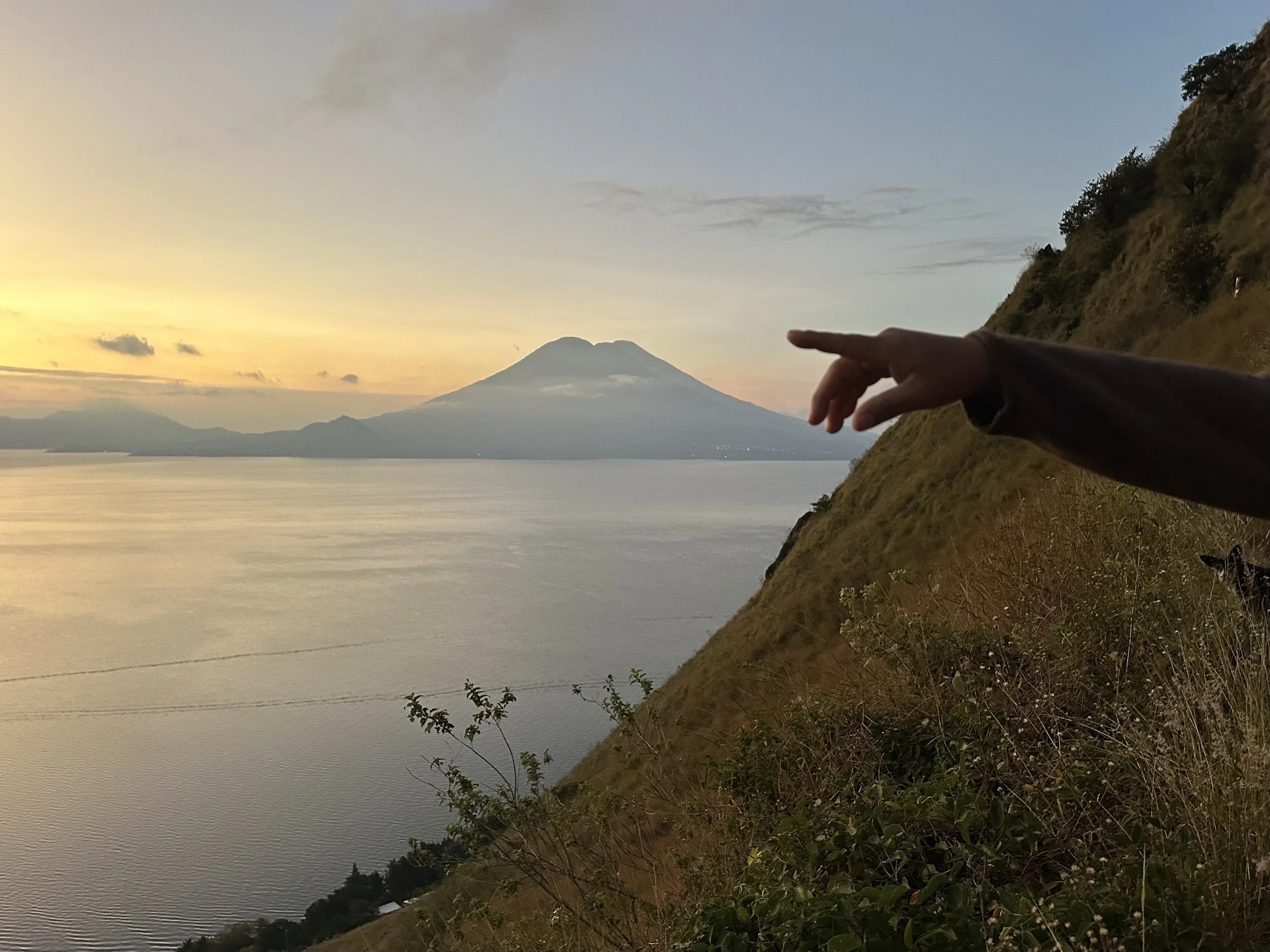
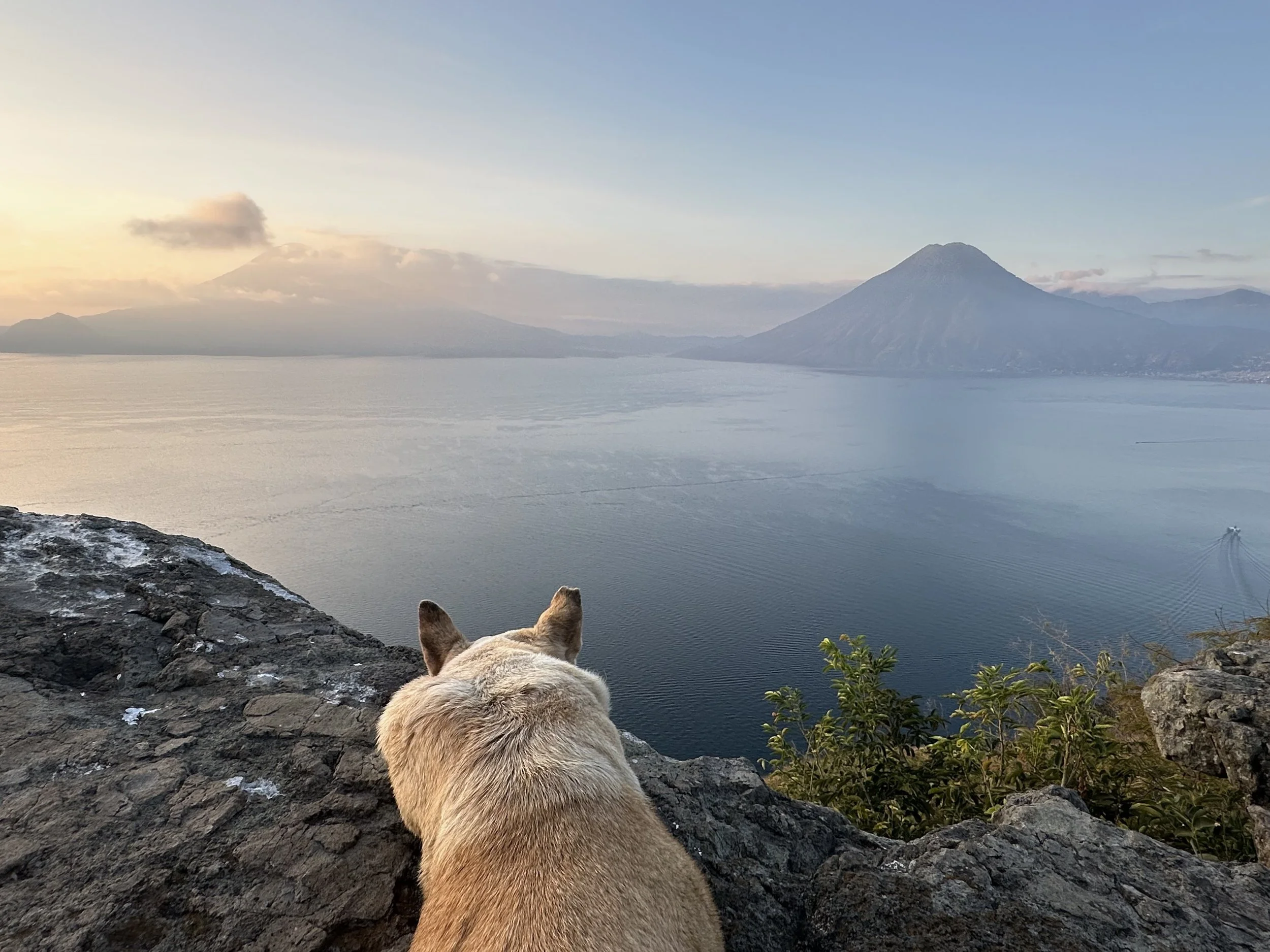
Elena pulled out Oreo-looking cookies and offered me one. As we ate, she began asking about my life: where I’m from, how I learned Spanish. She showed me photos of her two daughters: one recently married with a baby, the other who had just earned her master’s degree in entrepreneurship. She showed me her grandchild, her daughter walking across the graduation stage, and a photo of her father, who had passed away from cancer just three months earlier. I asked about her mother, and she said she was sick with a broken heart.
I showed Elena pictures of my family. She laughed at how tall my brother Carlos looked. She asked if my parents were still happily married. I said yes. She congratulated me and said that was rare. She then, very matter-of-factly, told me her husband had left her for another woman ten years ago. The women in her town informed her of this affair. Elena kicked her husband out and raised her two daughters alone. She said her heart was broken at first. “Pero así es la vida,” she shrugged with a half-smile. Now, she said, she loves her independence. She loves not having to wait up for anyone anymore. And, gracias a Dios, she is doing very well. She is busy guiding hikes, teaching cooking and weaving classes, hosting temazcal ceremonies, running a homestay, teaching Spanish and Kaqchikel, and selling food and clothing.
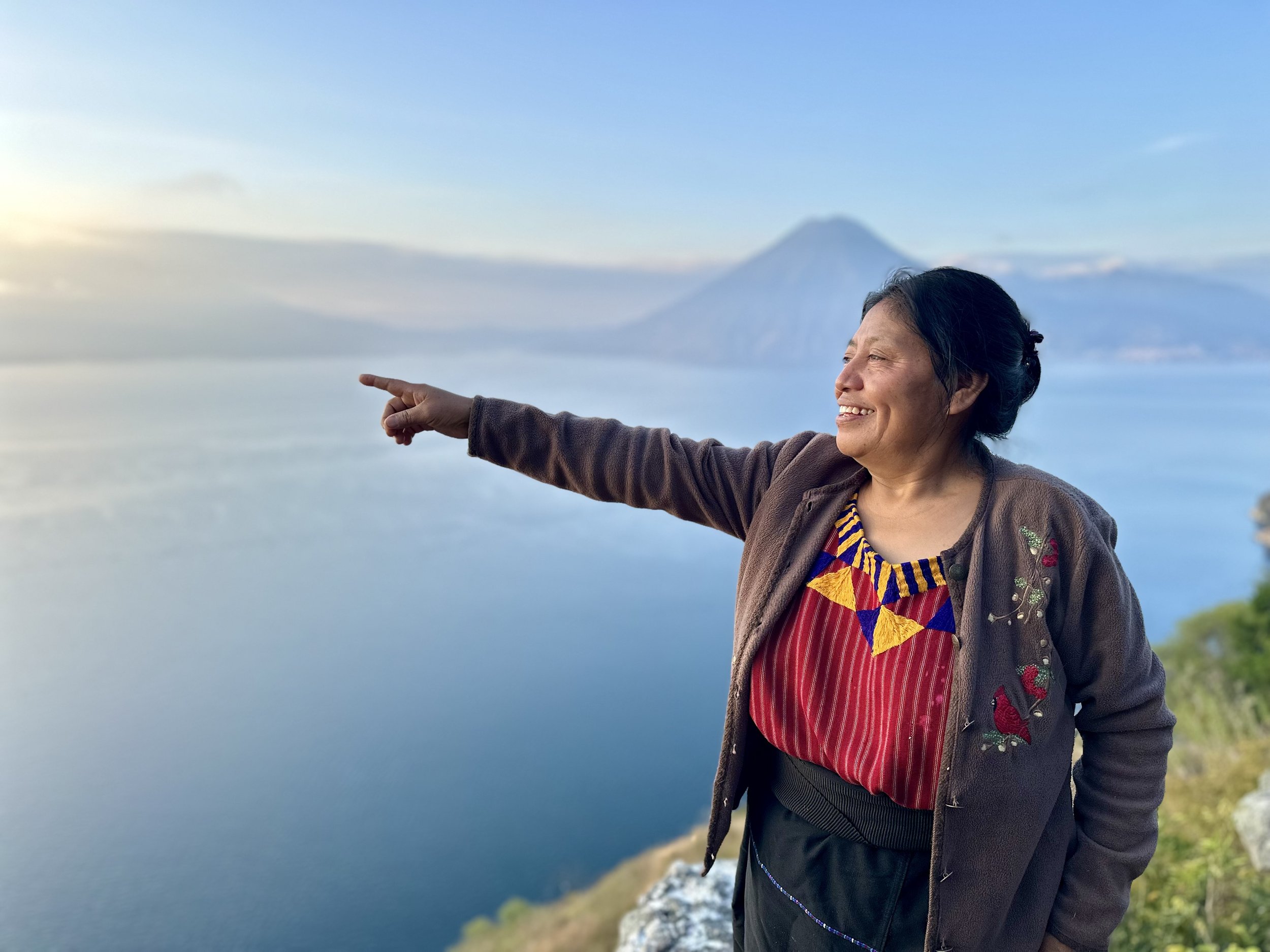
Just then, the sun rose above the clouds. Elena asked if I could take photos of her with my camera. I was happy to. We did a mini photoshoot, and I told her she was beautiful. She smiled so big in that moment, and I captured it. She looked like the queen of the mountain, sitting on her rock where she comes nearly five times a week. I took countless photos of her dogs, too, who posed politely like they were used to it. She asked for a selfie together, then took a few photos of me with Negra. I felt like I was with a friend.
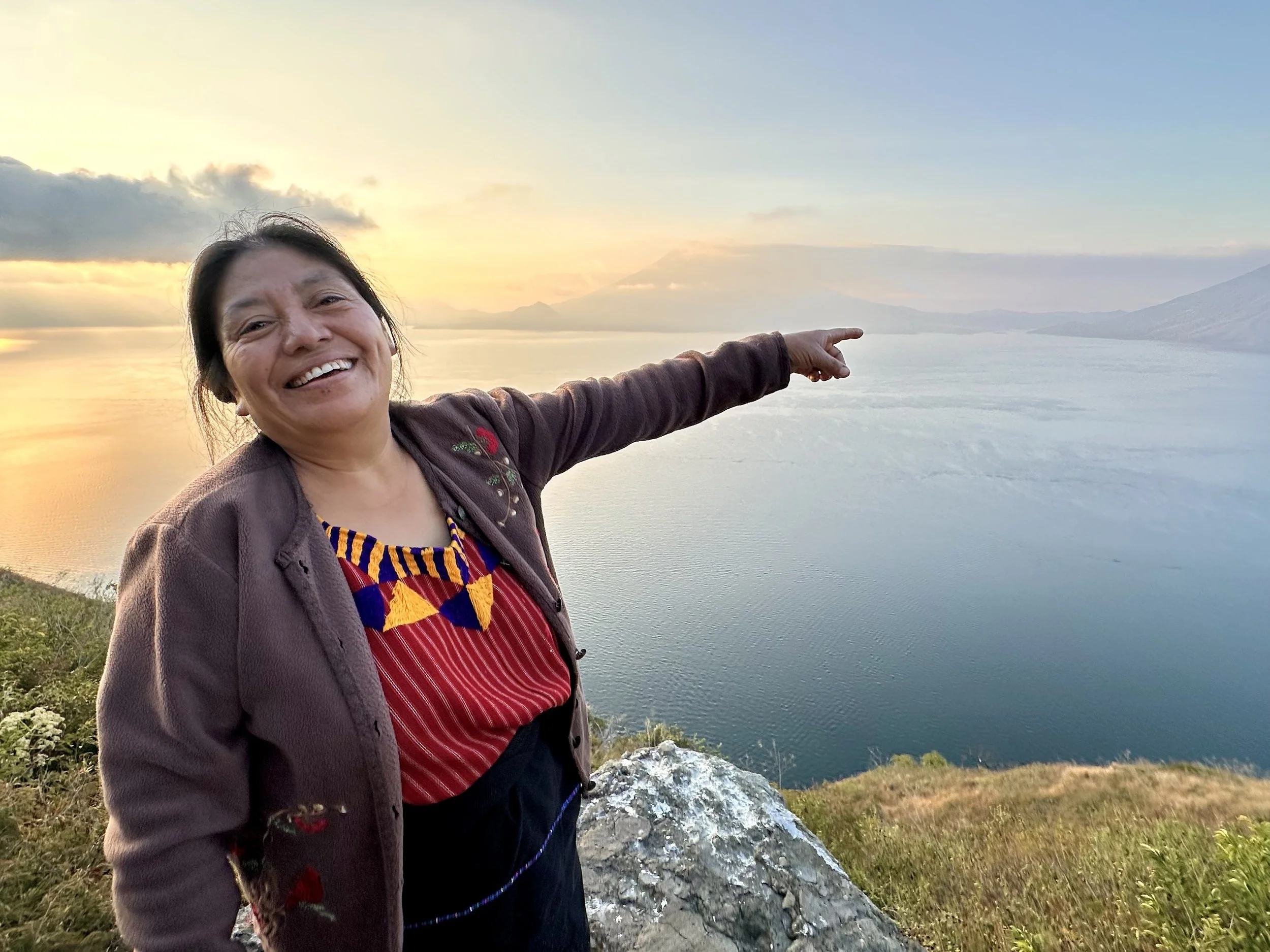
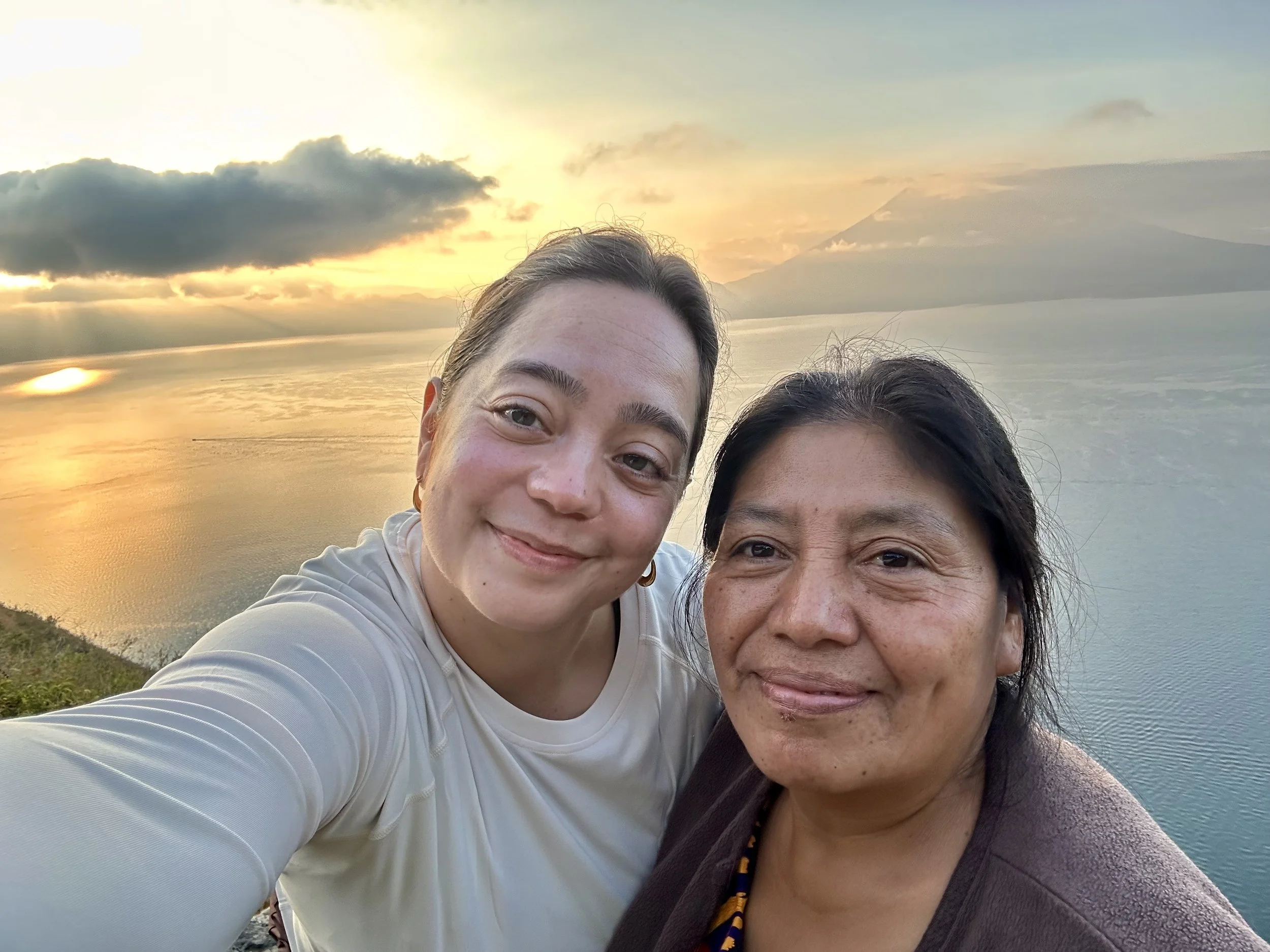
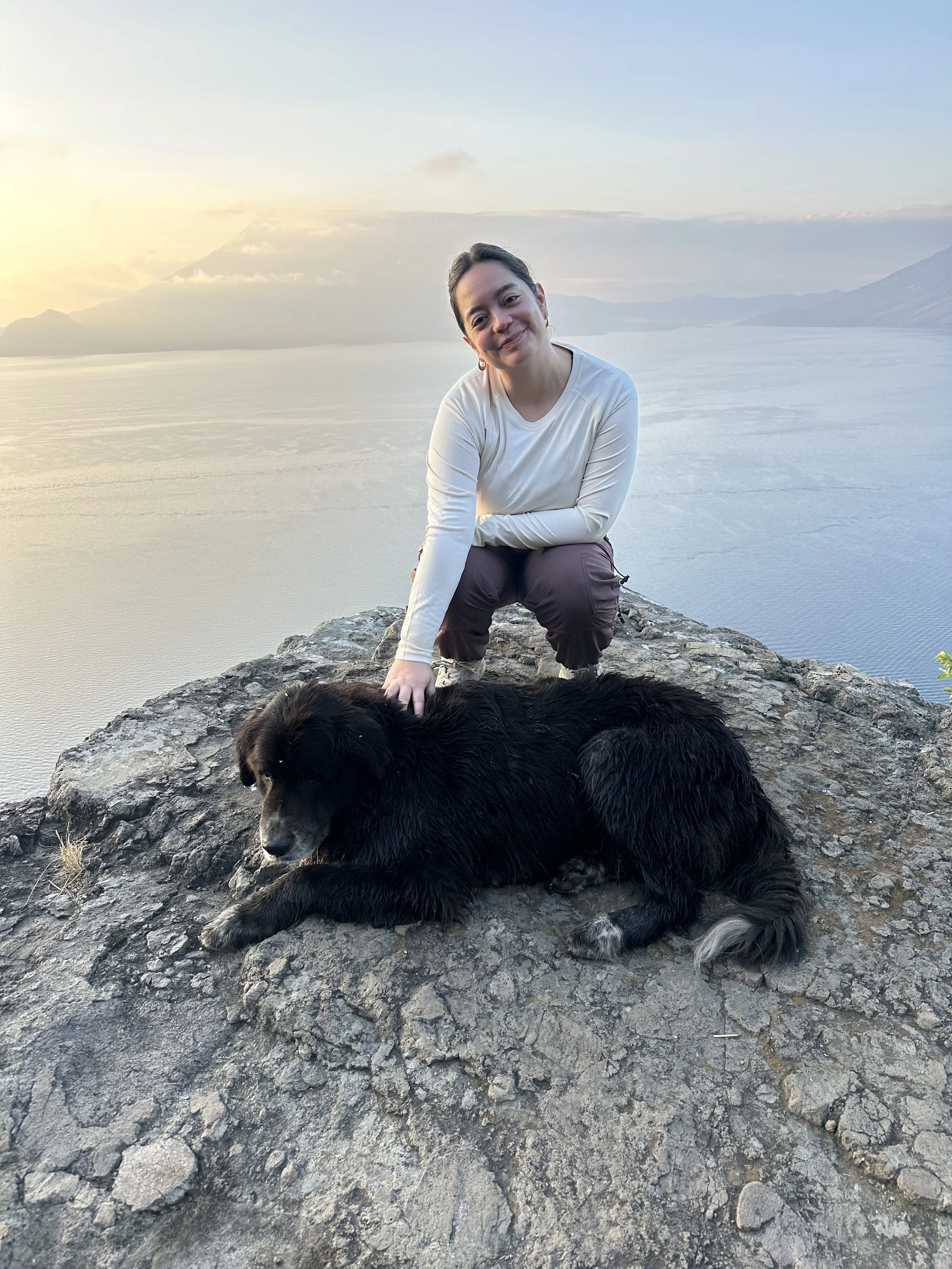
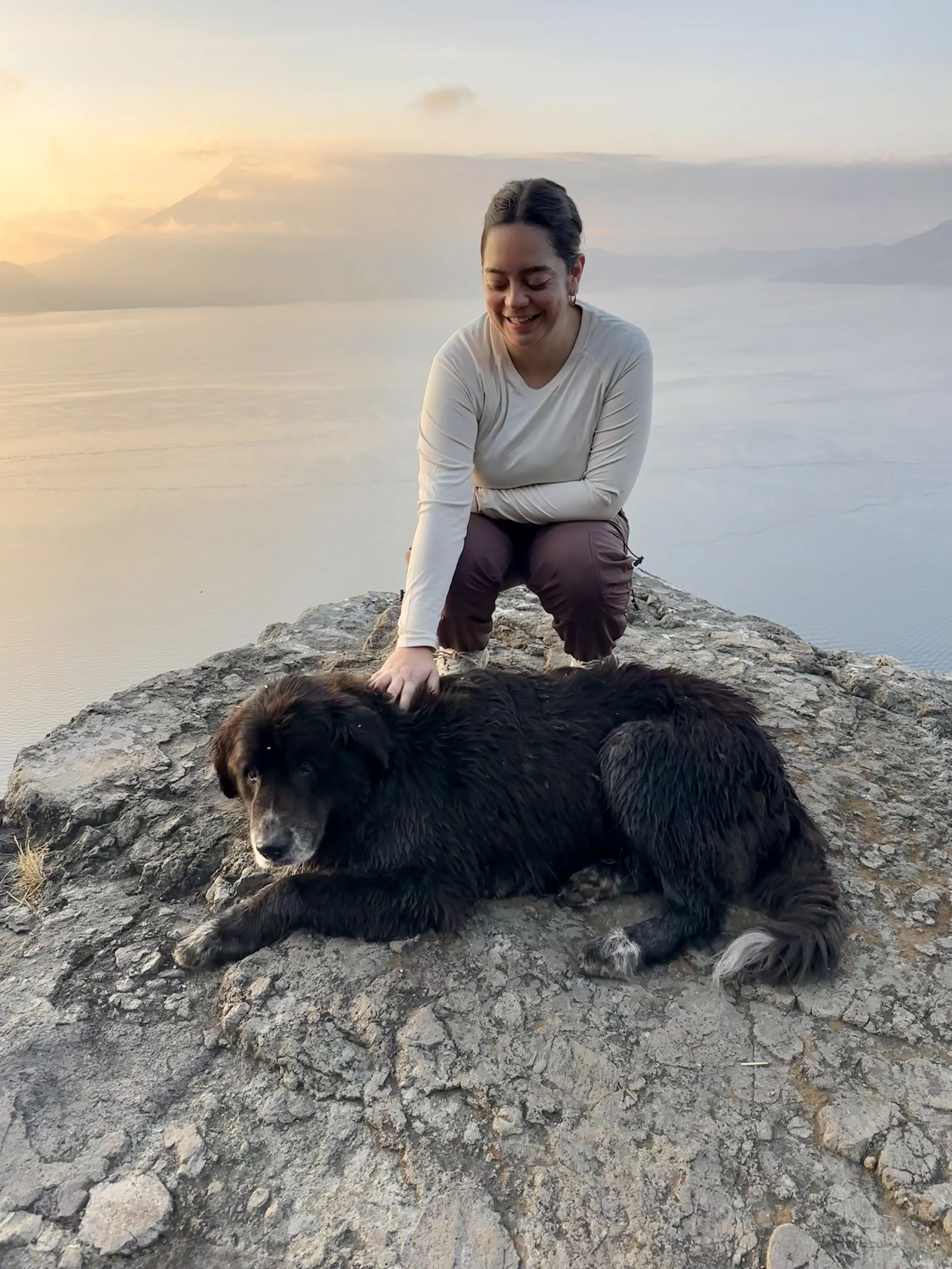
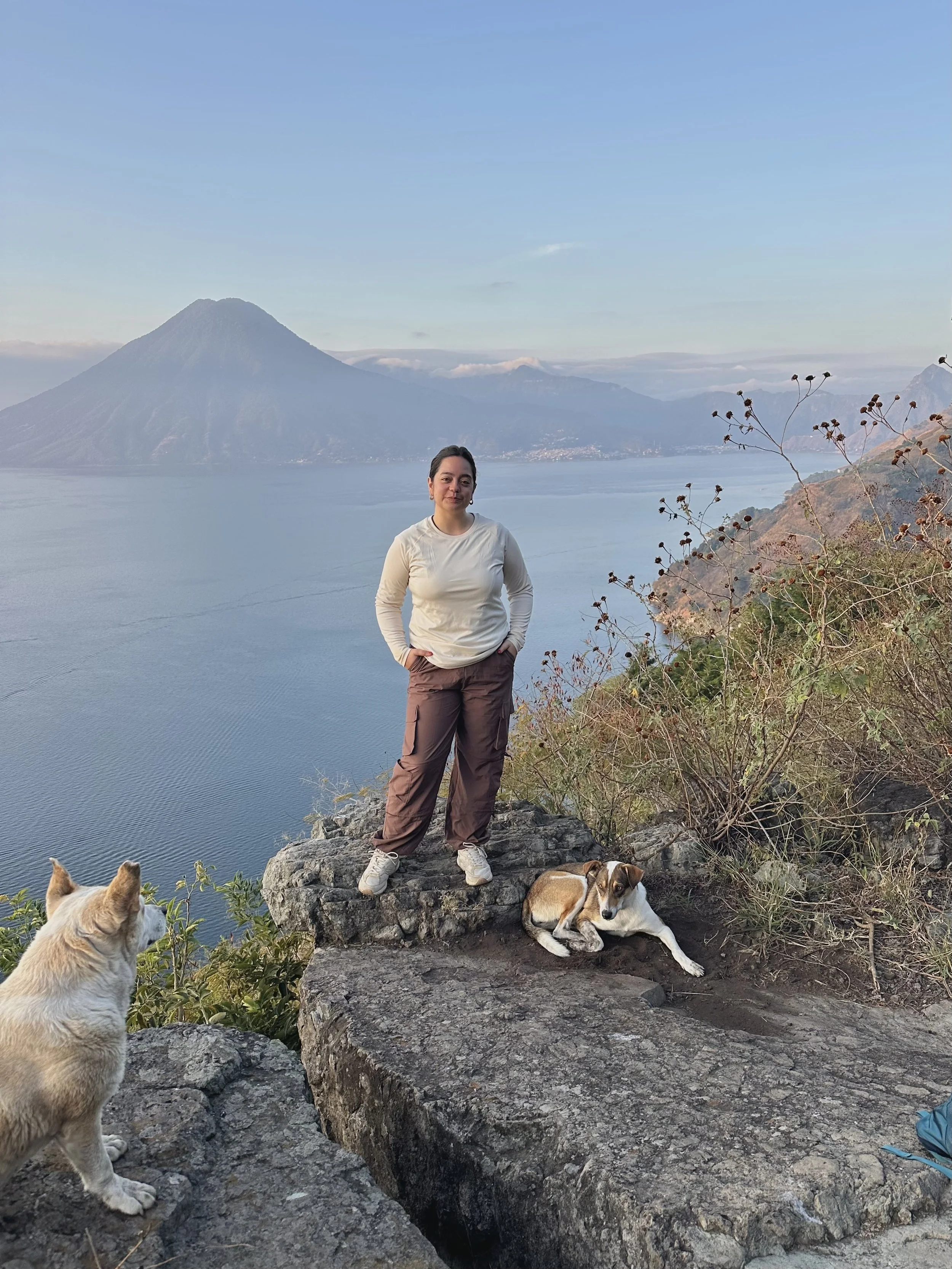
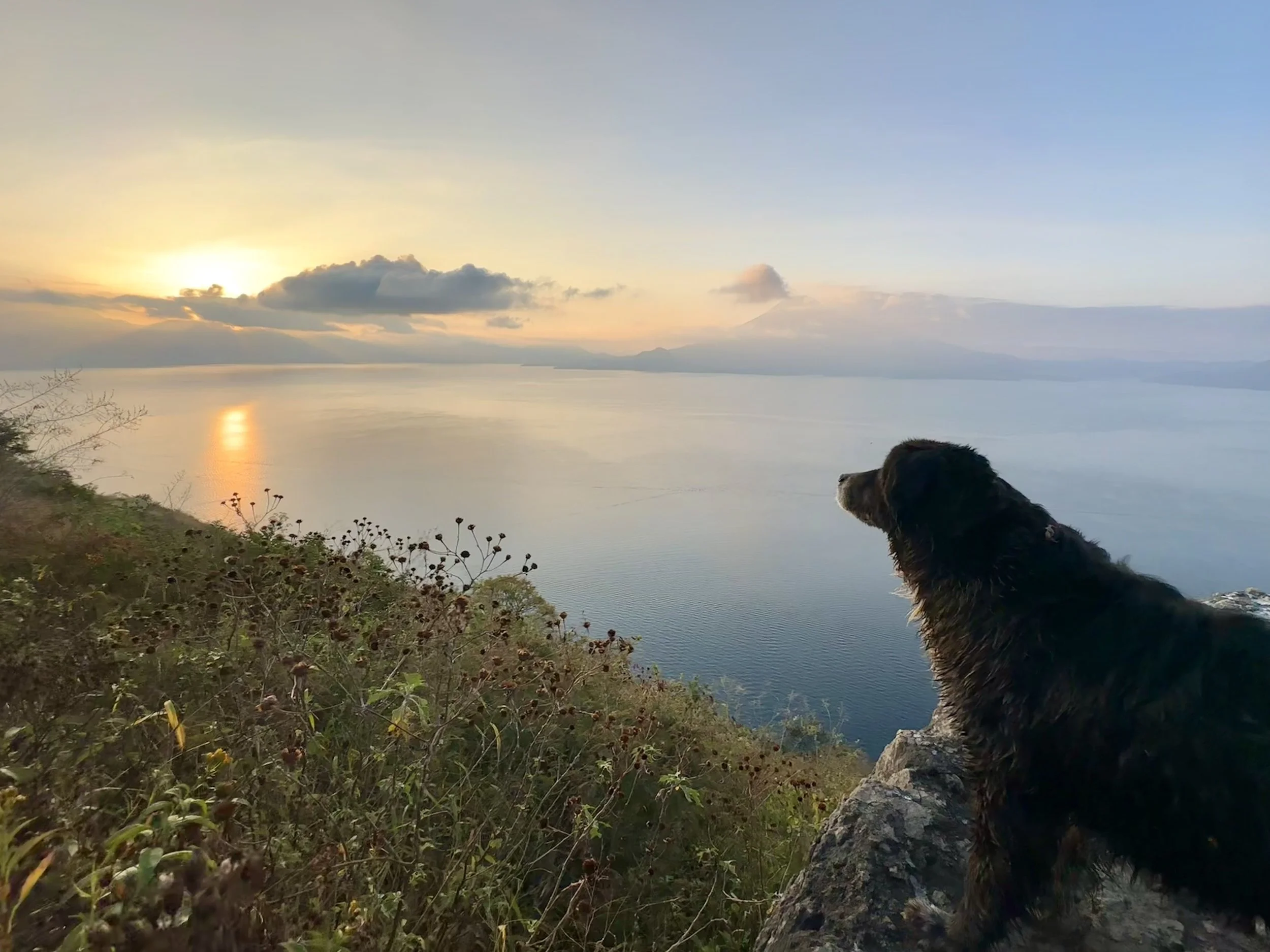
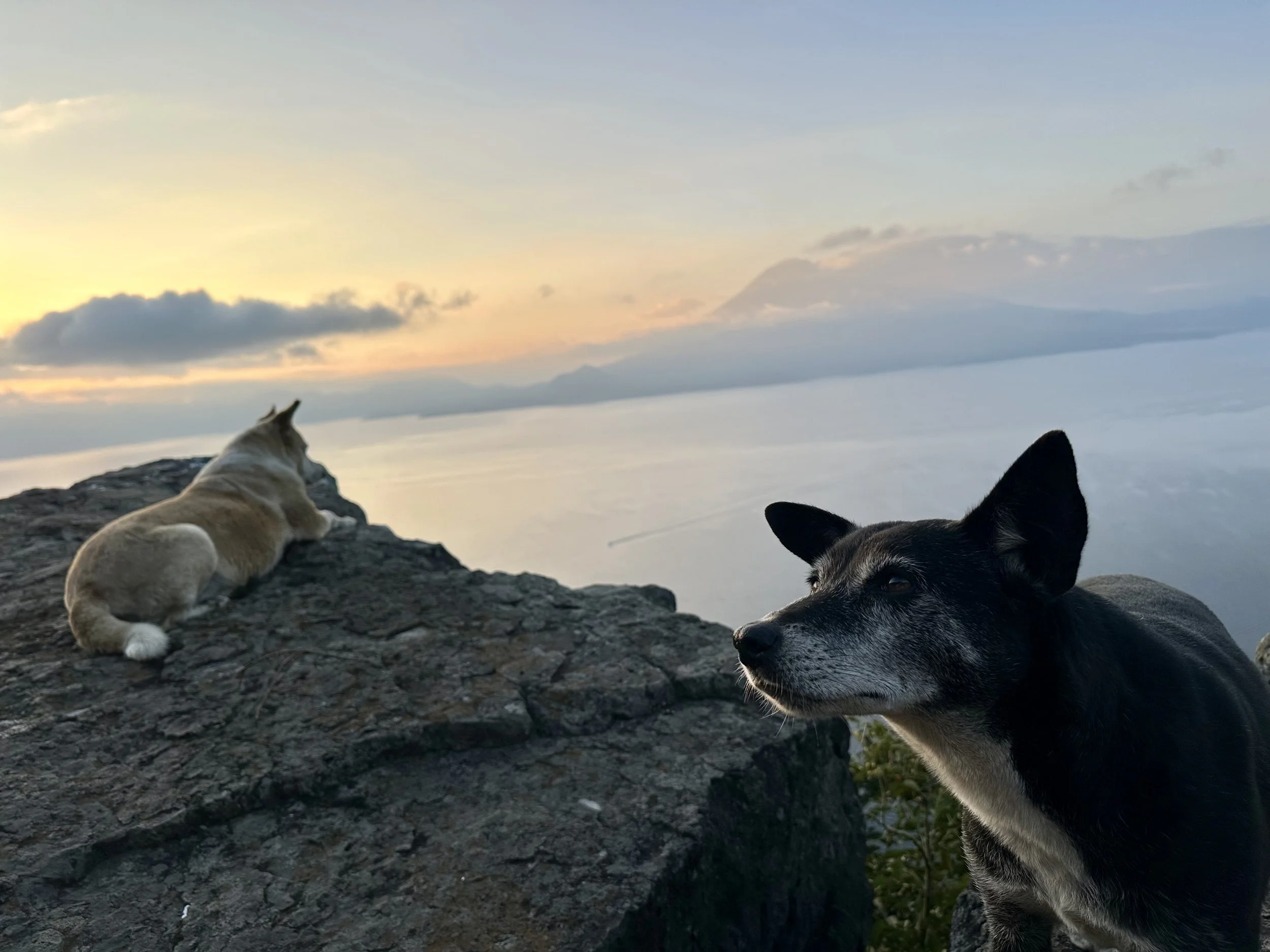
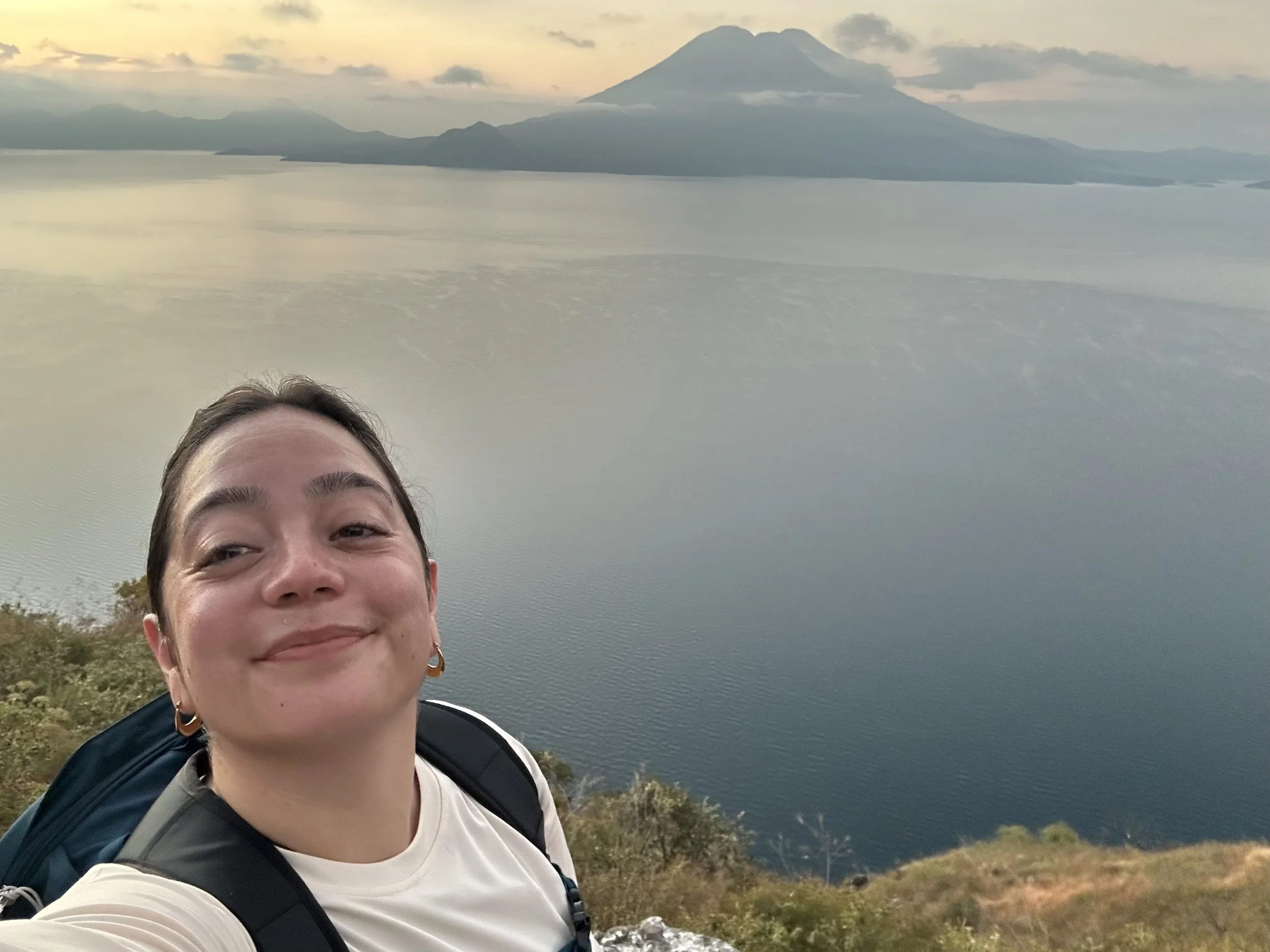
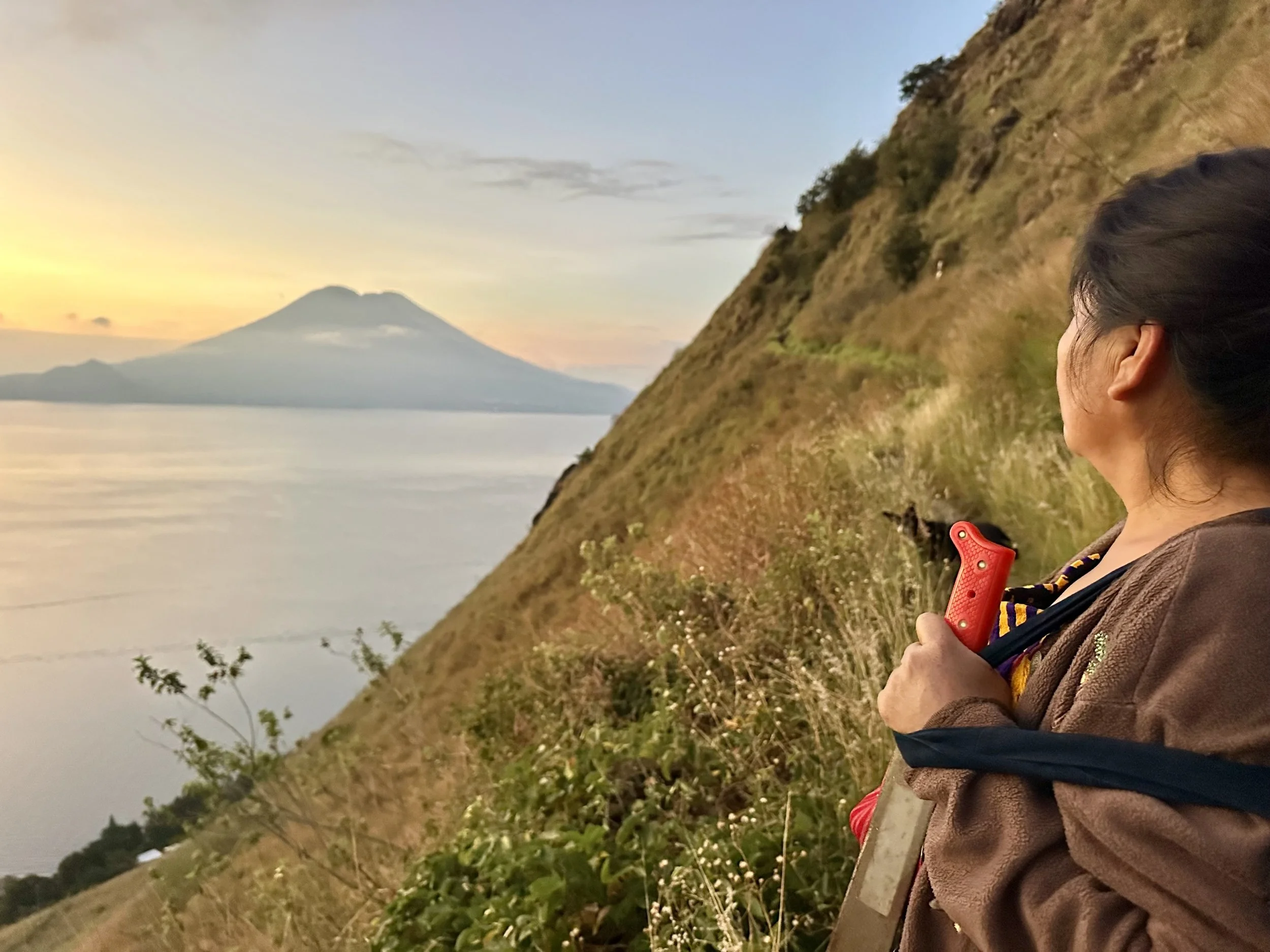
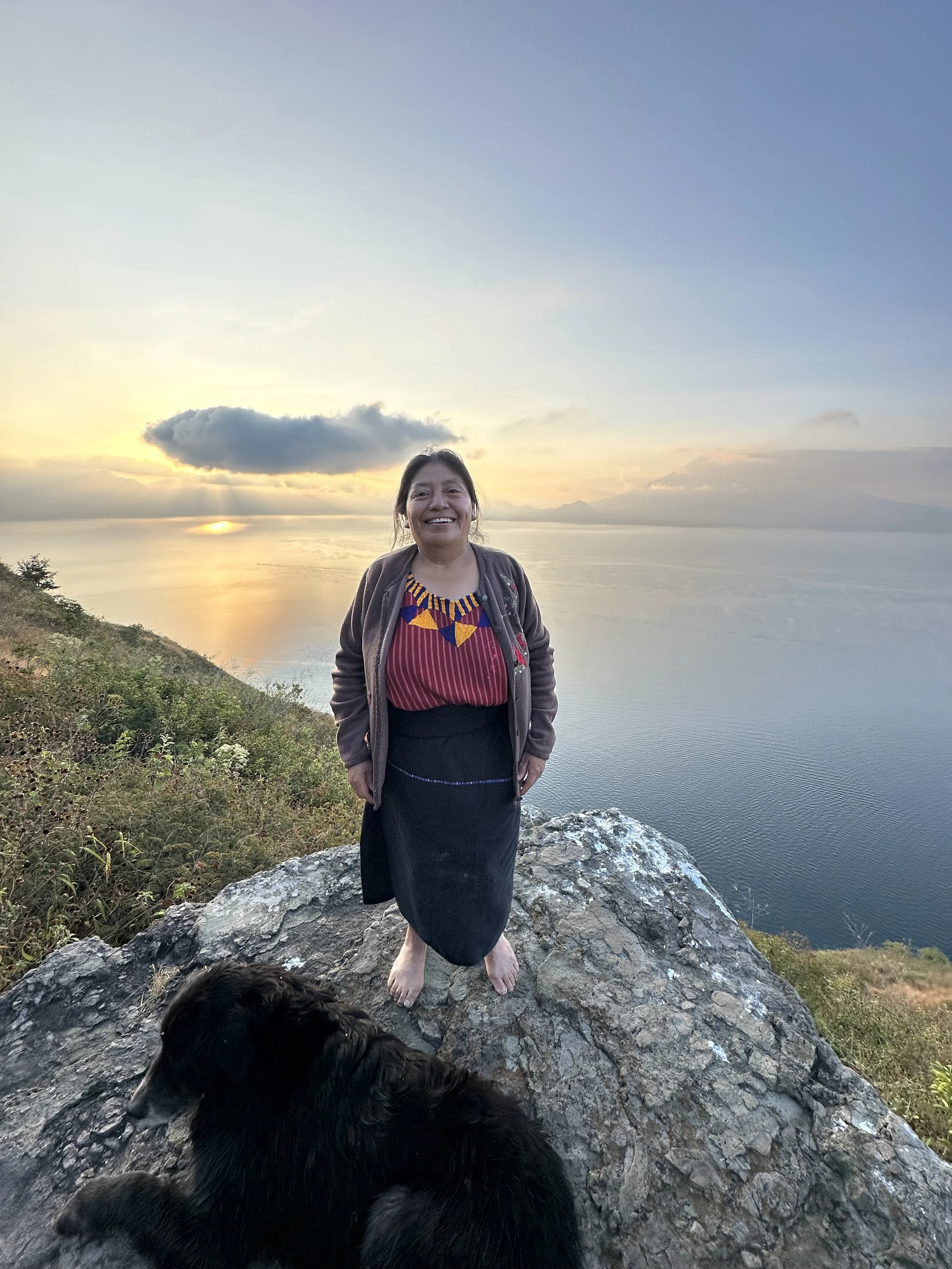
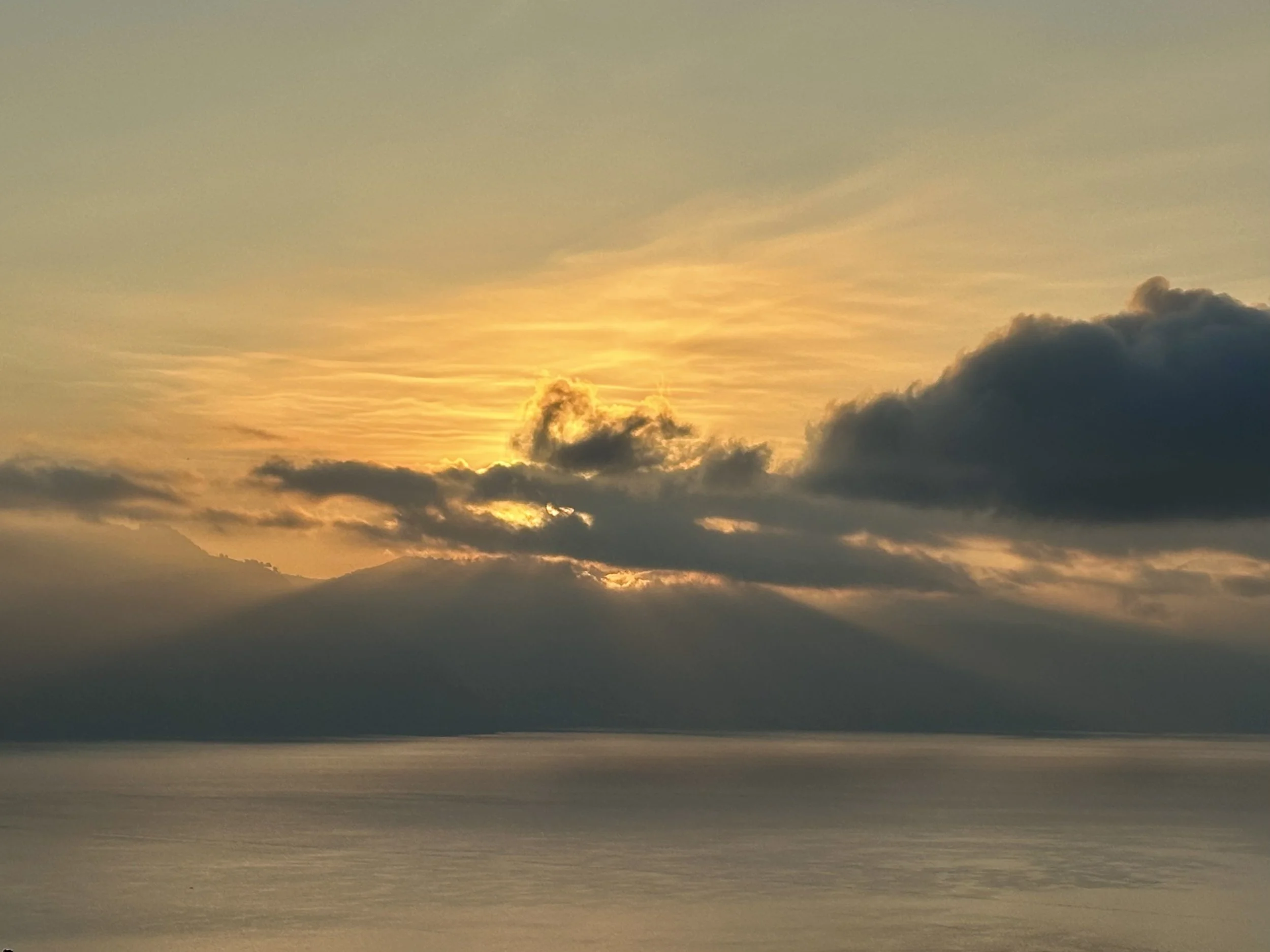
Sun rising over the clouds
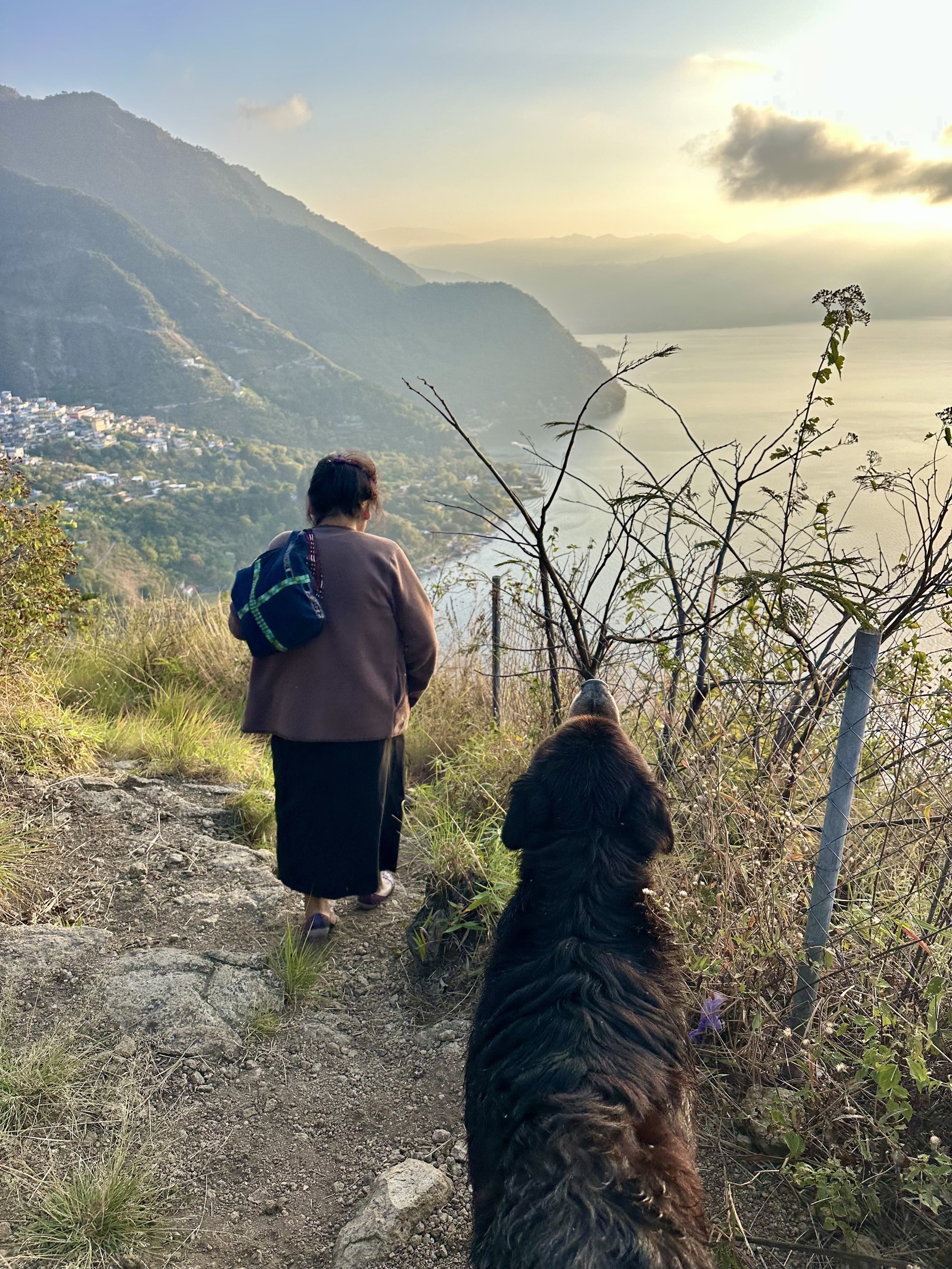
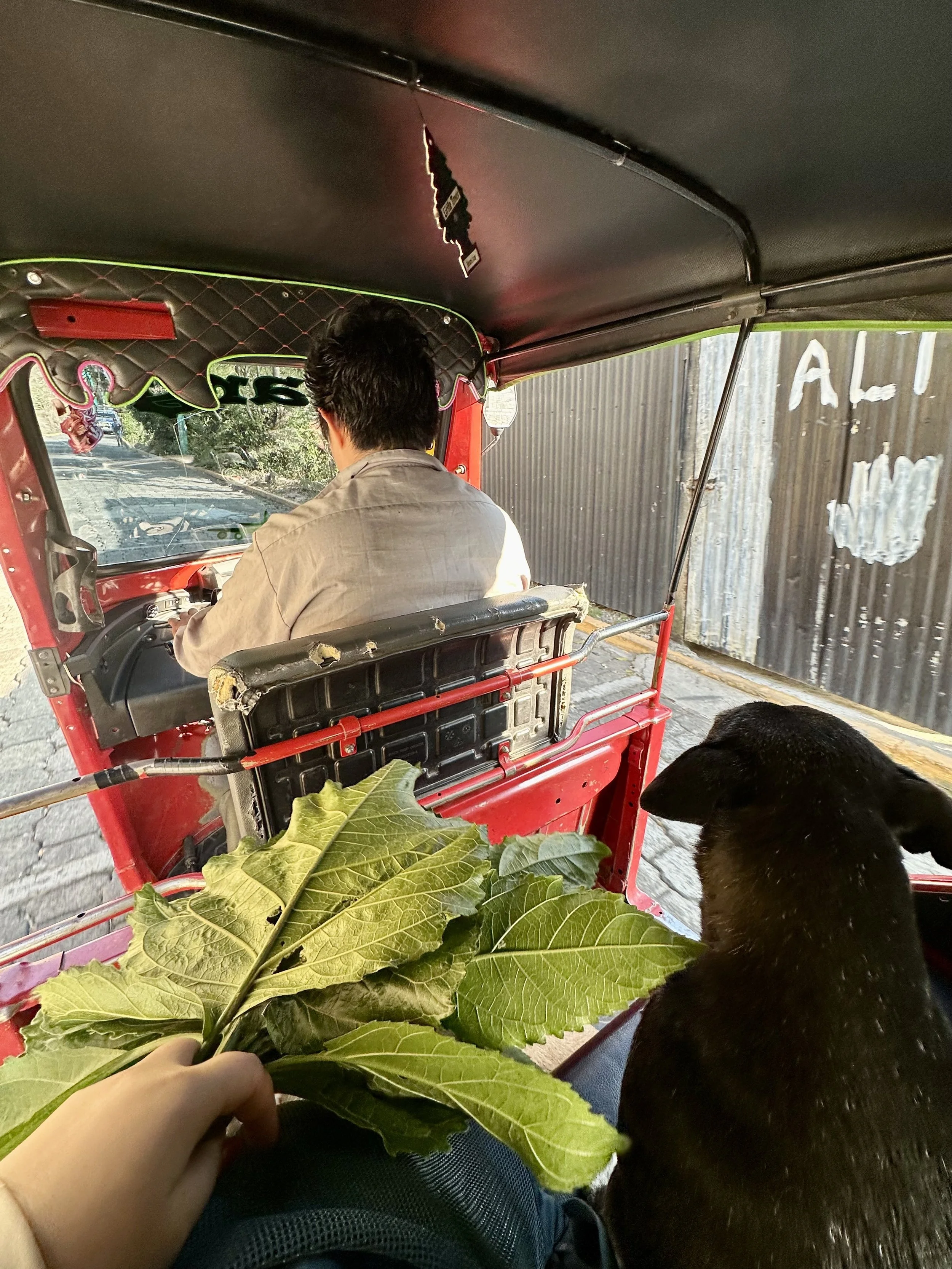
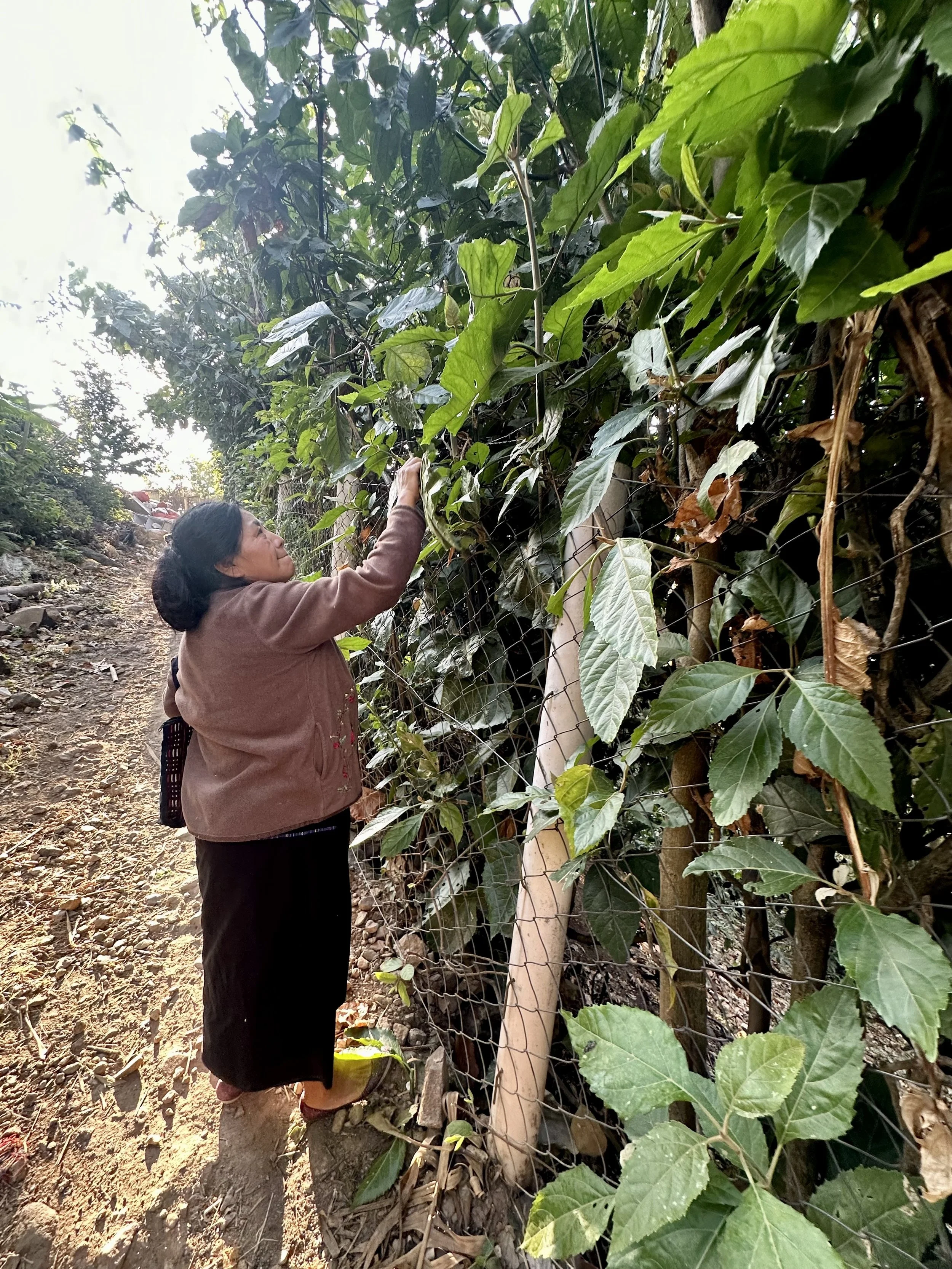
On the descent, I filmed Elena and the dogs walking through the fields. Back in the woods, I realized it was more jungle than forest. What had been pitch black hours earlier was now lush and alive. She pointed out coffee plants and eucalyptus trees, then stopped to cut down some plants. “Eso es medicina,” she said, handing them to me to carry.
We passed people along the way, stopping to chat each time, conversations entirely in Kaqchikel. I didn’t understand a word, but the language was gorgeous. I listened closely, watching two women with machetes in the jungle, speaking their native tongue. Elena was clearly beloved. Everyone knew her. It felt like a privilege to witness.
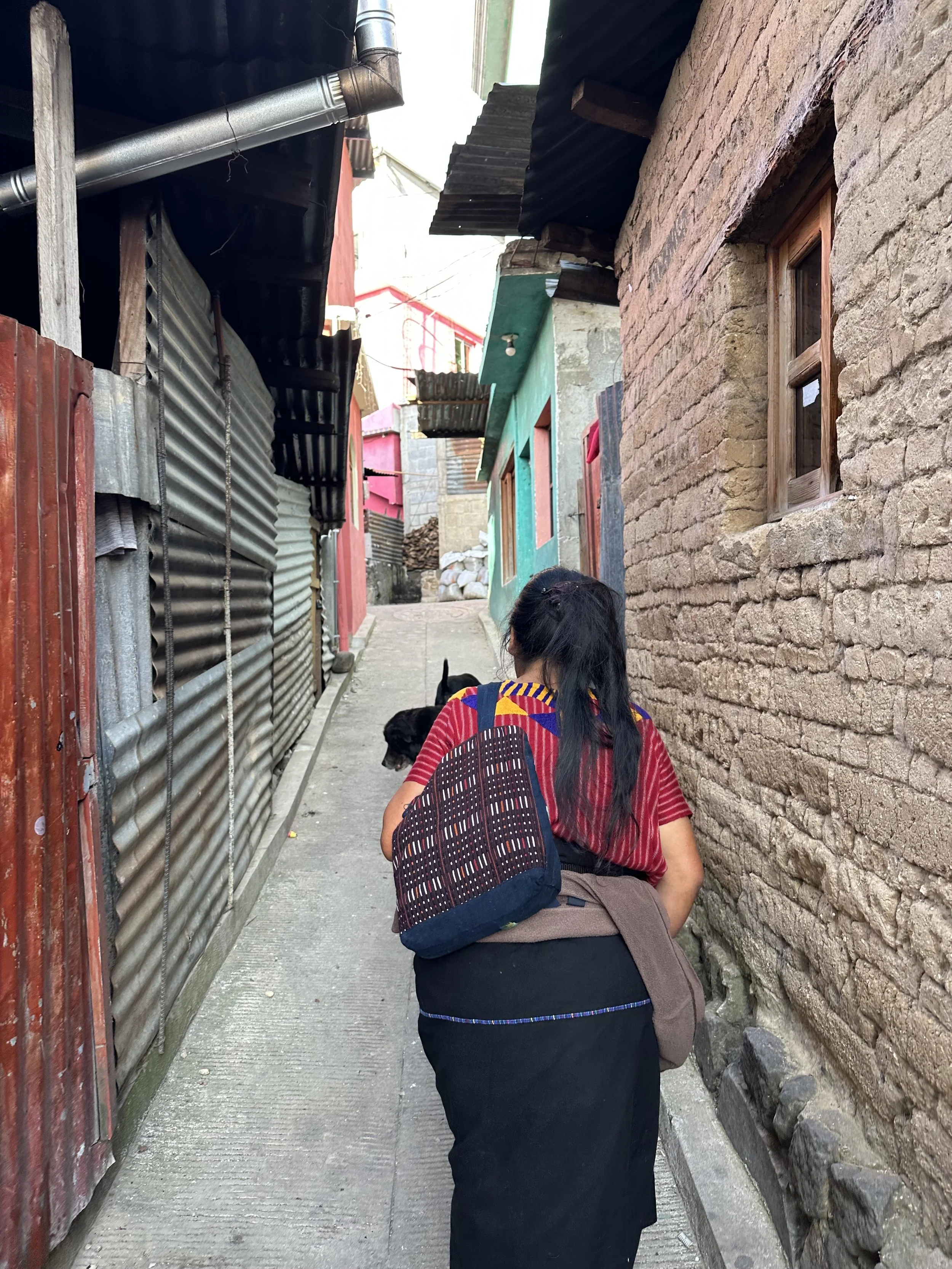
Eventually, we reached a road, where she had me board a tuk-tuk with her dogs. They hopped in effortlessly. It’s clear they knew the routine. Elena followed behind in another tuk-tuk. From there, we walked uphill to her home, where her daughter and two-year-old grandson greeted us.
Elena took the medicinal plants from my hands, explaining she’d prepare them for the temazcal.
Temazcal
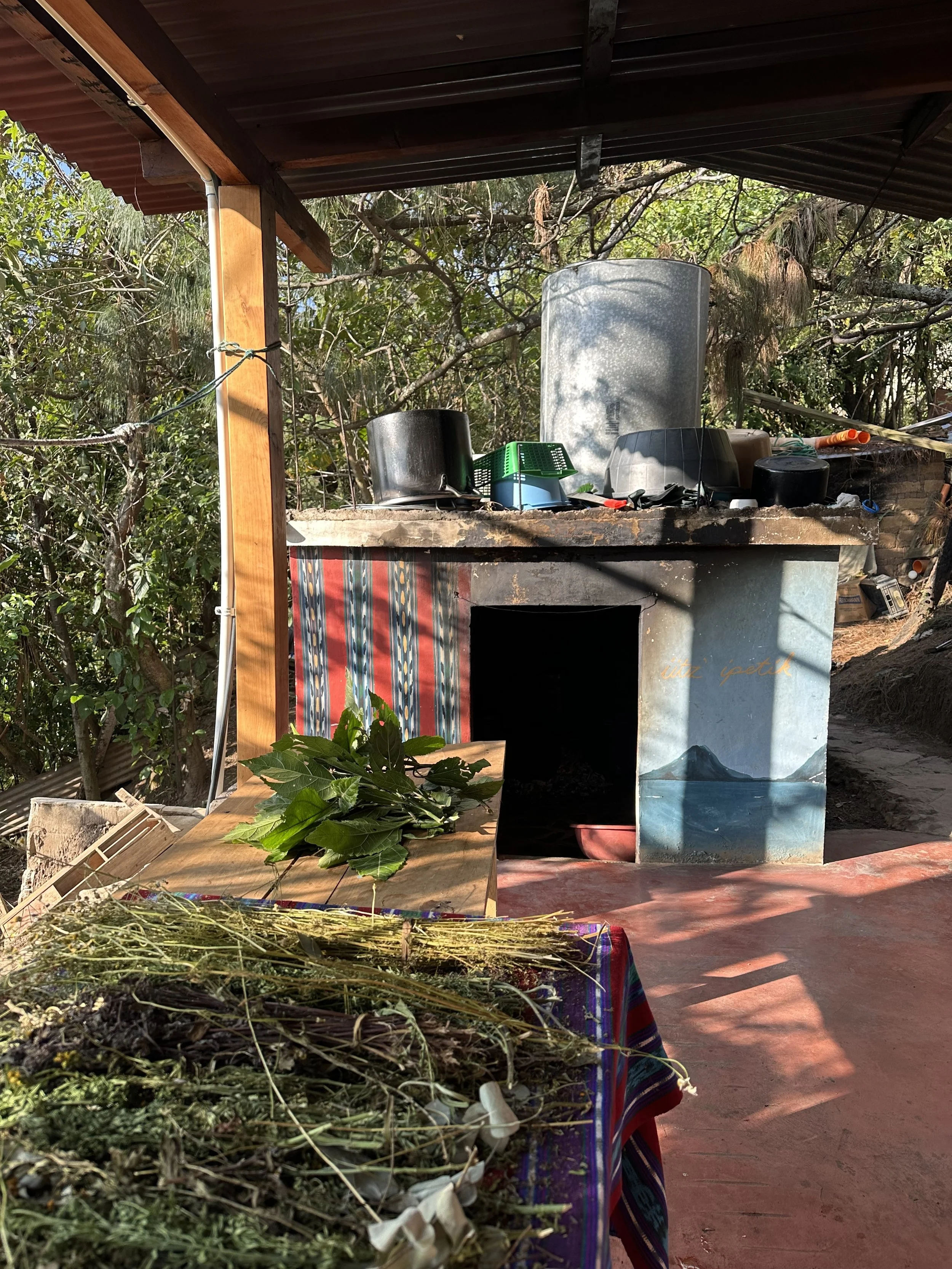
Elena’s Temazcal at her home.
Traditionally, the temazcal is used not just for physical cleansing, but for emotional and spiritual healing. It has been practiced for centuries by Mayan communities and is often part of important life moments, such as after childbirth, during times of illness, grief, or major transition. The heat, steam, and medicinal herbs are believed to help release what no longer serves the body or spirit, making space for renewal.
I changed into a bathing suit, and Elena guided me inside. It was dark and intensely hot. A fire burned beneath a large pot of water mixed with herbs. I could smell rosemary and eucalyptus, but couldn’t make out the others.
Before beginning, Elena told me she was going to speak to the herbs. She turned toward them, bowed her head, placed her hands in prayer, closed her eyes, and spoke softly in Kaqchikel. Later, I wished I had thought to ask what she said, but maybe it was better to let that remain between her and the herbs.
I had never done this before. In Mexico and Costa Rica, I had seen temazcales offered as tourist attractions, which always felt a little silly to me. But this invitation from Elena felt different. It was a personal invitation to slow down, to listen, and to be held in a tradition far older than me.
She left me inside alone for a while and told me to soak the leaves we had gathered in the hot herbal water, then place them on my body to receive their healing properties. She suggested rotating them over my heart, stomach, shoulders, and knees. I did exactly as she said, sitting in the darkness by myself. I felt incredibly grateful—for Elena, for this experience, and for being trusted with it.
I said goodbye to Elena, after buying an apron she made, and walked down into town from her home to get some breakfast. It was a long, beautiful morning, and I was quite hungry.
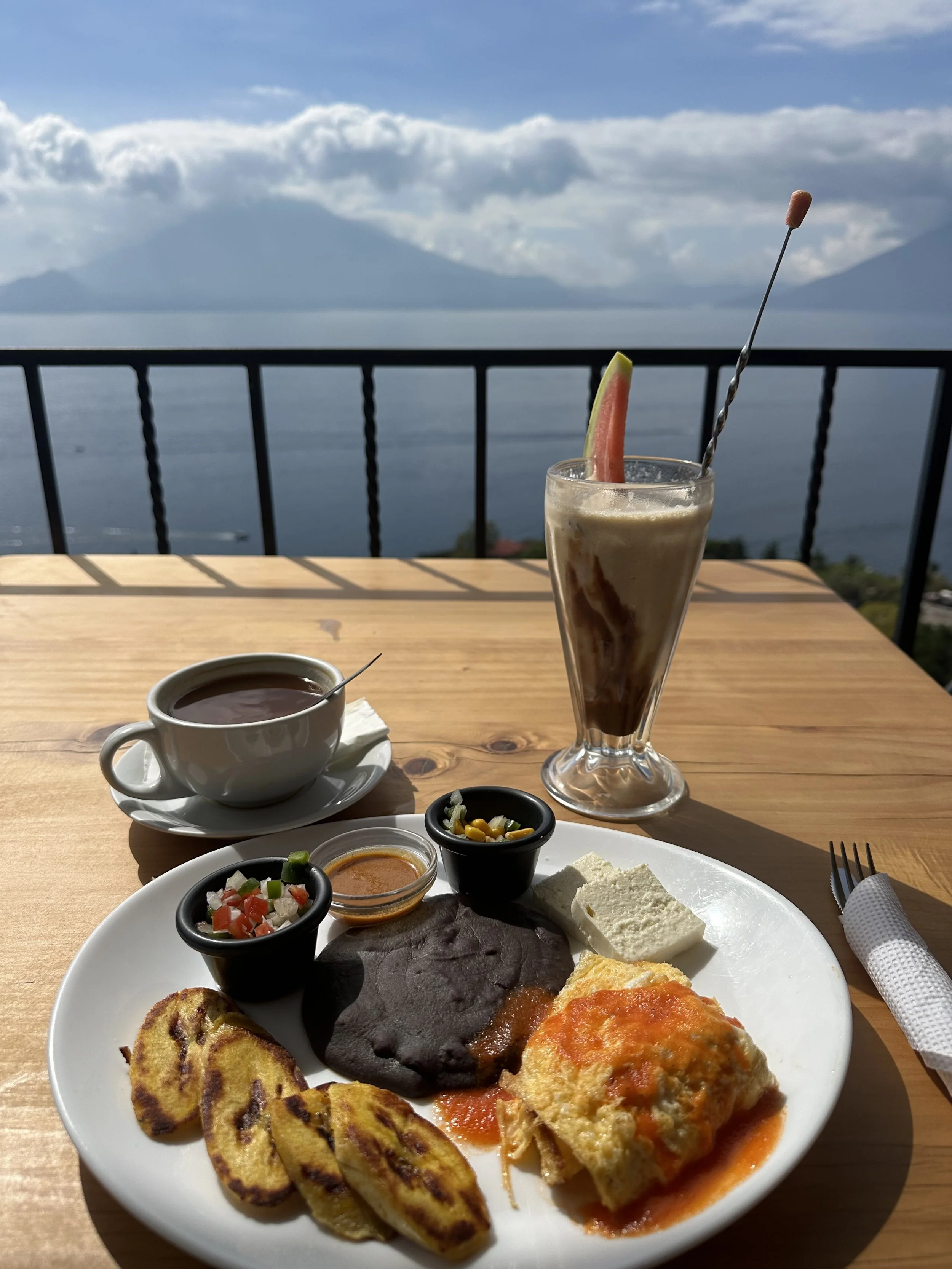
Traditional Guatemalan breakfast.
