A Very Full Day in Antigua
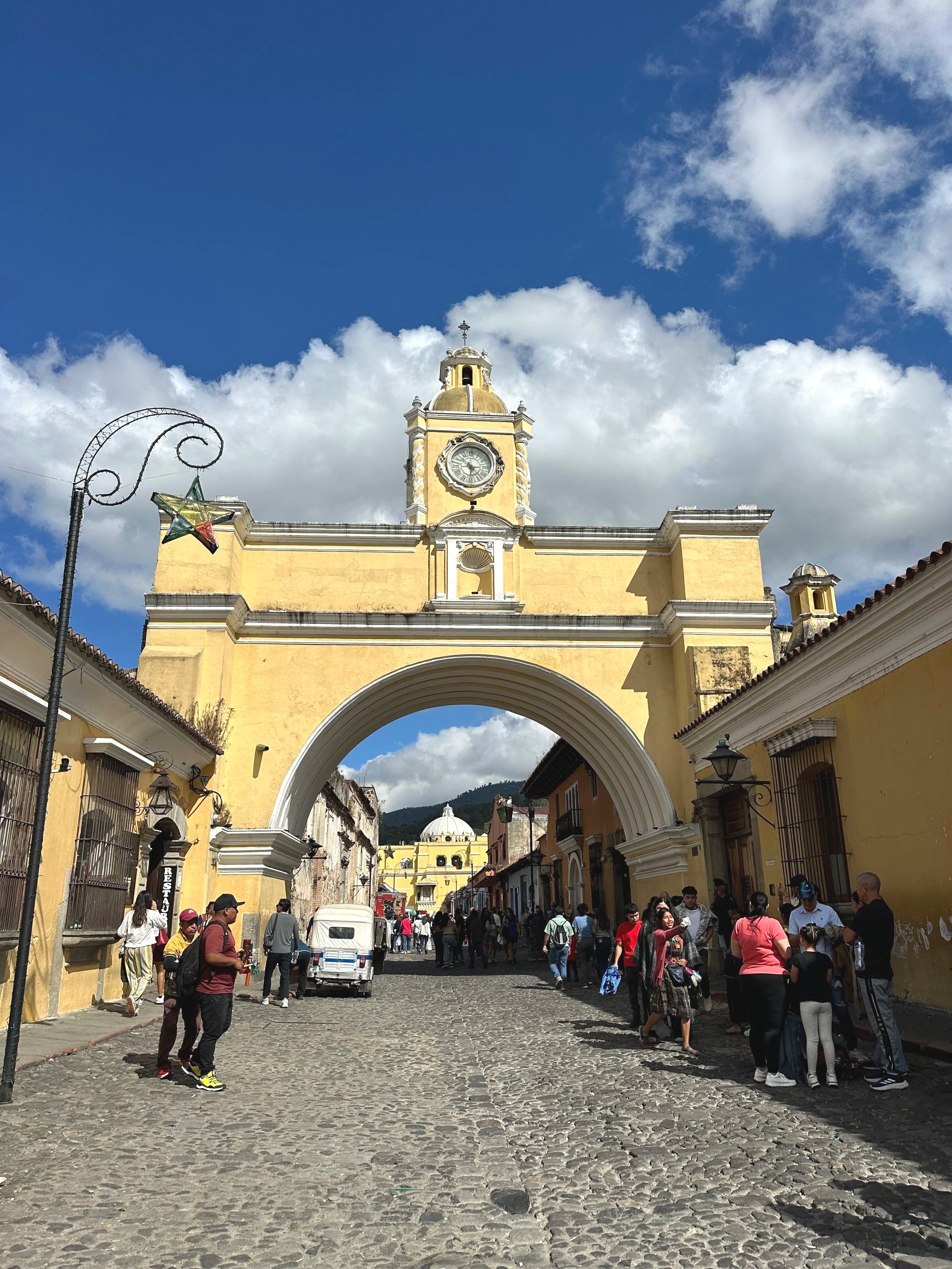
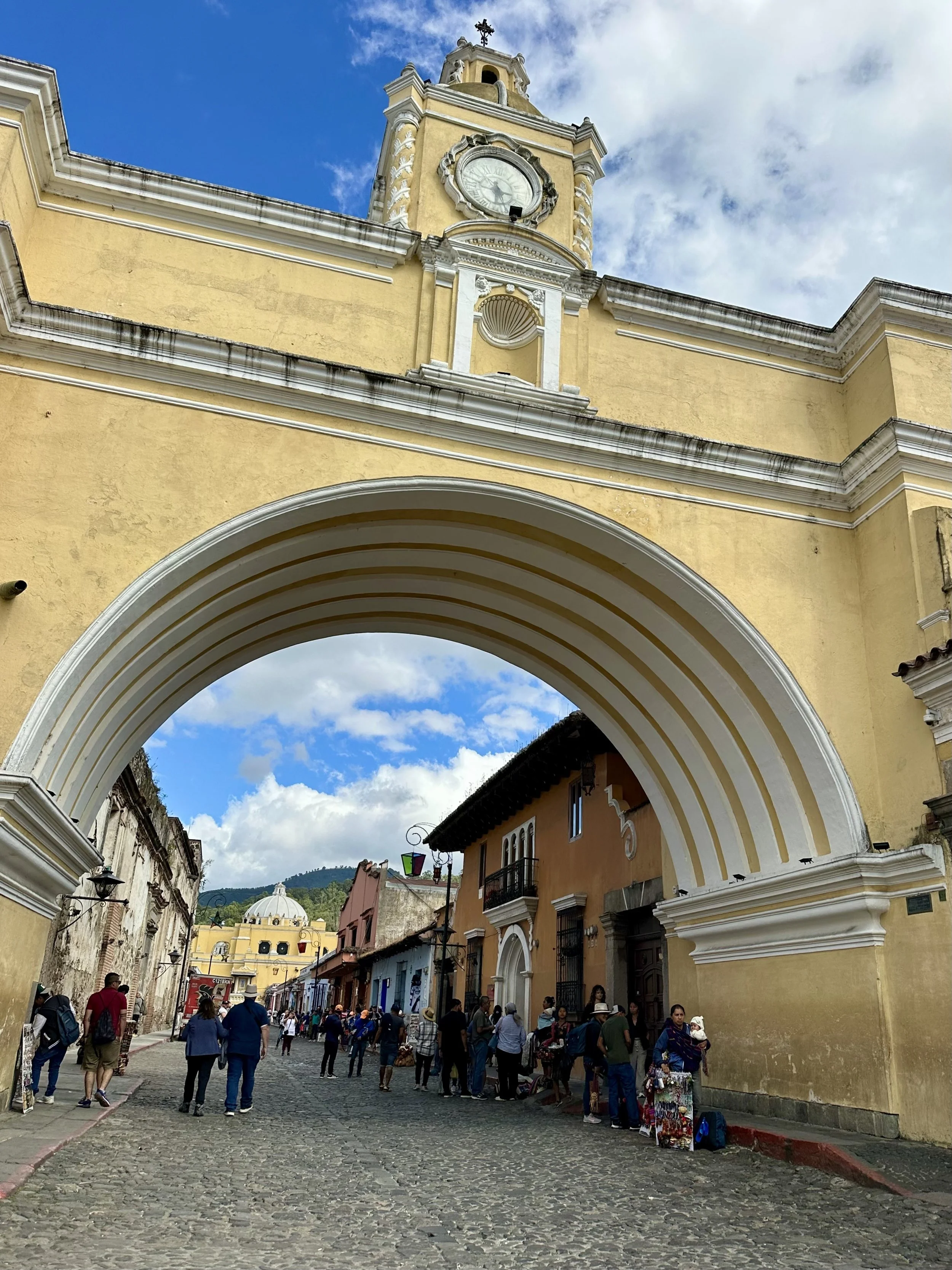
Arco de Santa Catalina
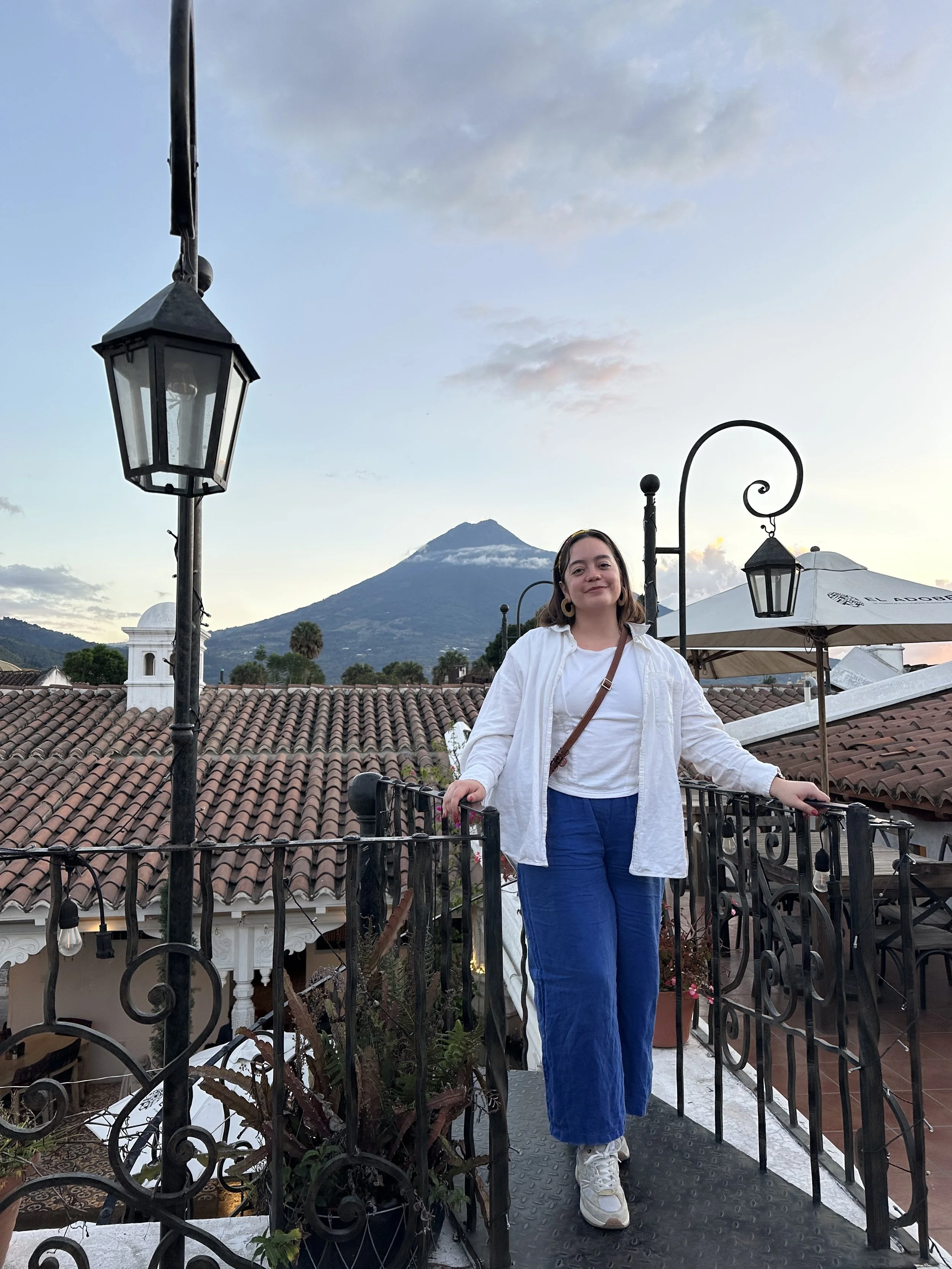
The room I’m staying in is pretty dark, the kind of dark that lets you sleep longer than you meant to. When I finally stepped outside, I was immediately blinded by sunlight. After a cloudy, chilly evening before, I felt genuinely grateful for it. Below are views from the hostel in the morning.
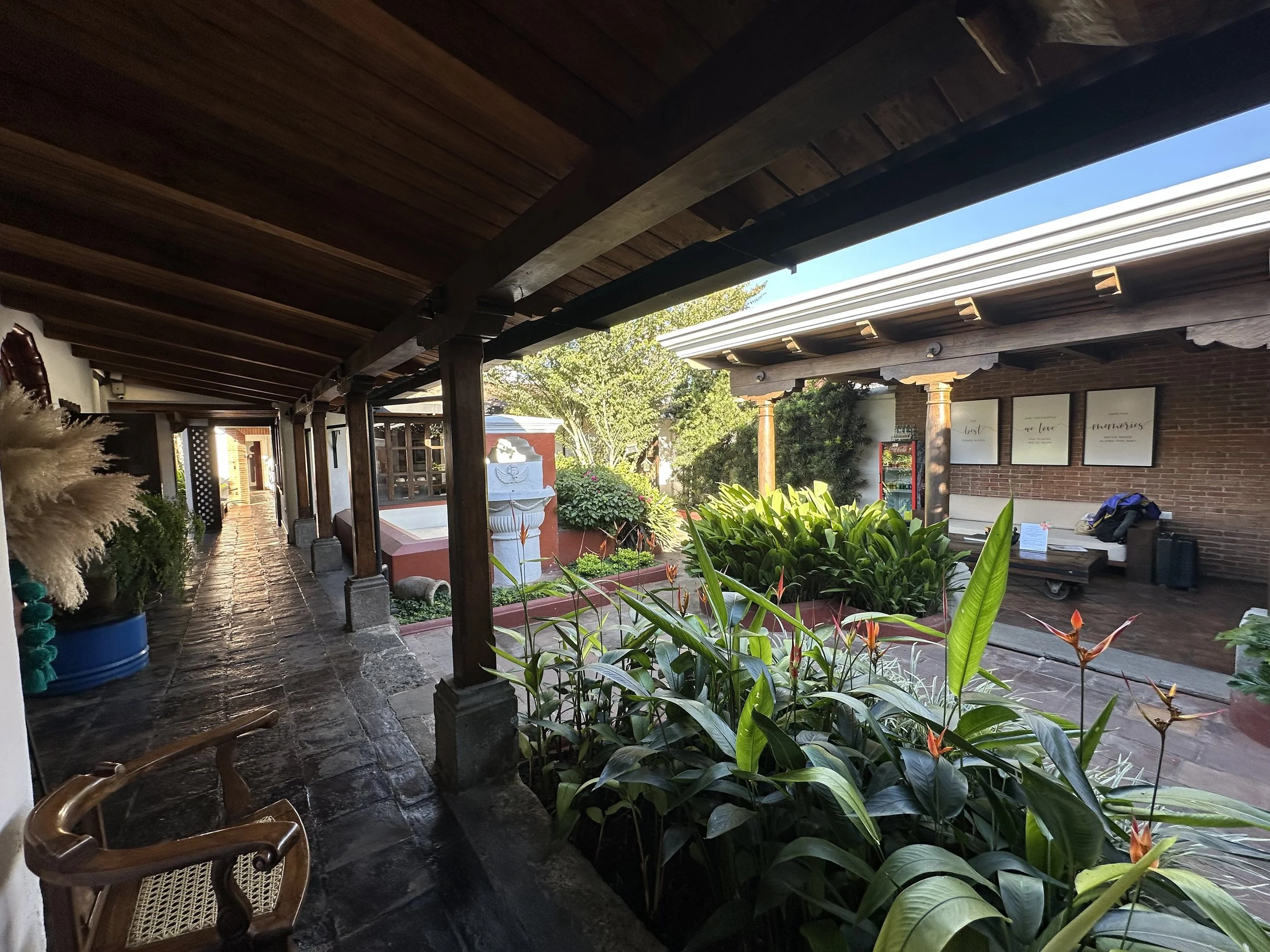
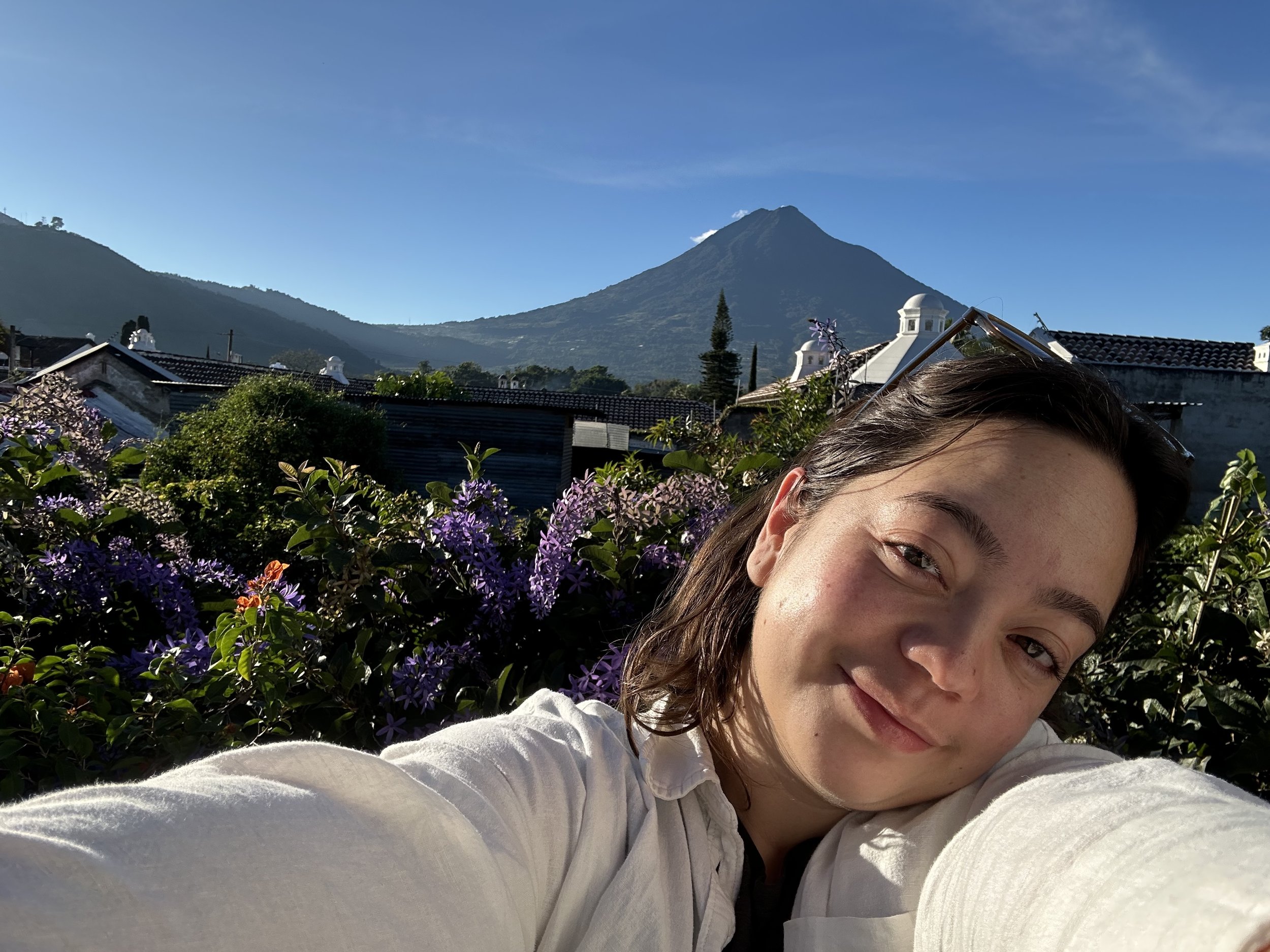
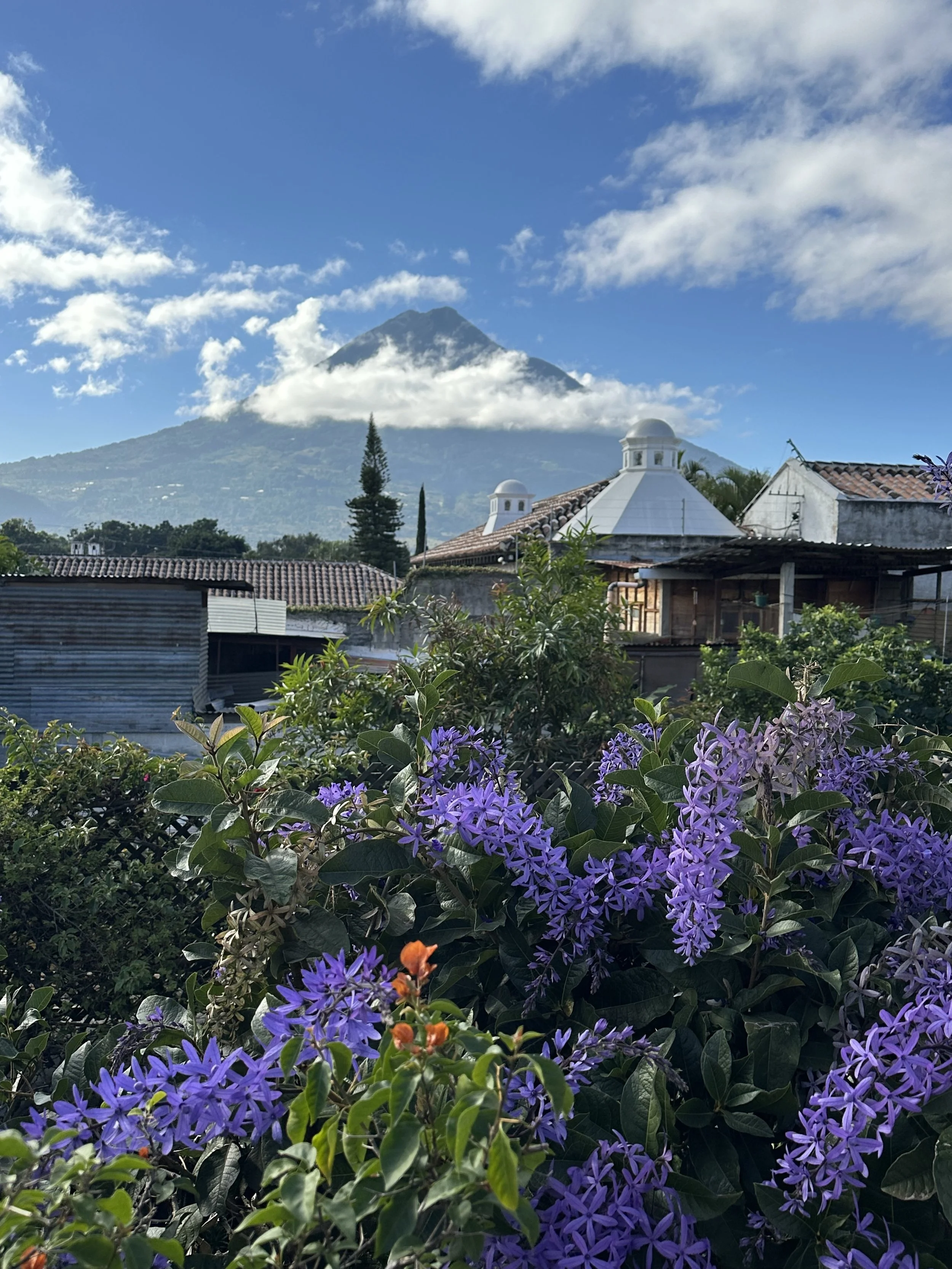
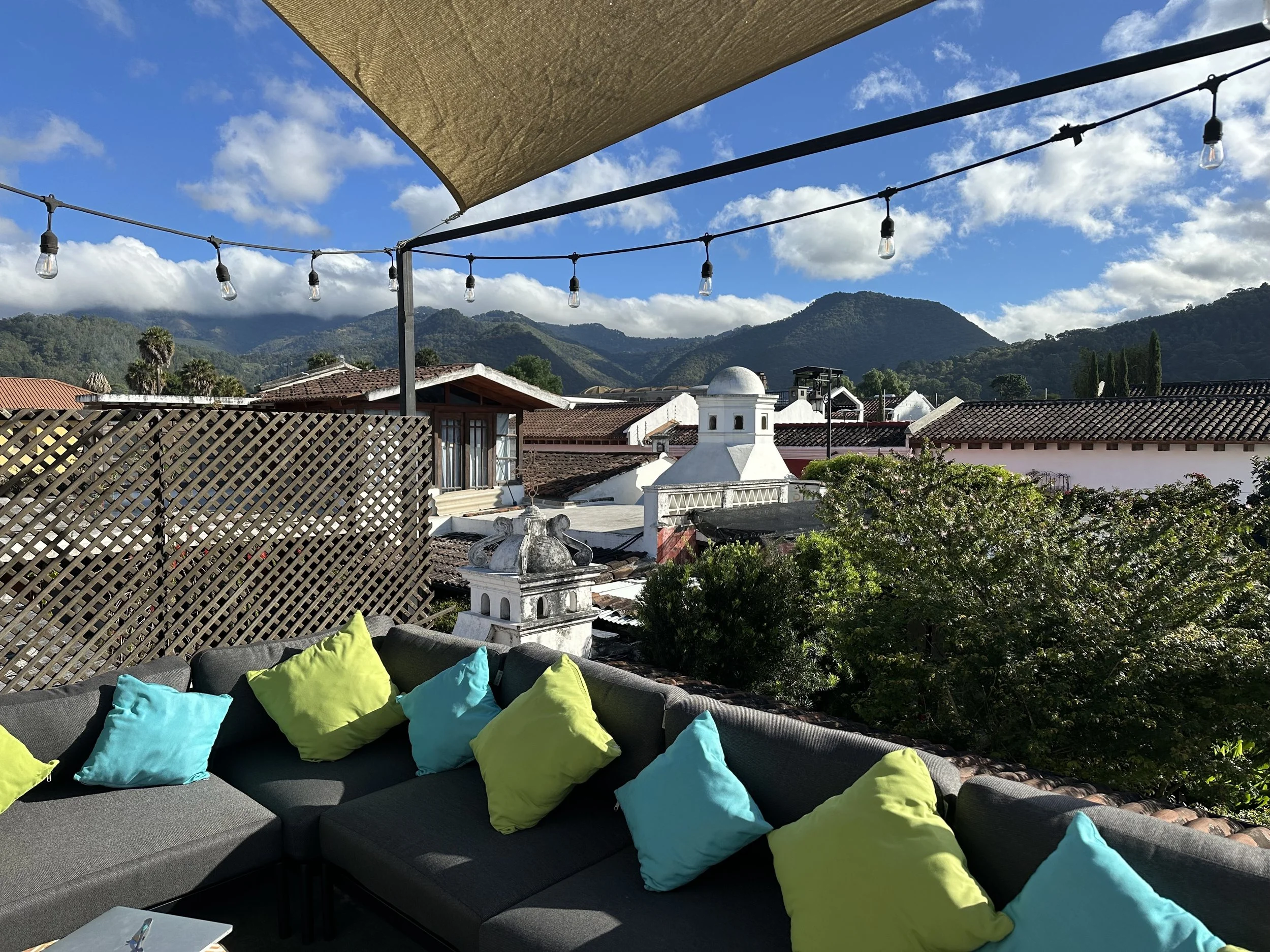
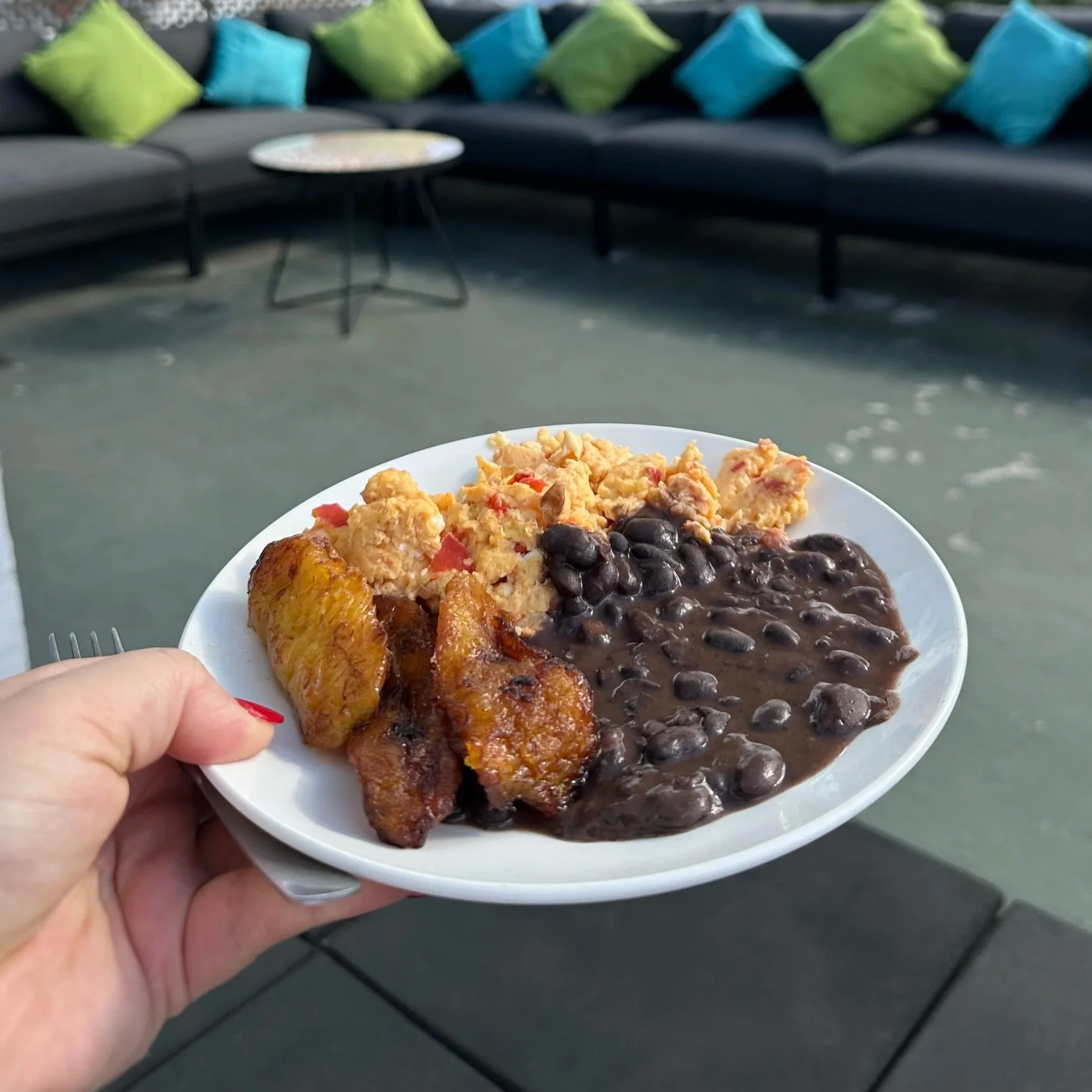
Breakfast is included at the hostel. Today it was Mexican eggs (or Guatemalan eggs? I’m not totally sure, because eggs cooked with tomato and onion are huevos a la Mexicana), beans, plantains, fruit, and a fresh cup of coffee. The coffee here is liquid gold—so smooth and flavorful that it can, and should, be drunk black. I met my dorm mates over breakfast, two women from Seattle. They’re funny and easy to be around, which instantly made the hostel feel more comfortable.
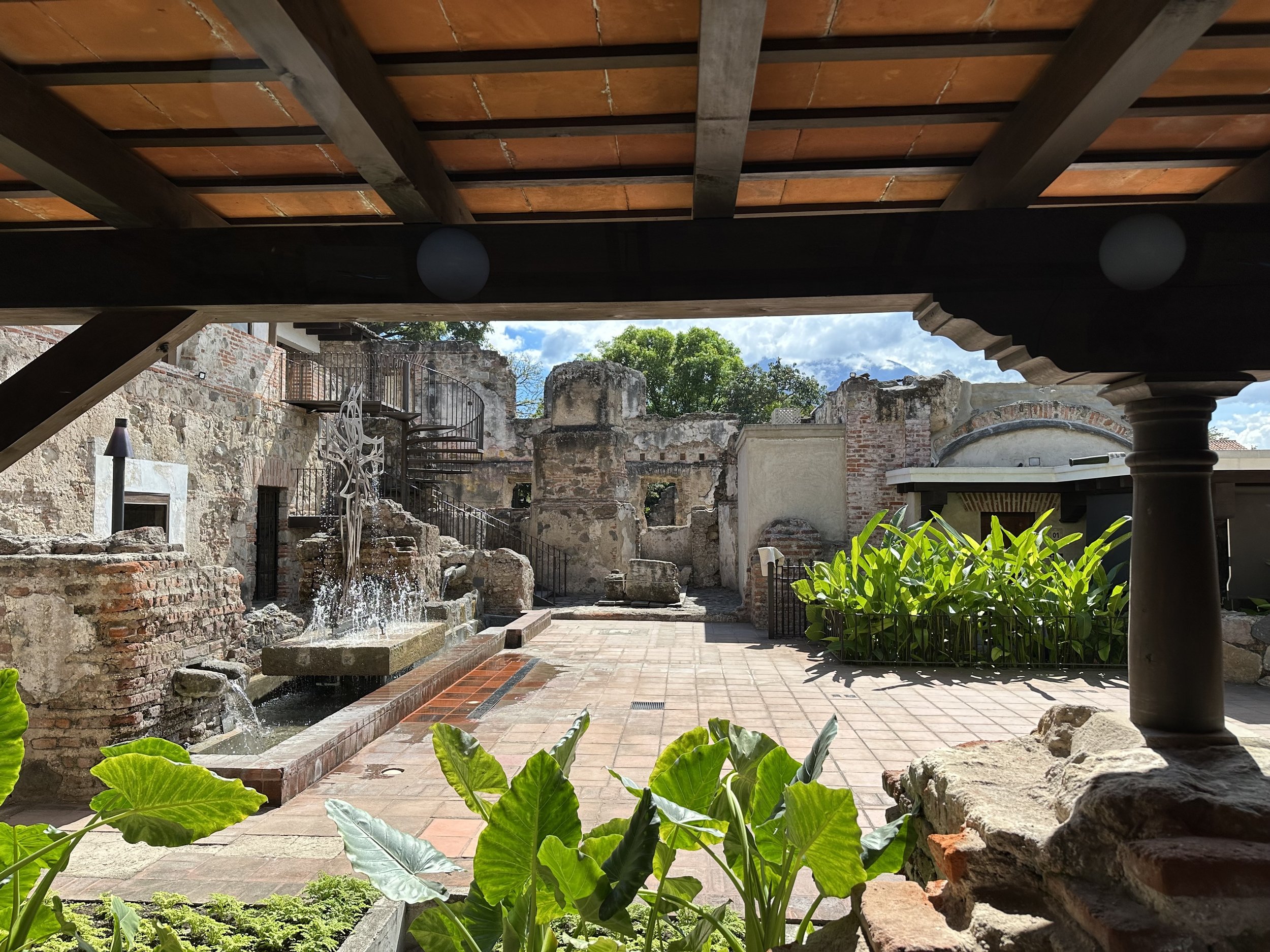
On my first day in a new country, I like to book a tour to orient myself. I signed up for a super cheap three-hour walking tour. There were five other people on the tour: a couple from Canada, a man from China, and two people from New Jersey. We walked in and out of churches and hotels that looked unassuming from the street but opened into stunning courtyards—fountains, flowers, even pomegranate trees, each place more beautiful than the last.
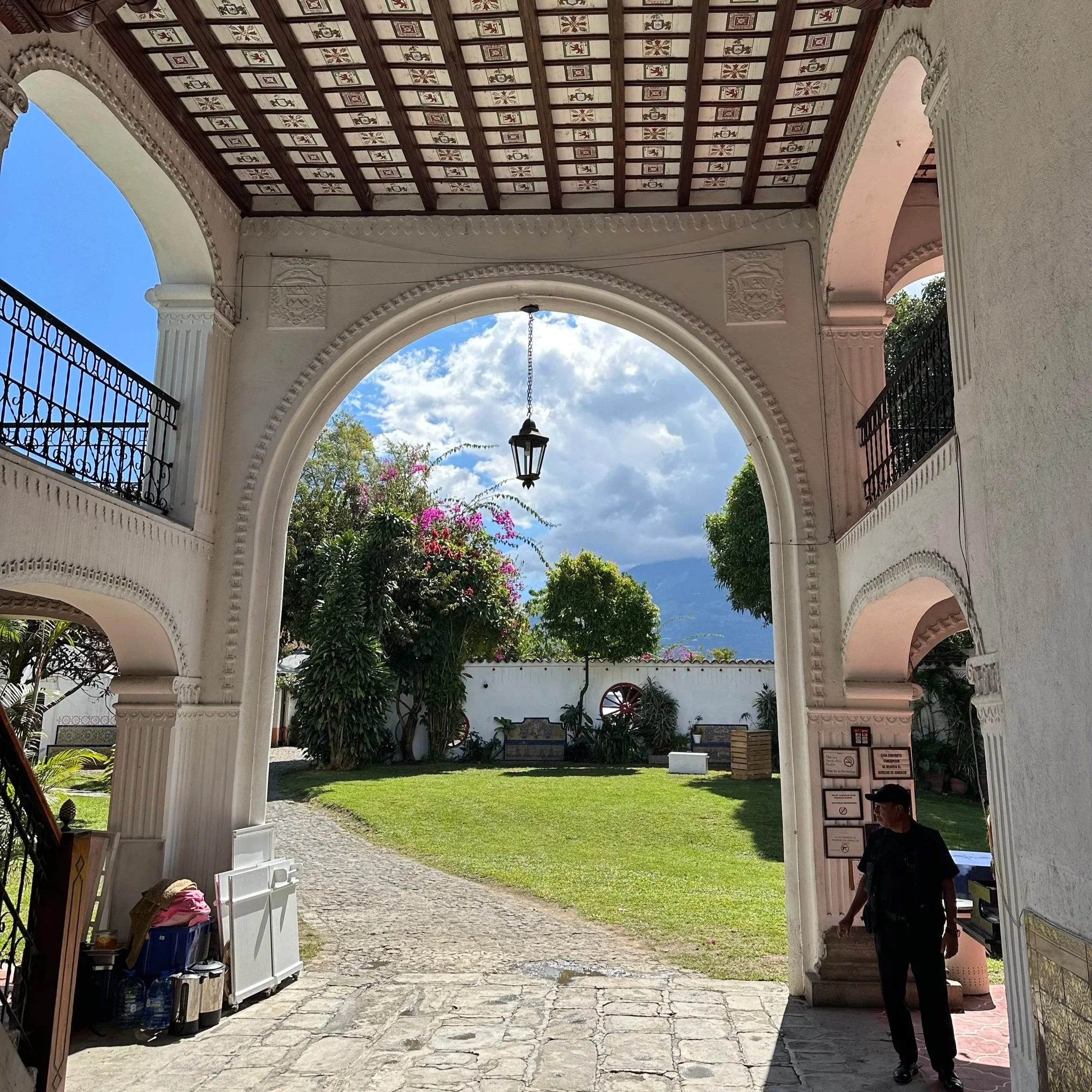
Peering into a courtyard of some hotel.
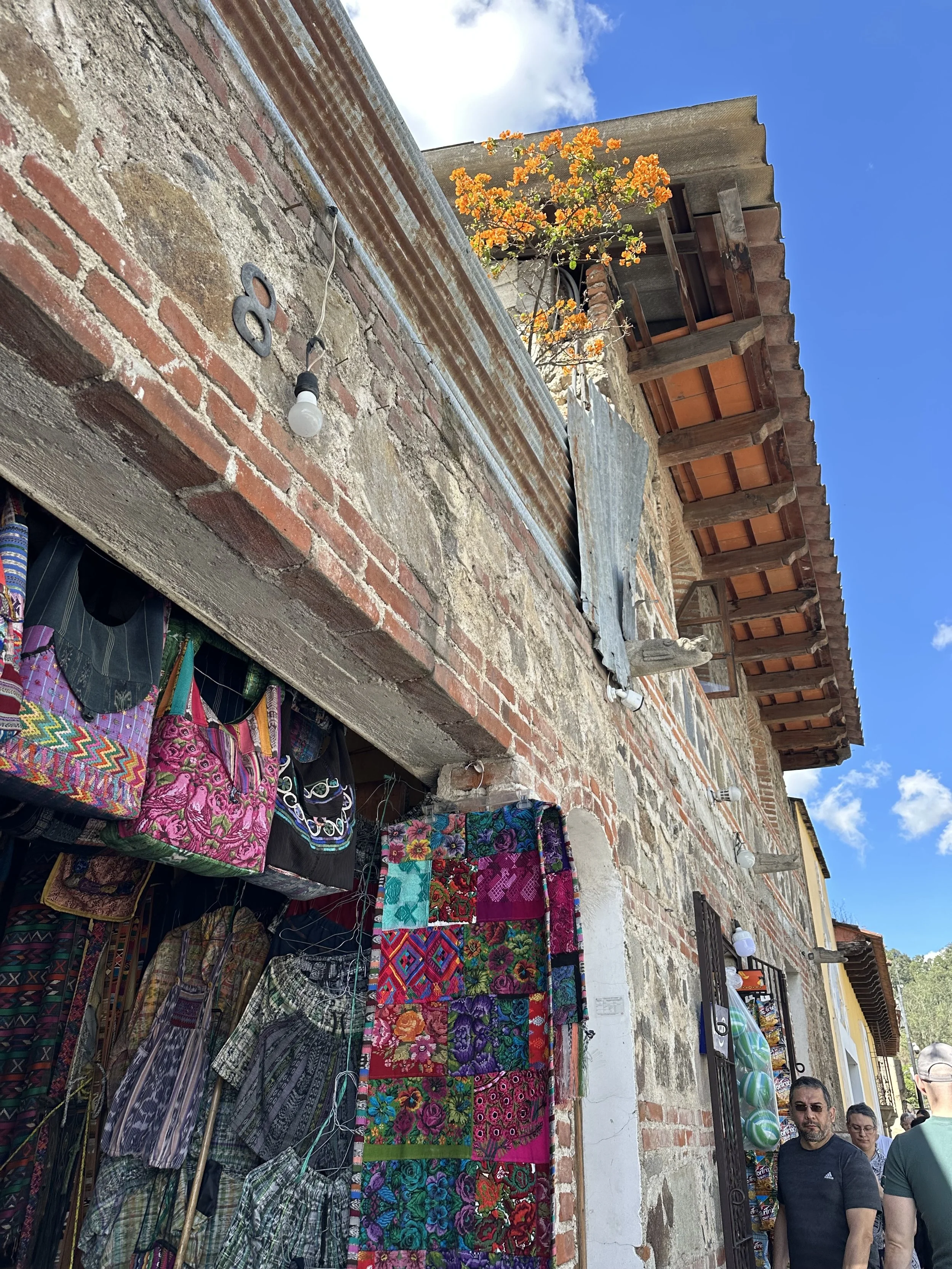
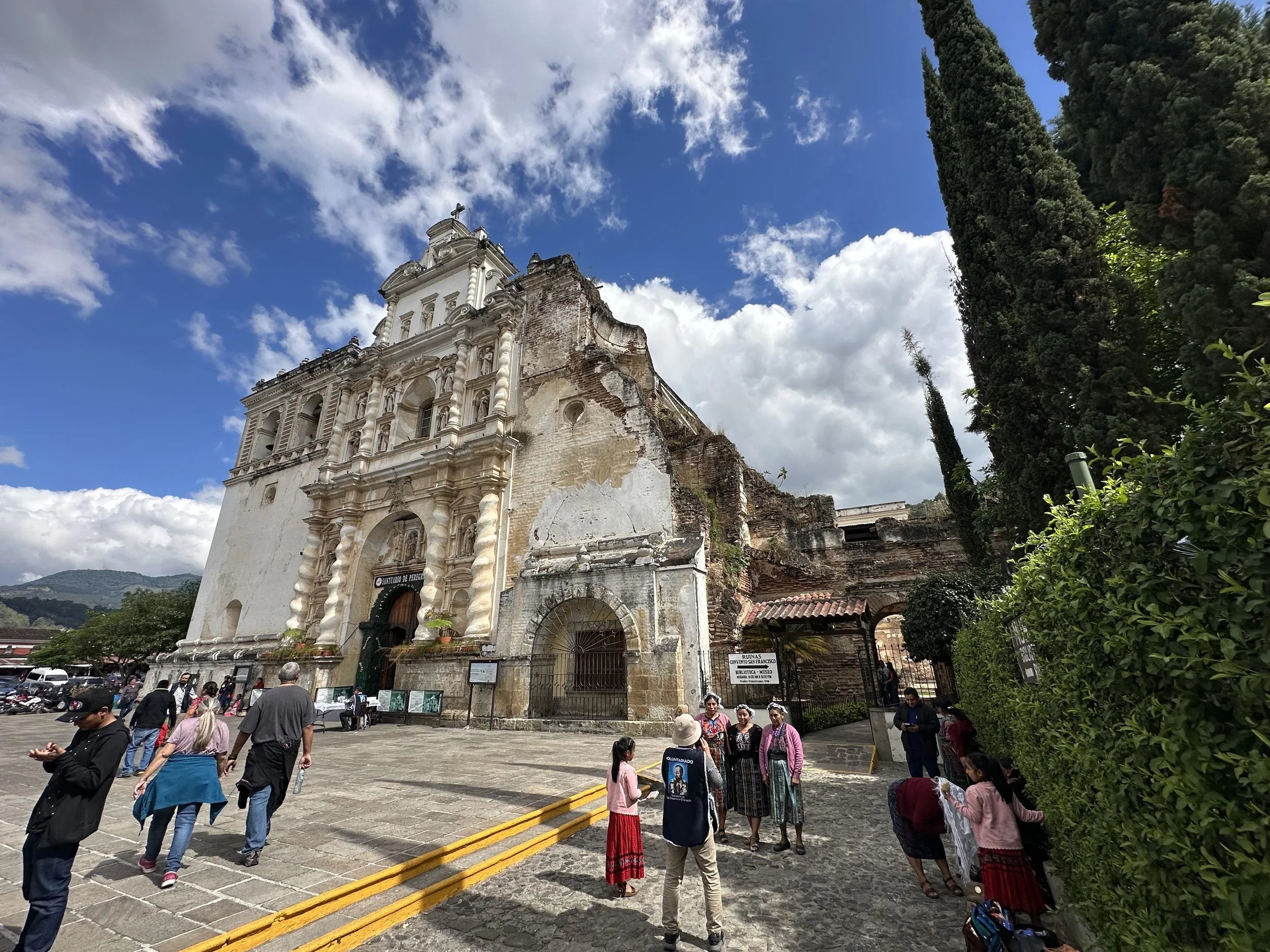
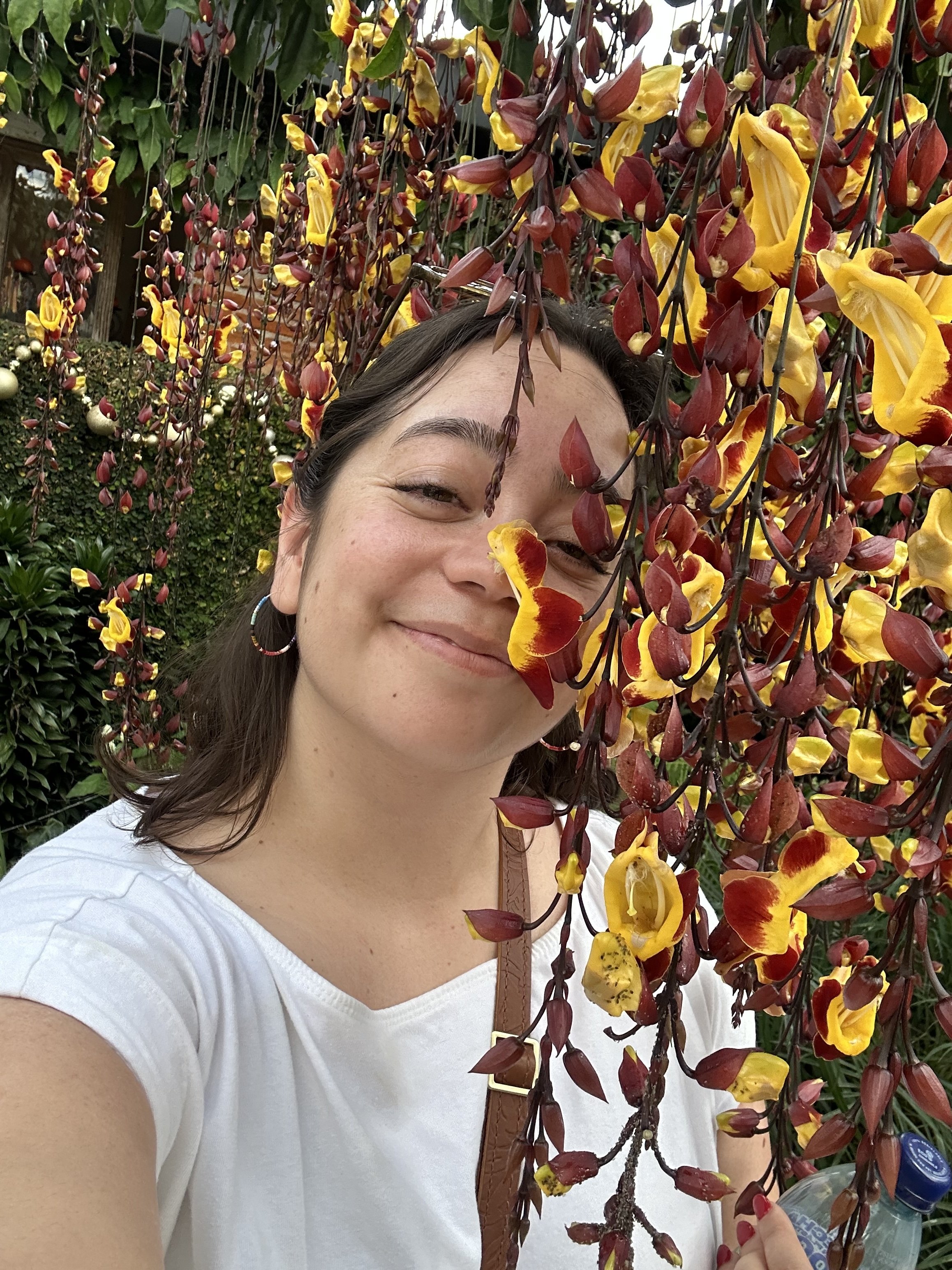
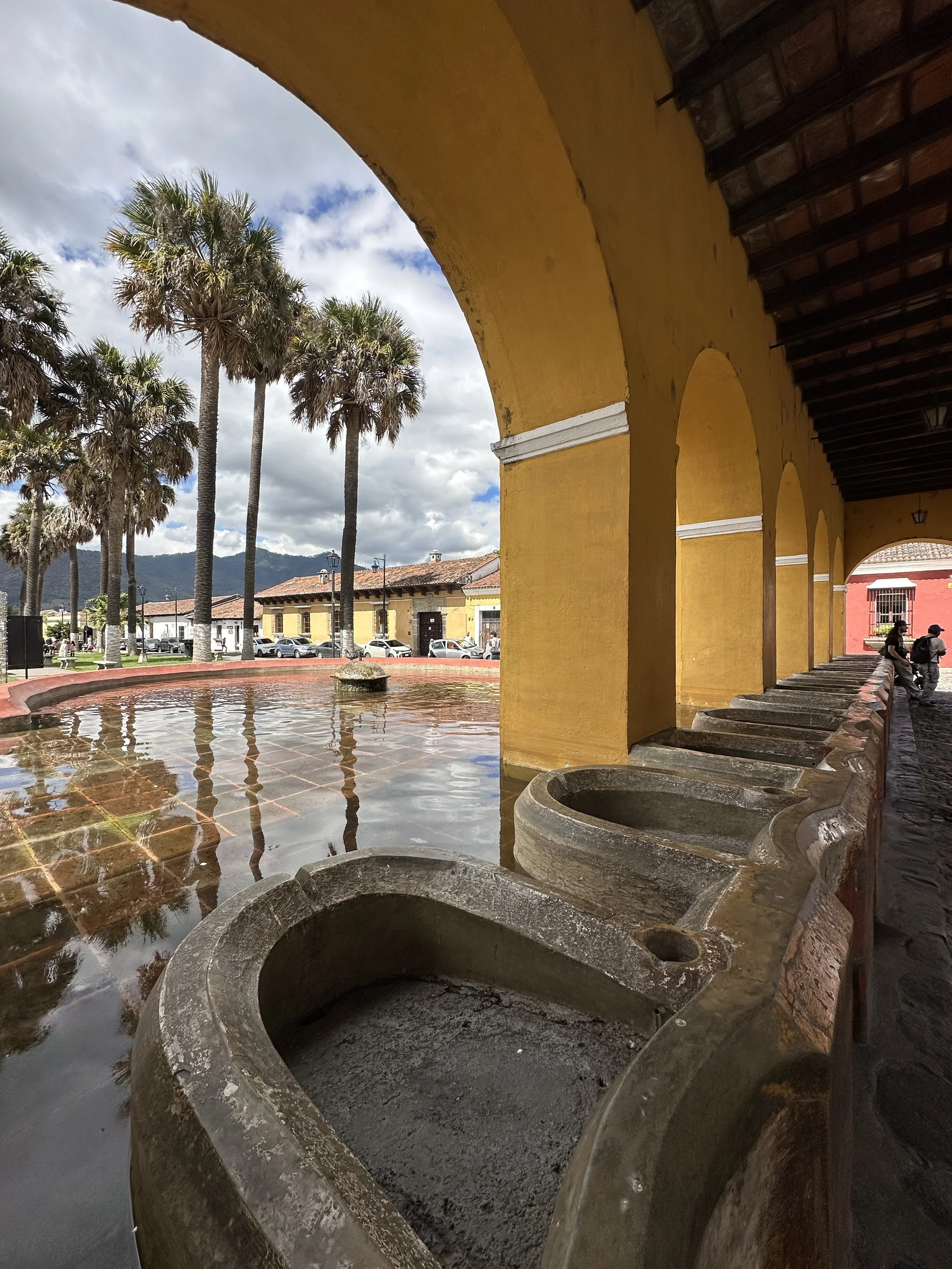
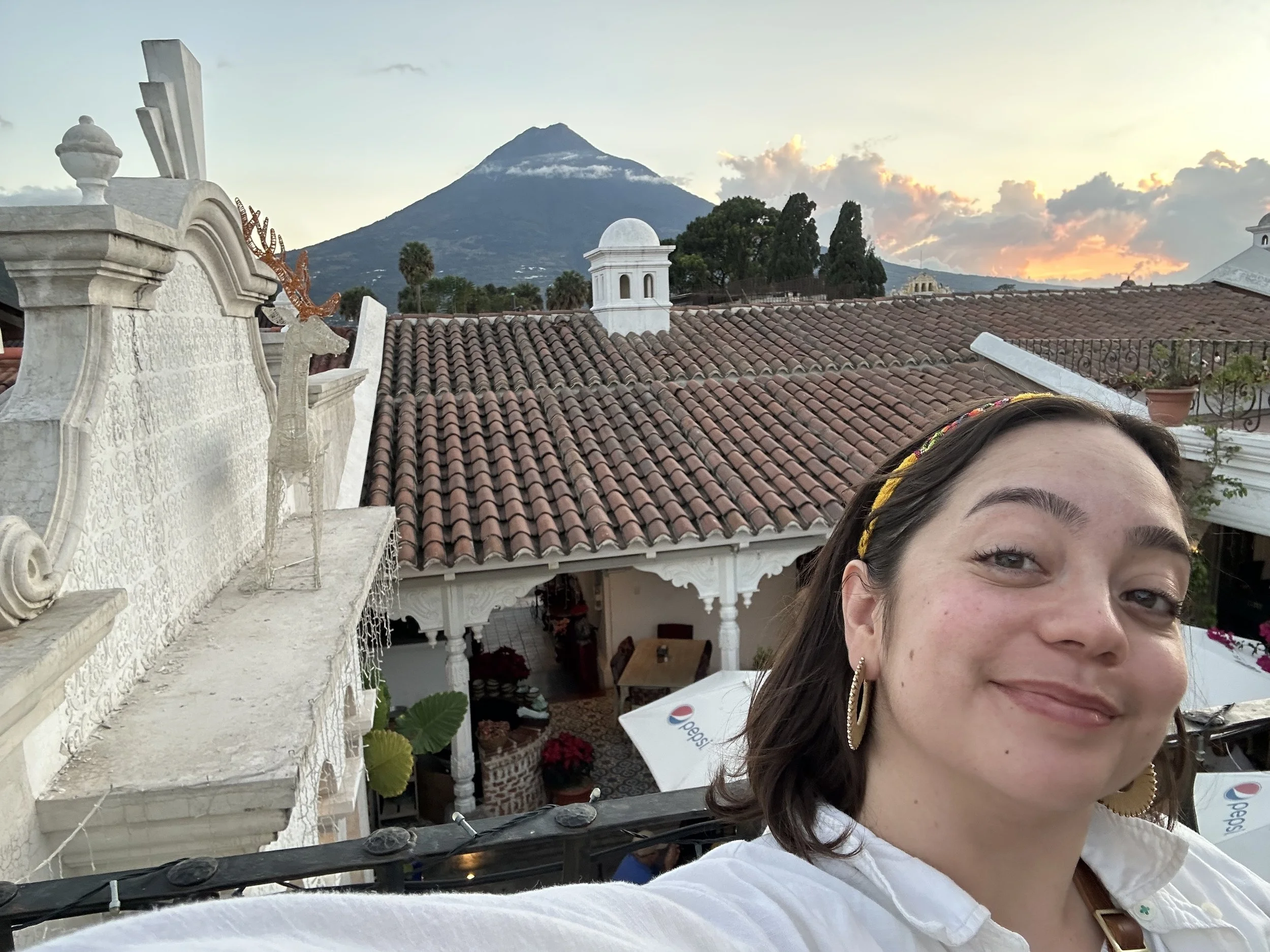
As we walked, our guide explained that Antigua was founded in the 1500s and once served as Guatemala’s capital. After devastating earthquakes in the 1700s, the capital was moved, leaving Antigua mostly frozen in time. What’s left is a city of cobblestone streets, colonial buildings, church ruins, and hidden courtyards framed by looming volcanoes. Walking through it felt like moving through history, and it’s clear the city works hard to preserve it.
This tour is how I first saw the famous Arco de Santa Catalina, packed with people trying to get the perfect photo. Our guide joked that the Arch is their Eiffel Tower and told us it was made of limestone, milk, eggs, and honey, which I found especially interesting.
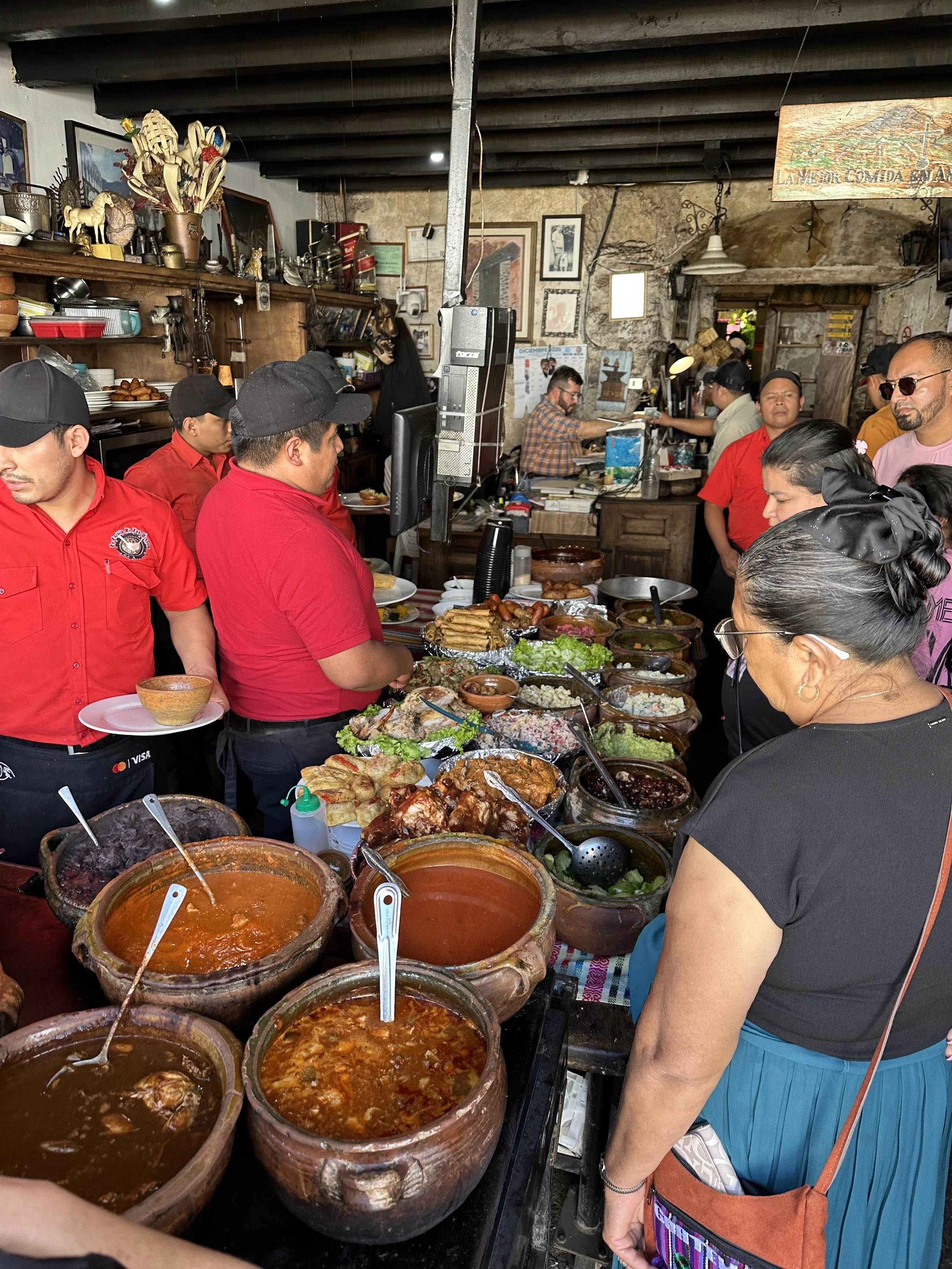
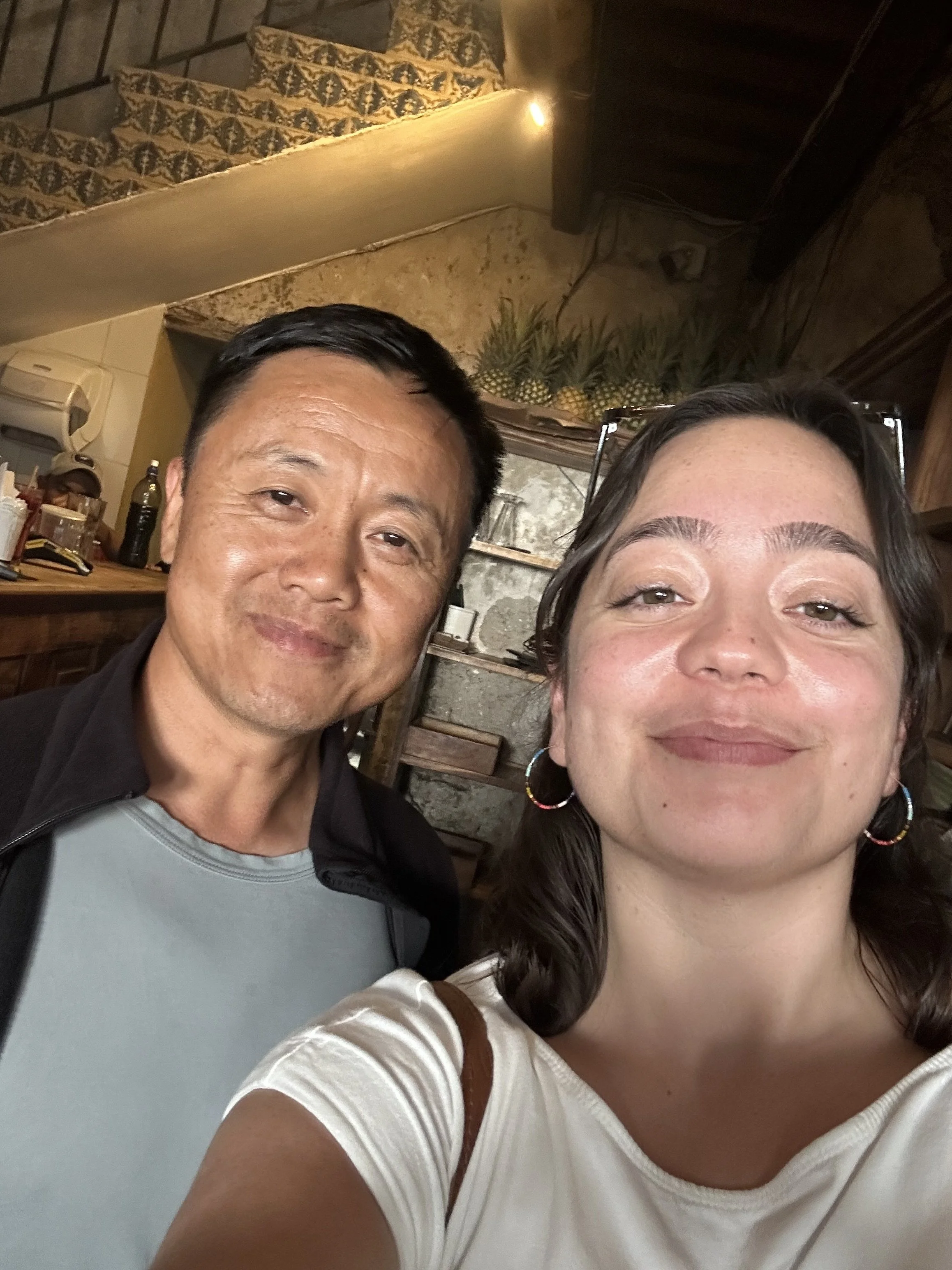
After all that walking, I stopped for lunch at a place the guide recommended. I planned to eat lightly since I had a food tour scheduled for the evening, but that didn’t exactly happen. I ended up eating with one of the people from the tour, Robert, who was nearing the end of a two-month trip through South and Central America. He told me about his travels and about living and growing up in China. He seemed genuinely happy just to be alive and taking it all in, which I found inspiring.
I meant to head back to the hostel to rest, but instead wandered into a massive textile shop “just for a few minutes.” It was beautifully overwhelming: clothing, pottery, tablecloths, woven tapestries, jewelry. I went in wanting a scrunchie and a headband because of the humidity and came out over an hour later. Traveling alone makes it easy to lose track of time. There’s no one to say, “You ready to go?”
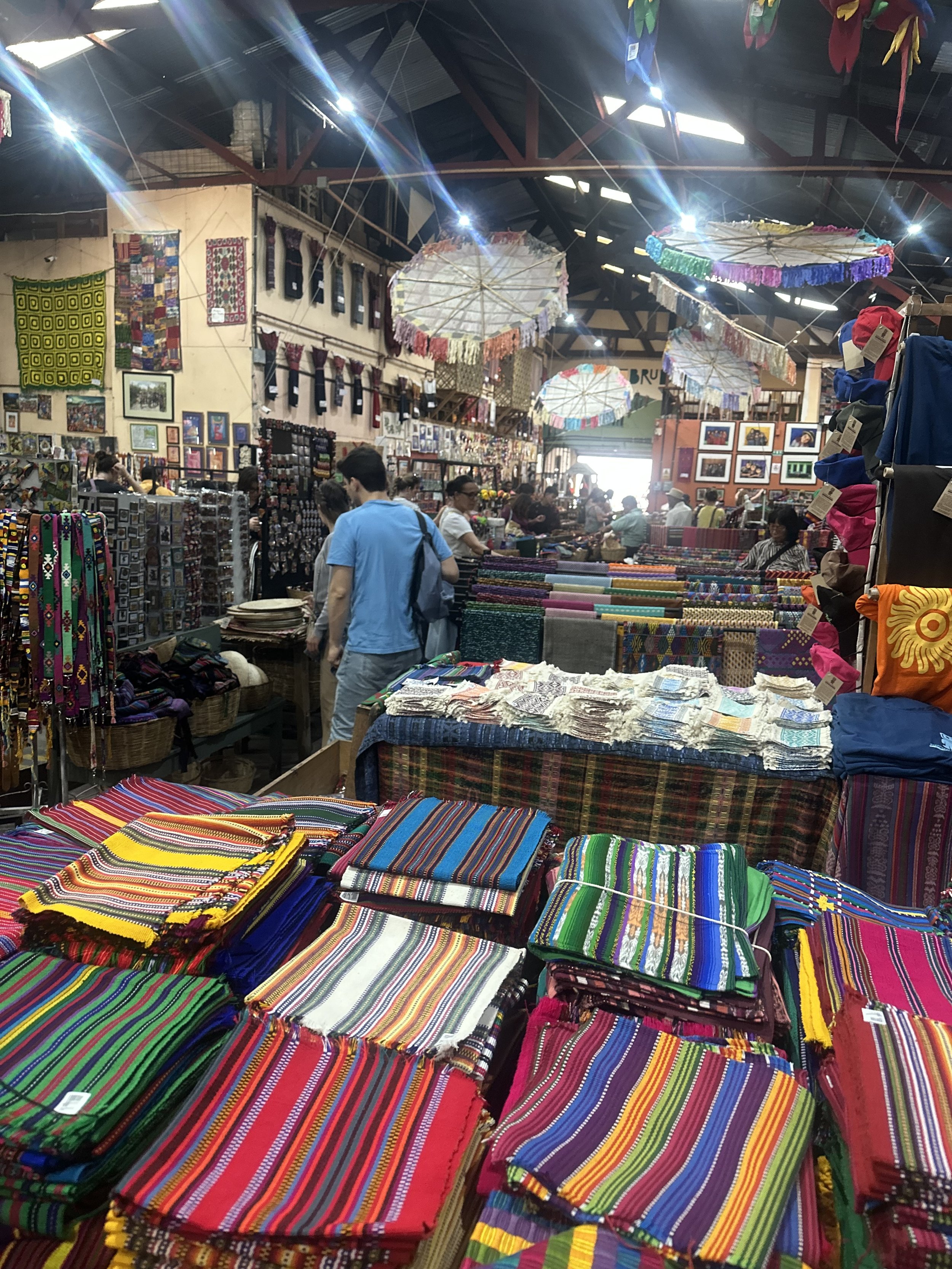
Textile shopping at Nim Po’t
Before I knew it, it was time for my food tour. Our guide, Xoshil, wore a bright hot-pink scarf with matching earrings and looked effortlessly cool. We walked all over the city, stopping at five places. First was a quesadilla and a cold drink I can’t remember the name of, made with pepper, cinnamon, lemon, clove, and brown sugar.
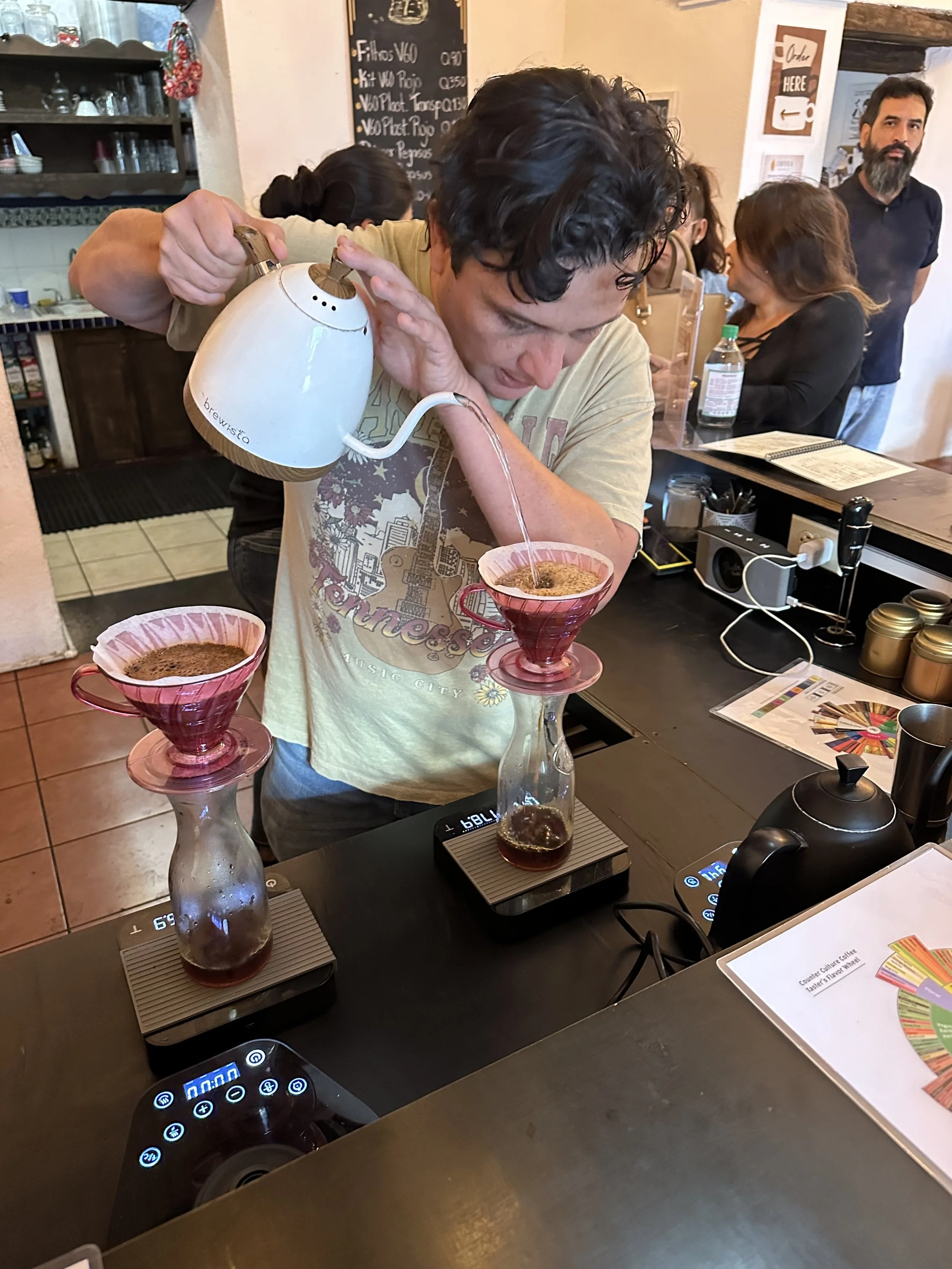
She then took us to a specialty coffee shop that had just been named one of the top 100 coffees in the world in 2025. The town was so proud, she said, that people came by and showered the shop with gifts. I could see why—the coffee was incredible. We watched as the owner made us each a cup and explained the citrusy notes we would taste. To me, it just tasted like really good, smooth coffee, but I don’t think I have the palate for specific notes. It reminded me of wine tastings, when they ask what flavors I taste, and I’m like… umm, grapes?
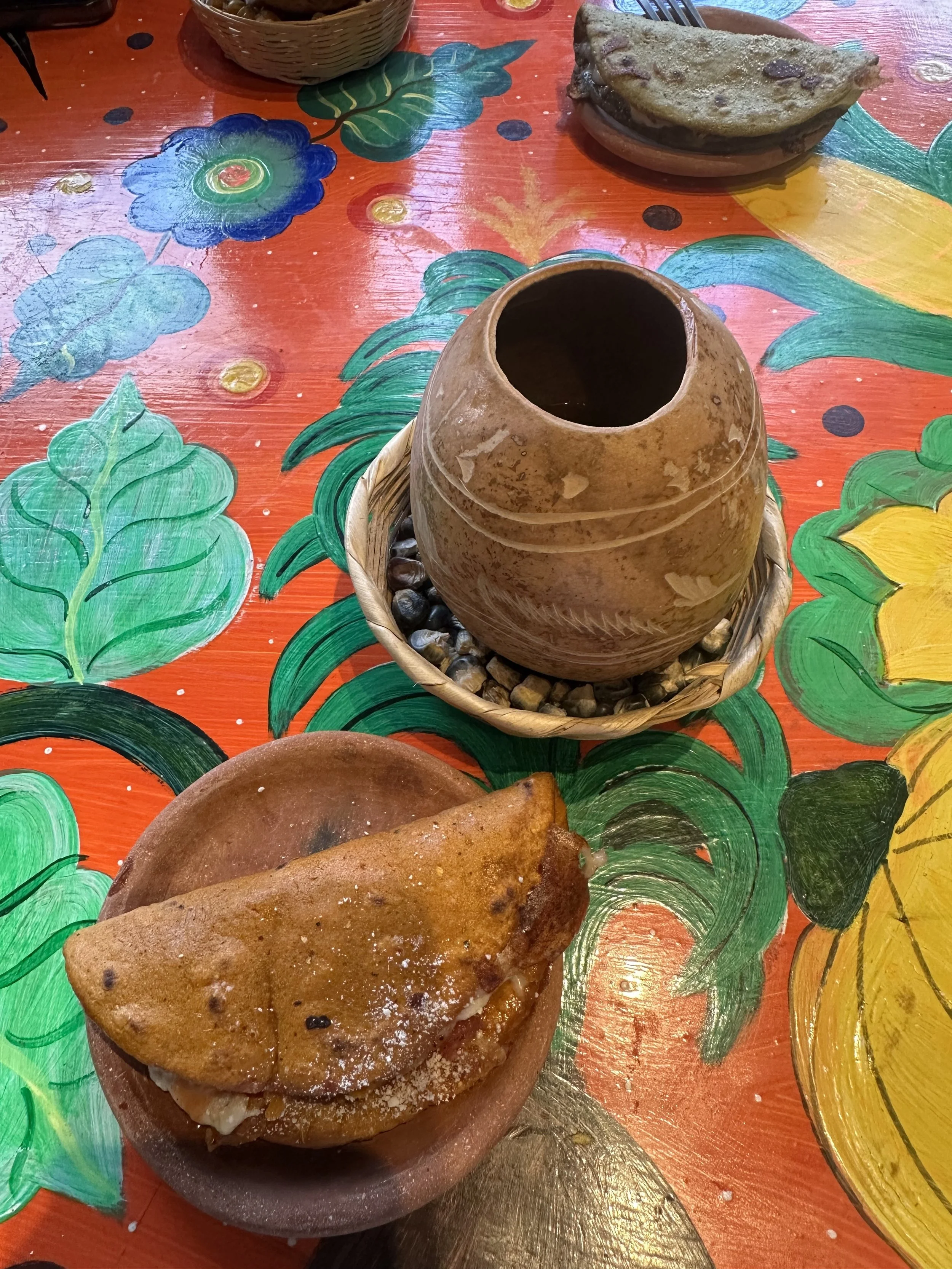
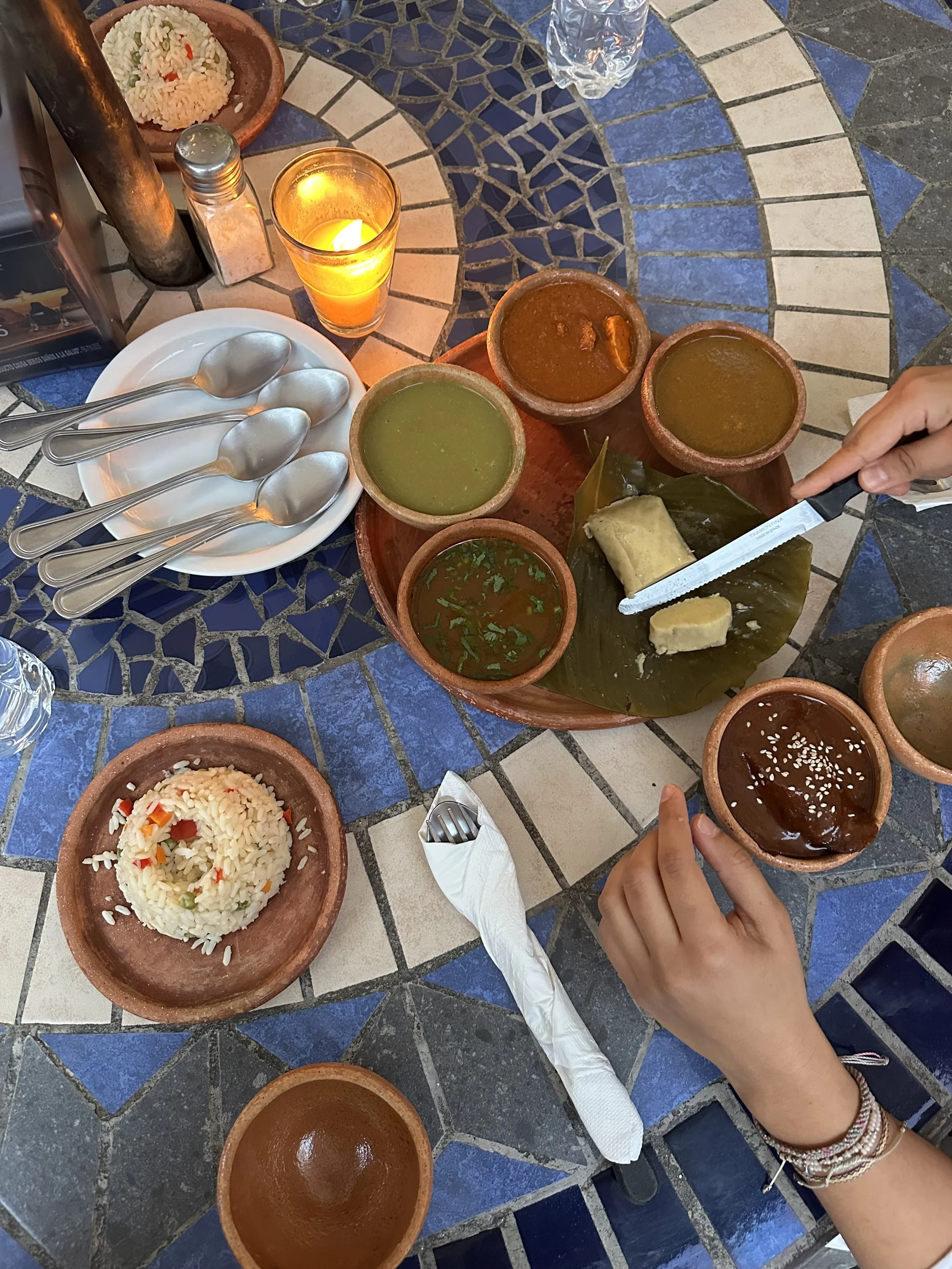
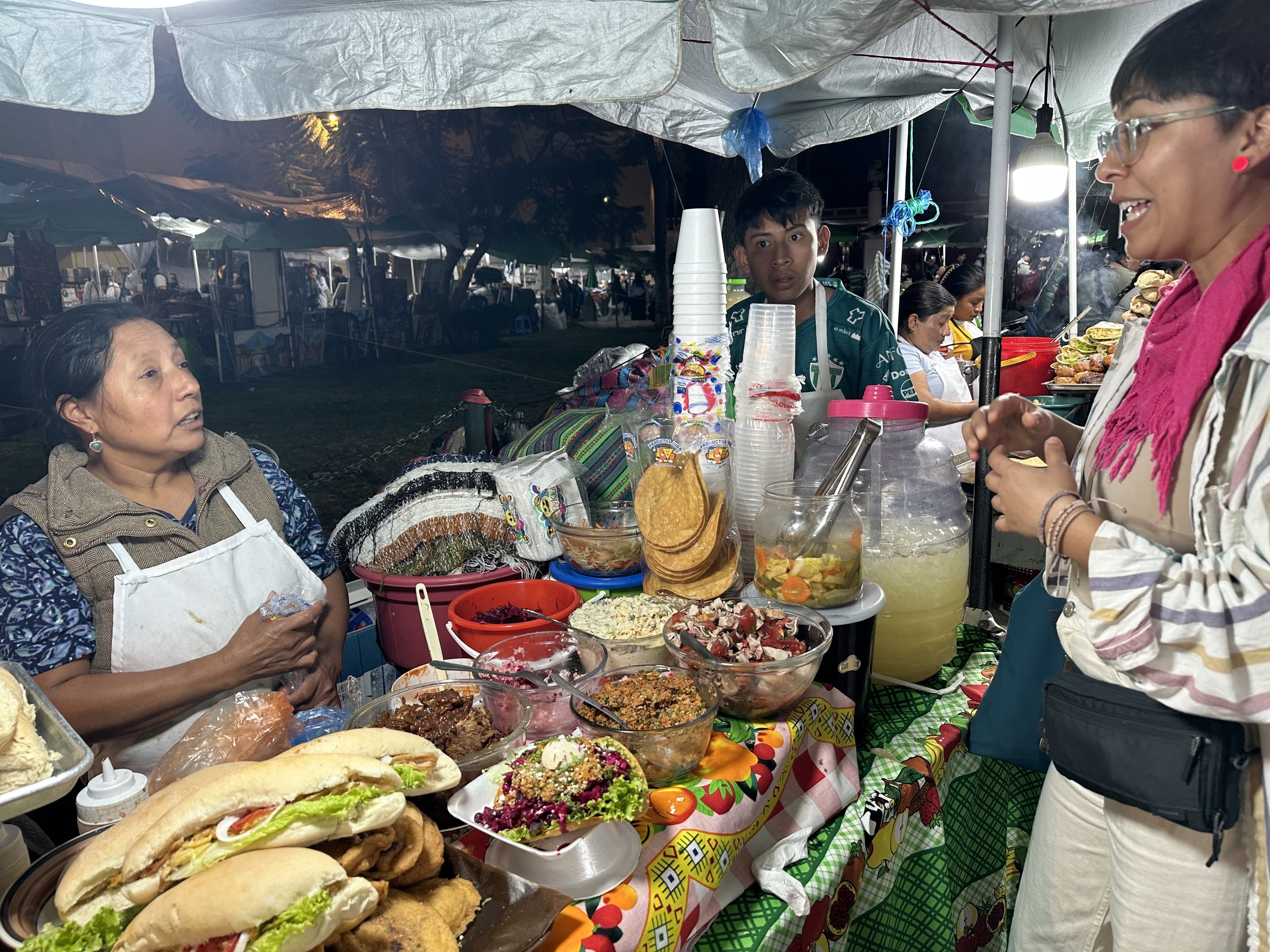
We continued on to try local dishes like pepián and other stews, along with street food like atole and pupusas. The tour ended with gourmet chocolate and a star fruit cocktail at a fancy bar. Somewhere along the way, Xoshil stopped feeling like a guide and started feeling like a friend. She even invited me to spend New Year’s with her and her friends. I felt incredibly grateful. I didn’t have plans and didn’t really want to be alone.
After the tour, I met up with my friend Emilsis, a newer friend from work. We realized we’d be in Guatemala at the same time and were determined to meet up. It’s fun to say that our first hangout outside of work was abroad. She comes almost every year around Christmas to visit family who live about two hours outside of Antigua, though she likes coming into the city to shop.
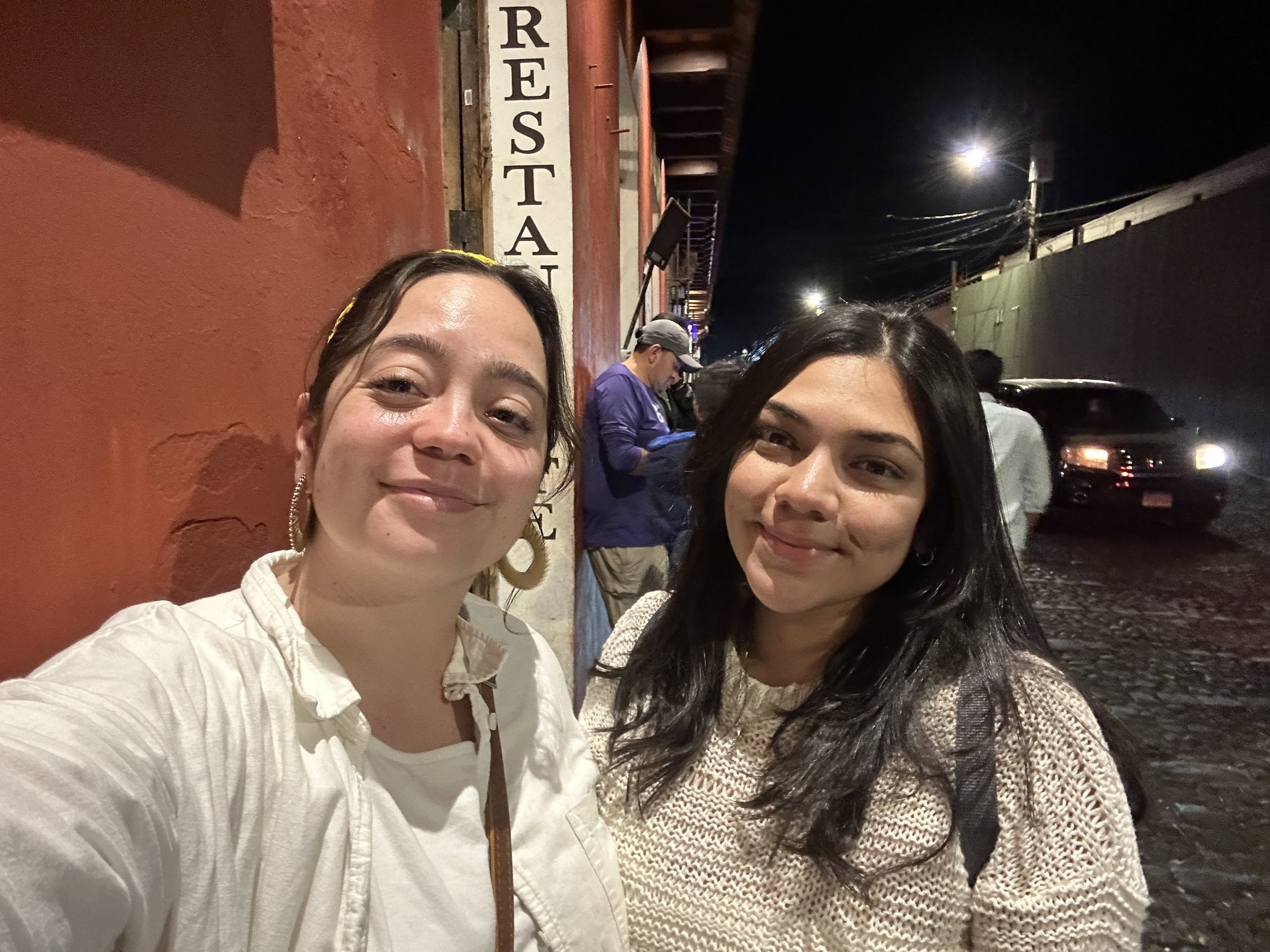
Even though I’d only been in Antigua for a day, it felt comforting to see a familiar face. I met her, her mother, and her cousin, who helped us barter for jewelry from street vendors before we sat down for coffee and pastries. It was already 10 p.m, and I was exhausted and thirsty, so I stuck with water. Emilsis told me that no matter how much water she drinks, she always feels dehydrated in Antigua. I did as well. I had a constant headache and knew I was still just adjusting to the high altitude of the city. I thought I wouldn’t have much of a problem since I travel to Mexico City a lot, which apparently has a higher altitude. Hopefully, my body will adjust soon.
When I got back to the hostel, my two roommates told me they’d been worried because I’d been gone all day. They’re so sweet. We sat on our bunks and caught up on everything we’d each done, the kind of end-of-day debrief that feels oddly comforting when you’re far from home. I checked my smartwatch to see how many steps I’d walked: 24,000, probably 10–12 miles. As tired as I was, I went to sleep feeling full, in every sense of the word, and grateful for how far my feet were able to take me.
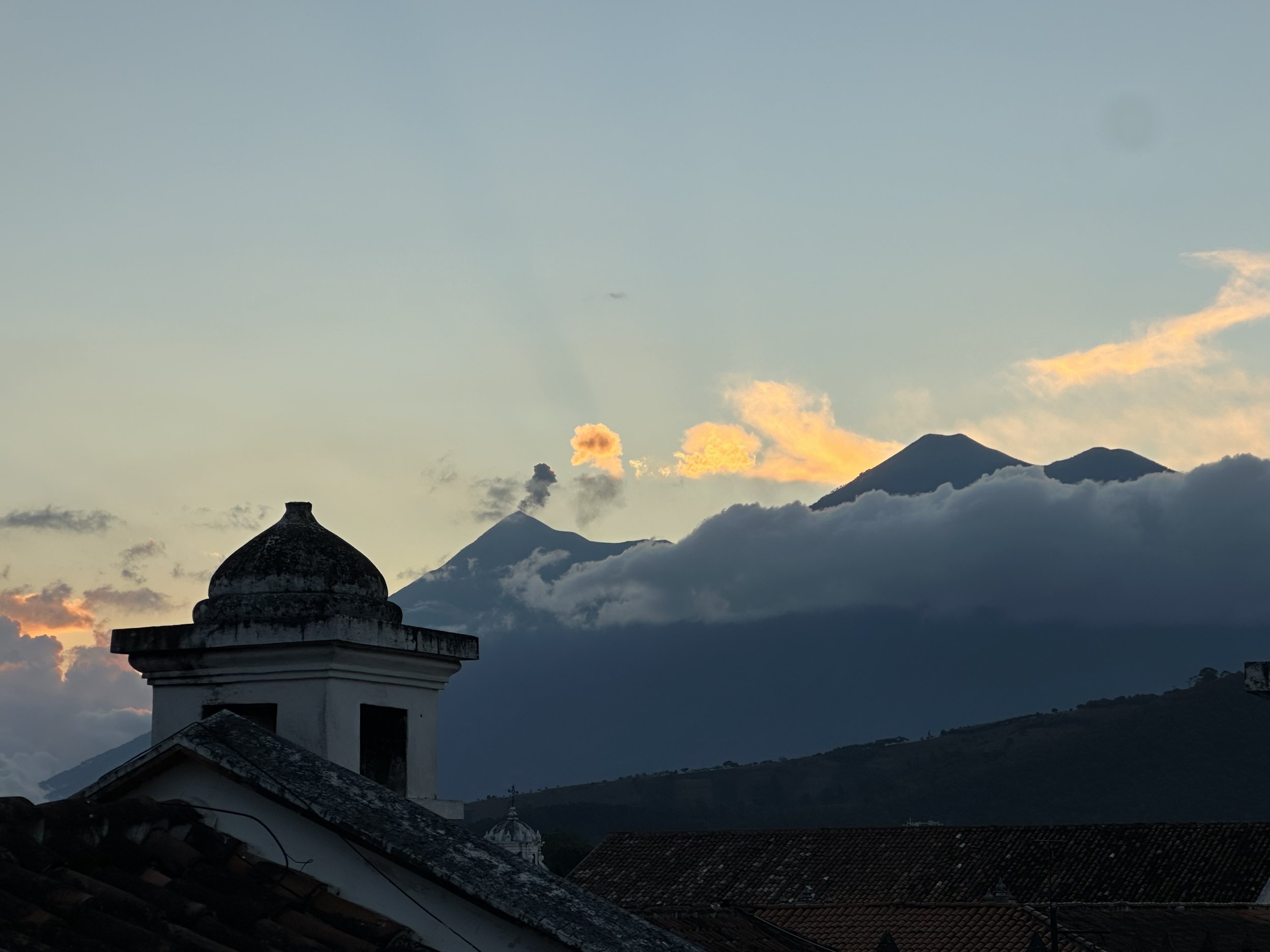
View of Fuego Volcano erupting at sunset.
