Cooking Pepián
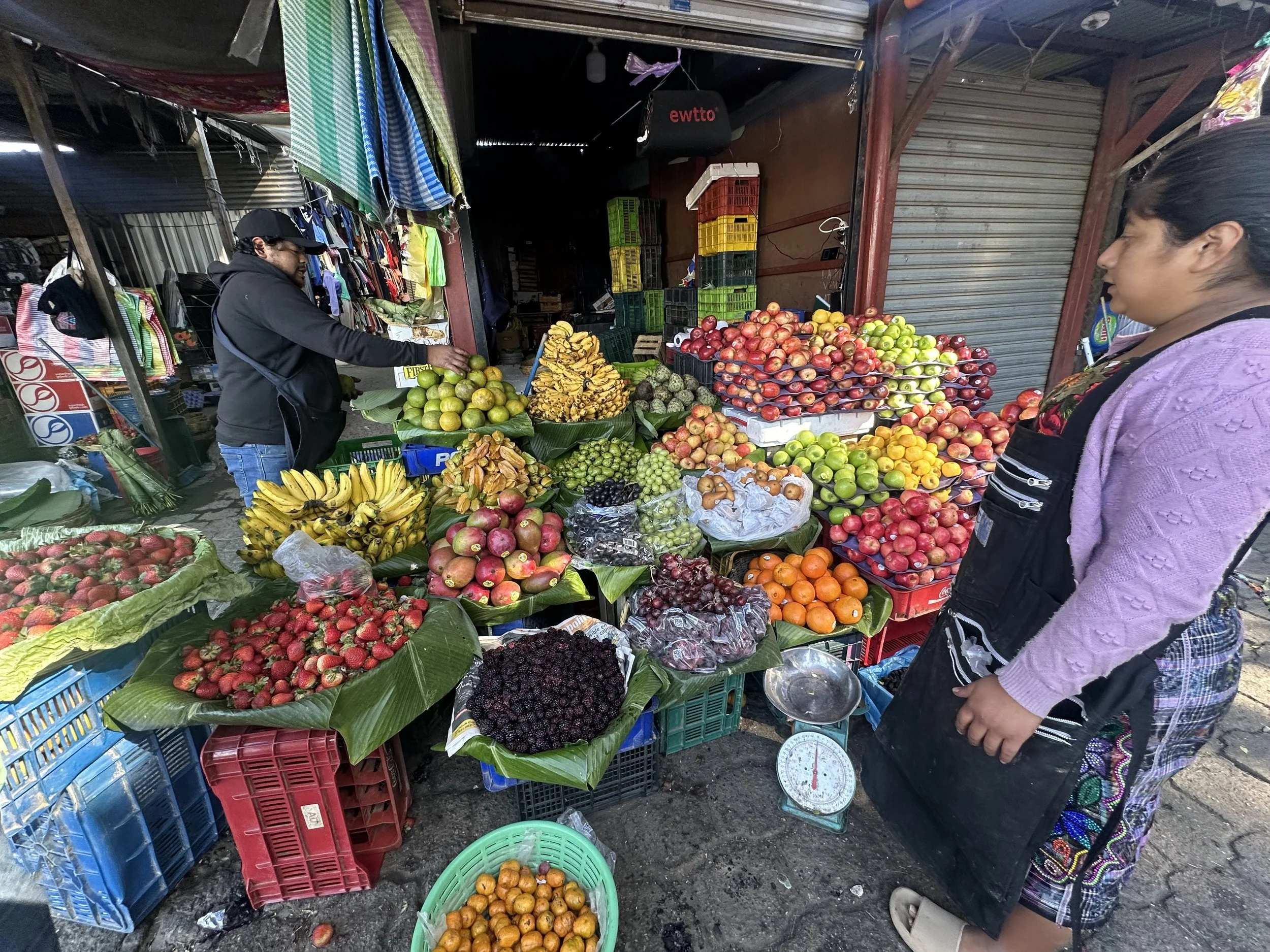
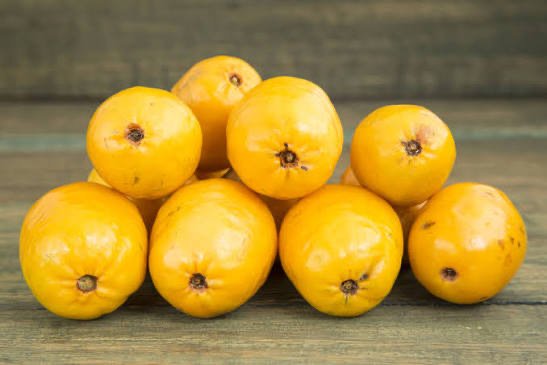
A fruit stall in an open-air market in Antigua.
Pepián is Guatemala’s national dish. It’s a rich, smoky stew with a thick sauce made from roasted pumpkin and sesame seeds, chilies, tomatoes, and spices, usually served with rice and tortillas. It feels like comfort food, the kind of dish that carries centuries of history. Pepián evolved through a fusion of Indigenous Mayan and Spanish colonial influences, incorporating new spices and meats like chicken over time, though it was originally a vegetarian dish.
I tried pepián for the first time yesterday on a food tour, and I immediately knew I needed to learn how to make it. As soon as I got back, I googled pepián cooking classes, found one happening this morning, and signed up without thinking twice.
This morning around 9am, I met up with Axel, my guide, at a huge food market on the edge of the city. We walked through what is usually a bustling place, but Axel explained that today wasn’t a typical market day, which made everything feel calmer and less crowded. Even so, every stall was beautifully arranged with piles of fruit, spices, vegetables, and fresh herbs. There was also a section with meat and fish, including whole chickens hanging from the ceilings of the stalls.
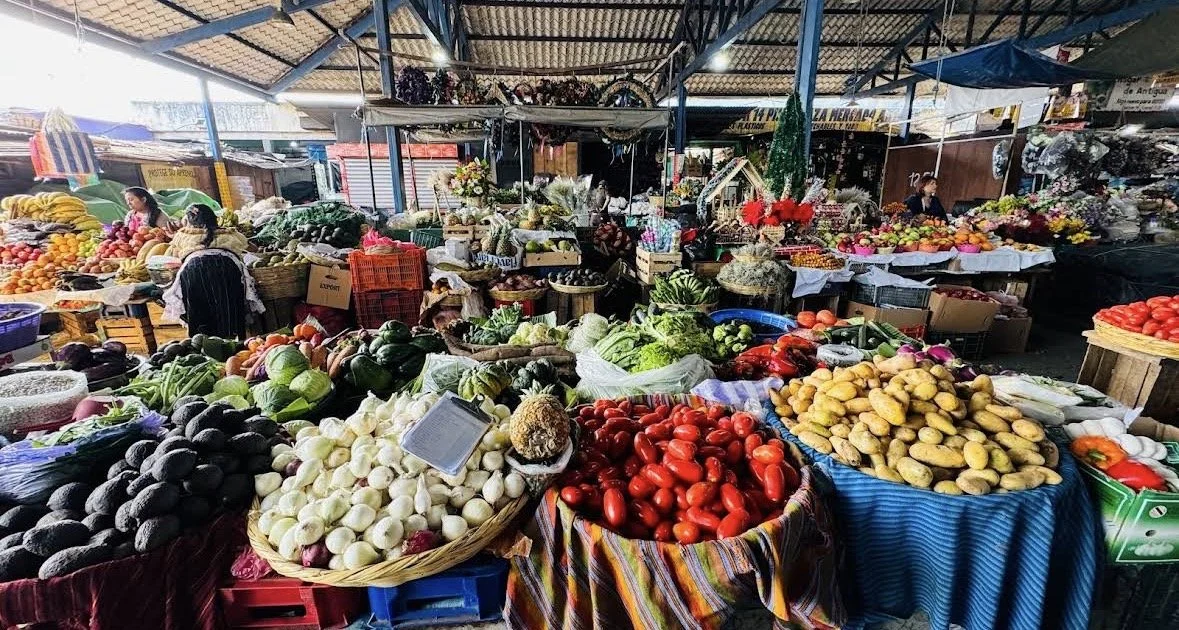
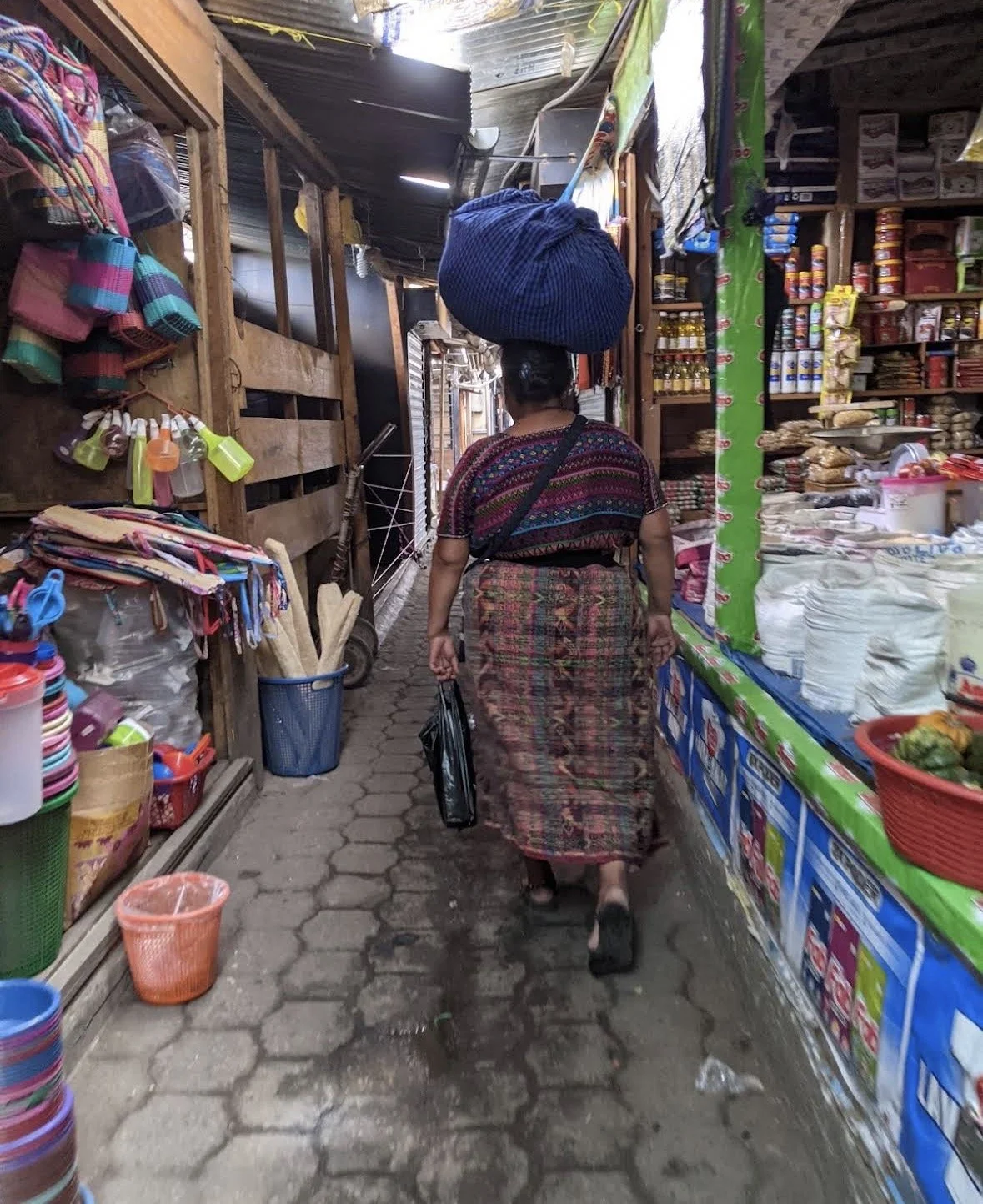
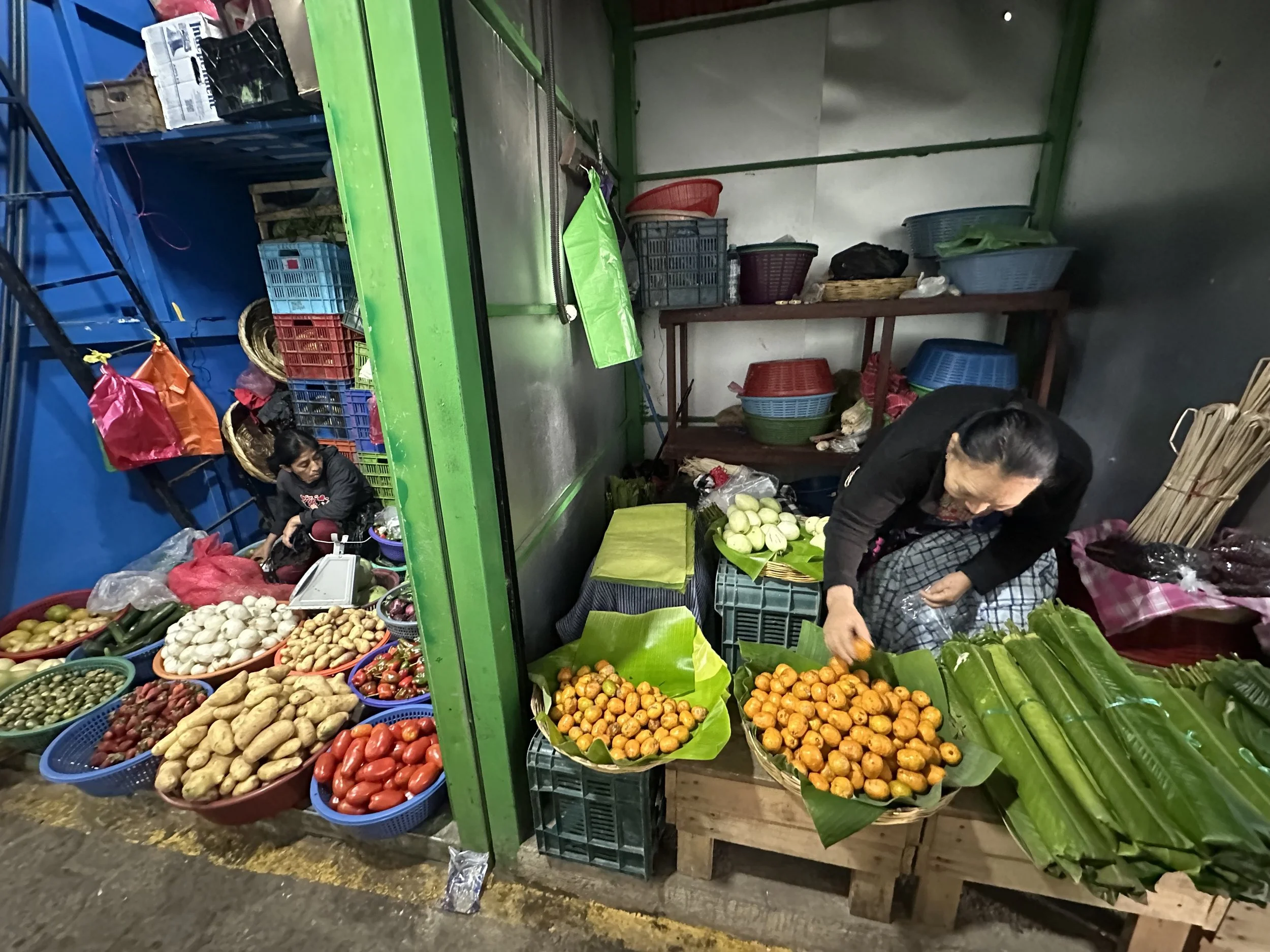
As we passed, vendors called out, “¿Qué buscas?” which literally translates to “what are you looking for,” but really means, “what can I help you find?” The sounds, sights, and smells of it all reminded me of other open-air markets I’ve visited in Mexico, Thailand, and Jerusalem. Despite being thousands of miles apart, they all share something in common: these vibrant spaces where people buy directly from local farmers and vendors, where food and community intersect so naturally. It’s a beautiful thing to witness.
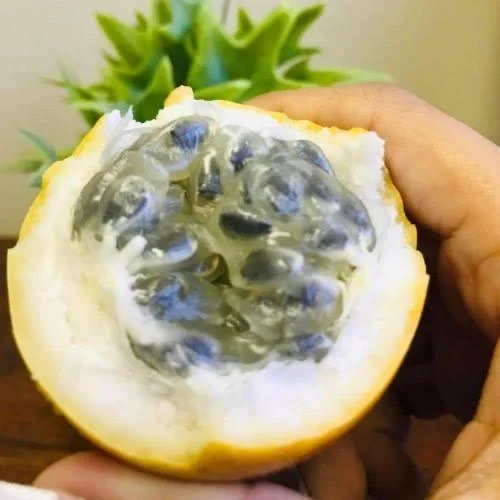
We stopped at several stalls to pick up the ingredients we needed for pepián, along with a few vegetables to serve on the side. Axel was especially excited to show me some Mesoamerican fruits I’d never heard of, let alone tried before: cushin, anona, chico, zapote, jocotes, and granadilla. I couldn’t wait to taste them. I was grateful to be with him; he knew exactly what was in season and how to tell when everything was perfectly ripe.
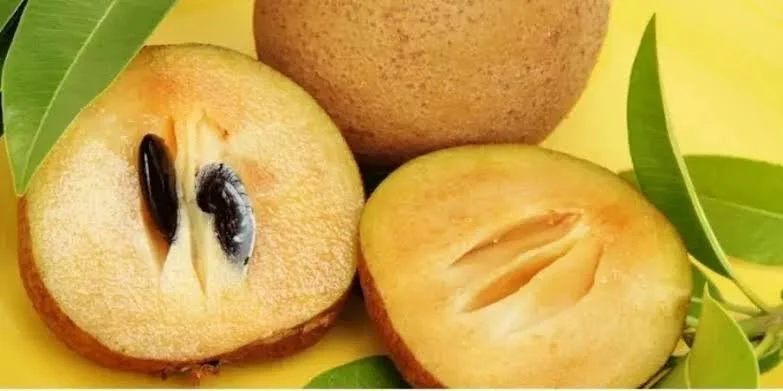
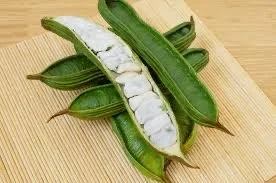
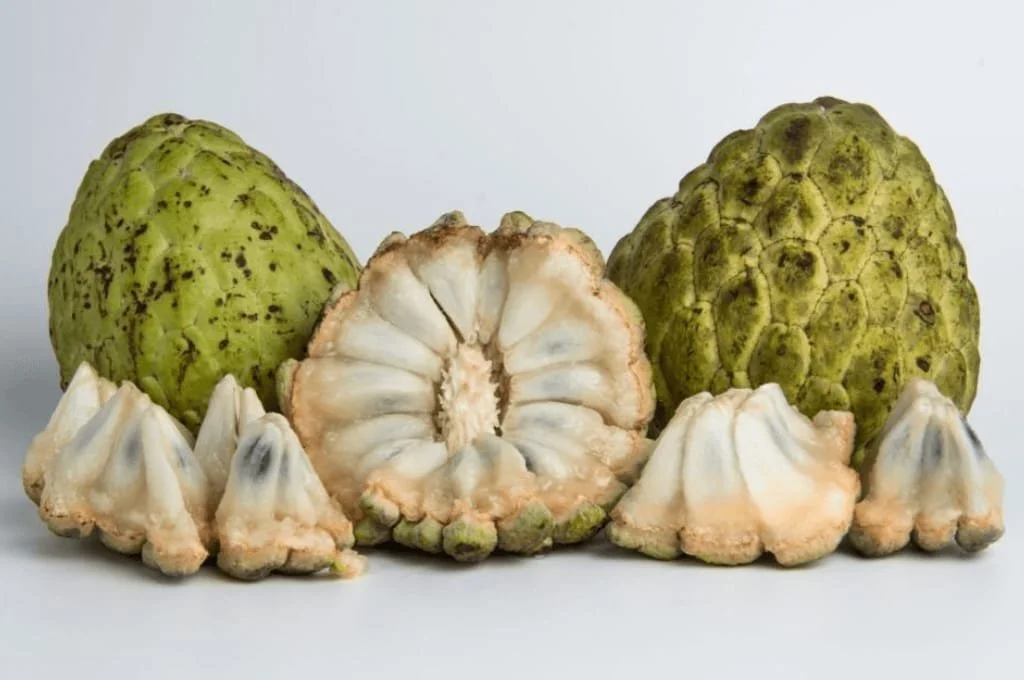
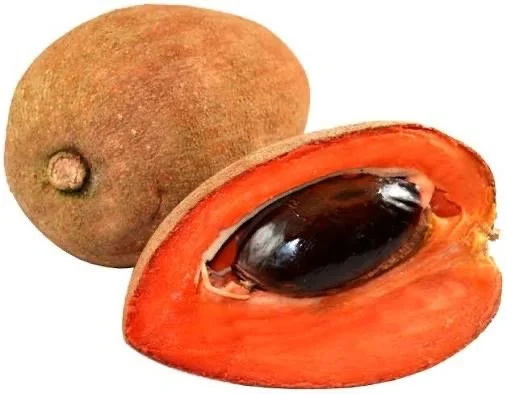
After the market, Axel drove me to a town just outside of Antigua. We were on our way to Doña Elsa’s house, a grandmother who lives with her three children and her mother. She would be the one teaching me how to make pepián. As we drove, Axel explained that it’s been difficult to find families willing to host his cooking class tours. In many cases, husbands aren’t comfortable with their wives earning more income than them. Elsa’s husband, on the other hand, is extremely supportive, and I couldn’t help but hope that her doing this might help normalize women’s financial independence within her community.
When we arrived, Doña Elsa welcomed us with a warm smile and a hug. She seemed relieved to hear that I spoke Spanish, mentioning that it would make things much easier. She put me straight to work: chopping carrots and peeling the thorny skin off a green squash, which felt nearly impossible. It was like peeling a cactus, and I definitely got pricked a few times.
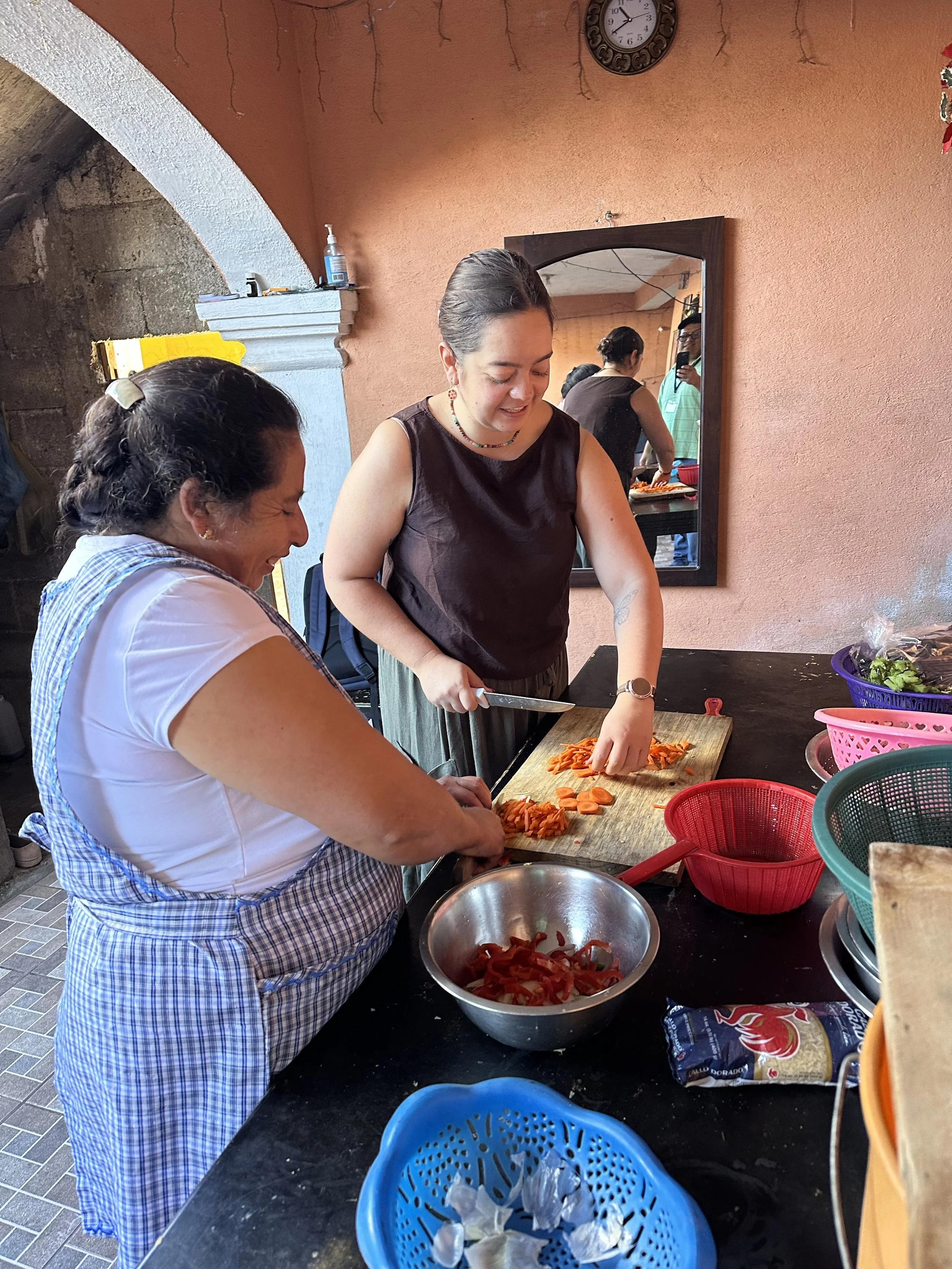
Doña Elsa
I peeled the tomatillos and washed them alongside the peppers, onions, and Roma tomatoes, then brought everything over to her fire-burning stove. The heat coming off it was intense. Elsa moved ingredients around with her bare hands, completely unfazed, while I hovered nearby using tongs from a safe distance. Years of cooking over that stove had clearly made her immune to the heat. She explained that she uses it every day and cooks everything on it. I noticed a regular commercial stove in the opposite corner of the kitchen, but she told me she only uses that one to make coffee. Her fire-burning stove put my tiny electric one at home to shame.
Along with the pepián, we also made mole, which I learned is quite different from Mexican mole. In Mexico, mole is famously complex, often made with 20–30 ingredients. In Guatemala, mole is a dessert. It still blends peppers and spices with chocolate, but it’s much sweeter and often served over fried plantains. I had been talking to Axel about Mexican mole, and when Elsa learned that I was Mexican, she quietly ran out to buy hot peppers to add to the pepián just for me. I didn’t realize she’d done this until we sat down to eat. The gesture was incredibly sweet and also very funny. I didn’t need it to be spicy, but I happily welcomed it.
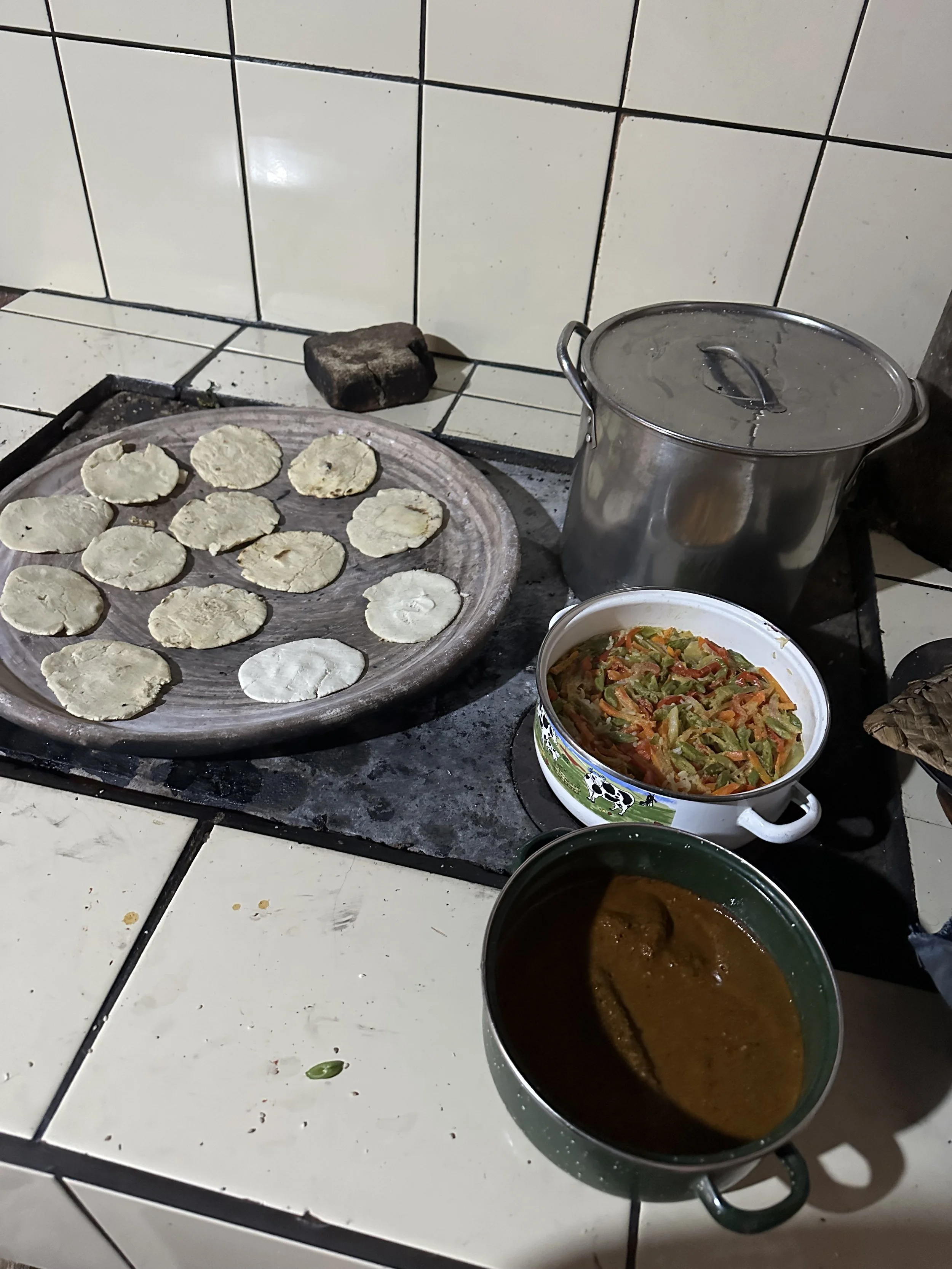
When everything was ready, Axel, Elsa, and I sat down together to eat our meal: vegetarian pepián, vegetables, rice, and tortillas, all washed down with agua de jamaica. It was even better than the pepián I had at the restaurant the day before! I love cooking, but by the end of this three-hour experience, I was hot and exhausted. Still, I felt overwhelmingly grateful to have been so warmly welcomed into Elsa’s kitchen. She told me I was welcome in her home anytime, and that next time I should bring my family.
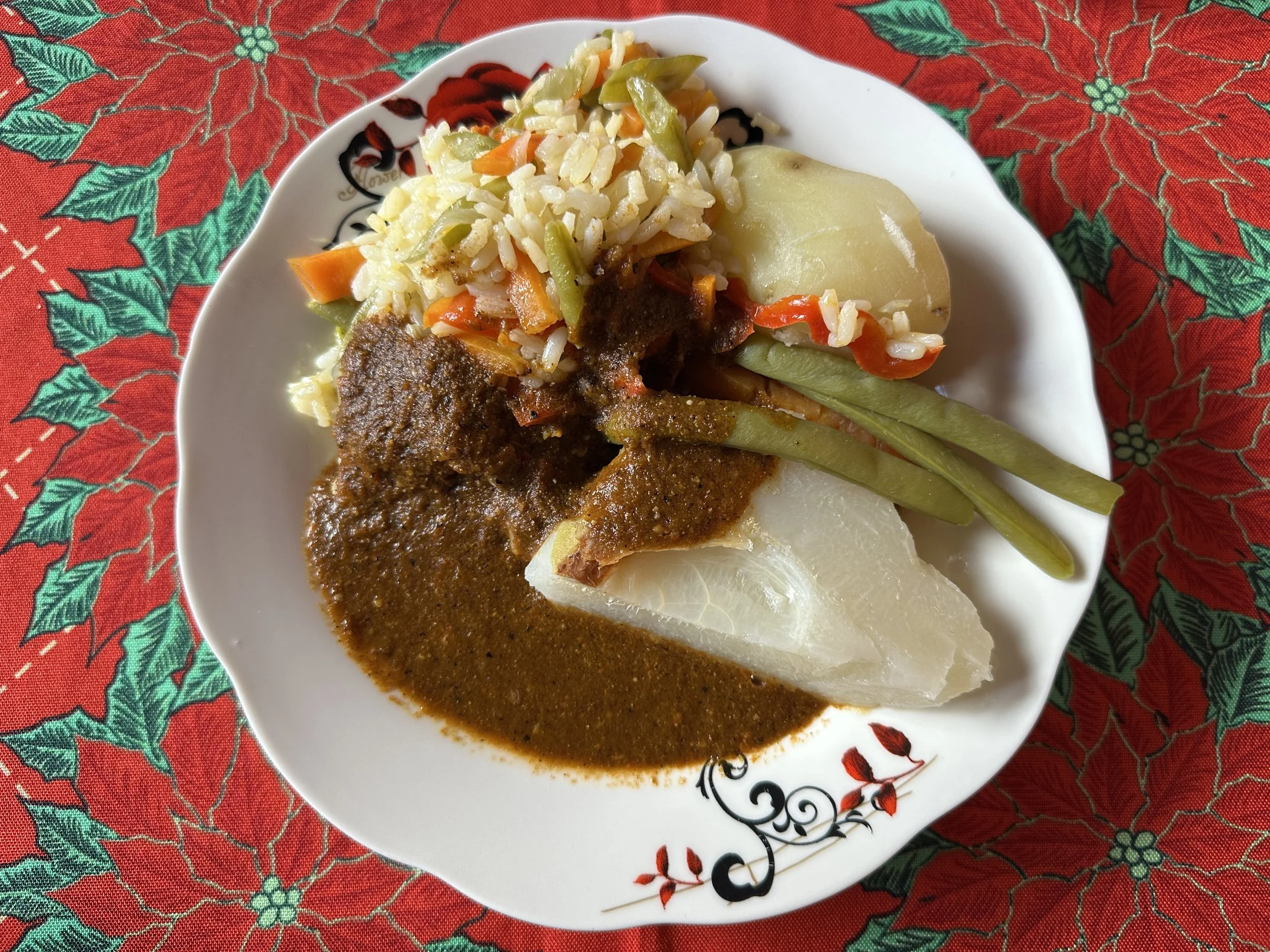
The final product - Veggie Pipian
On our way back to Antigua, Axel asked me to share this experience with anyone planning to visit Guatemala. He explained that many tourists pass through Antigua only as a base to hike the volcano, missing out on cultural exchange experiences like this—ones that support local communities and help preserve Mayan traditions through food. He hopes more people will seek out experiences like these and not overlook the importance of the people and culture here.
If you’re reading this and planning a trip to Antigua someday, please take this cooking class and market tour.
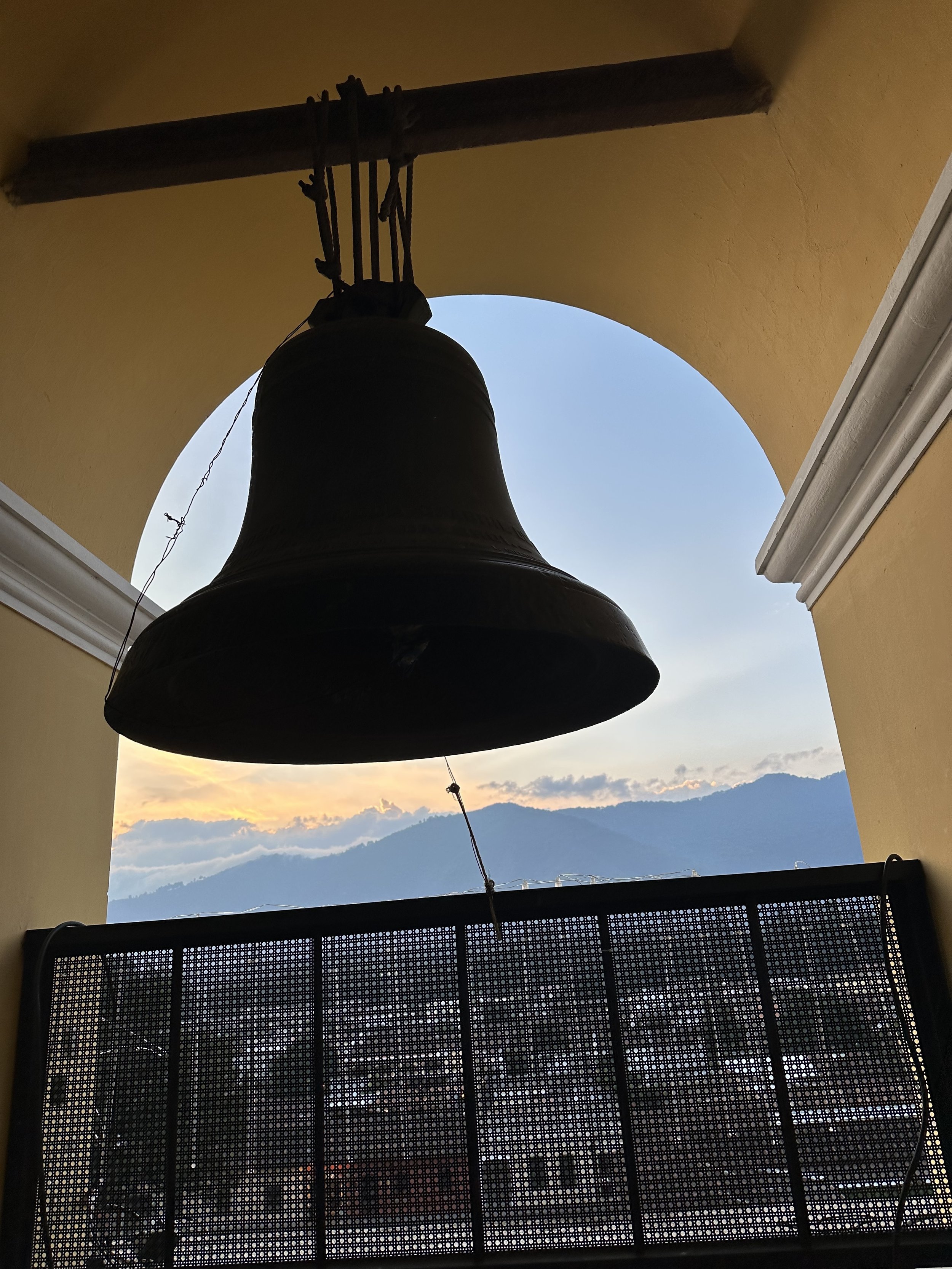
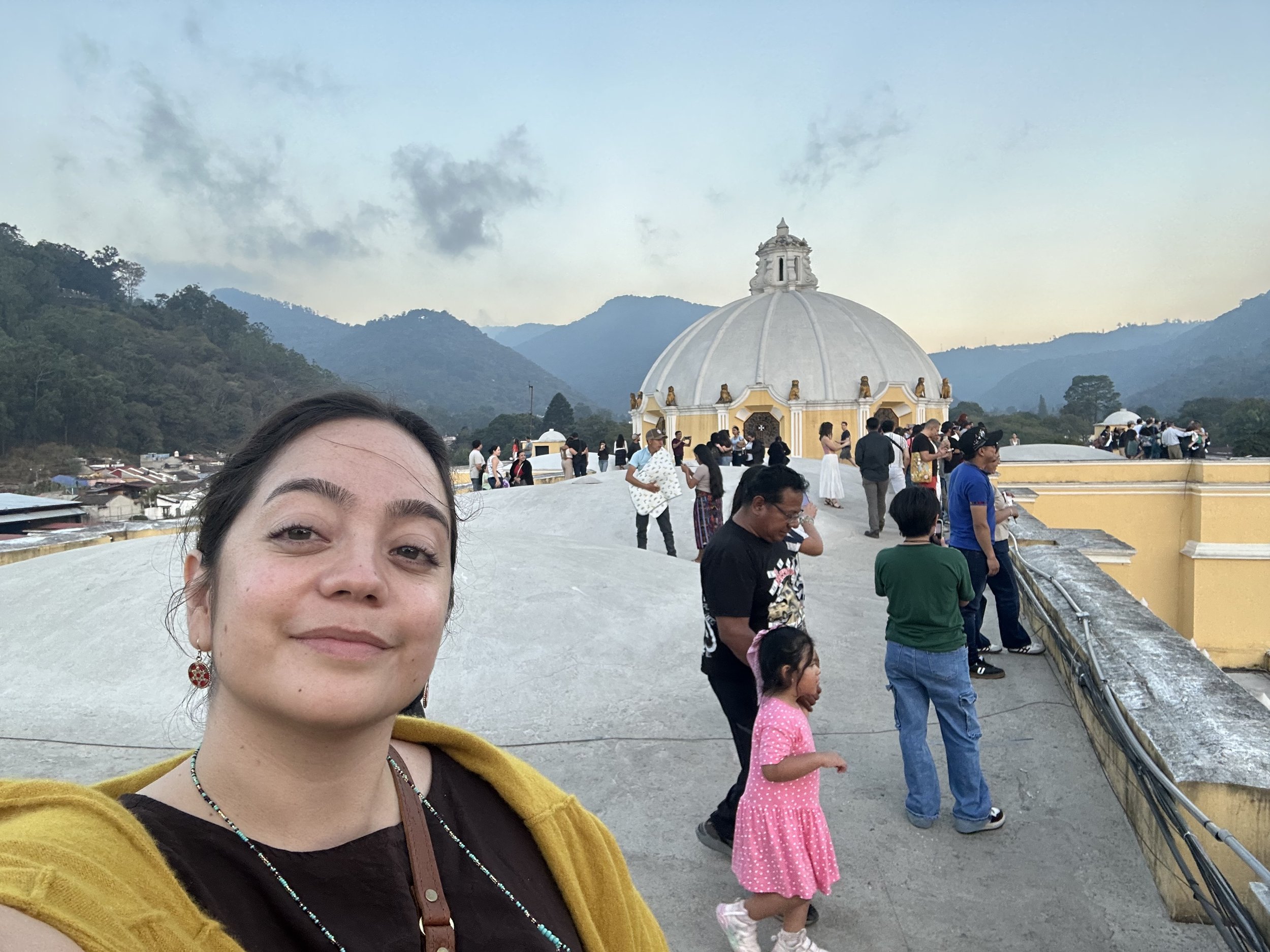
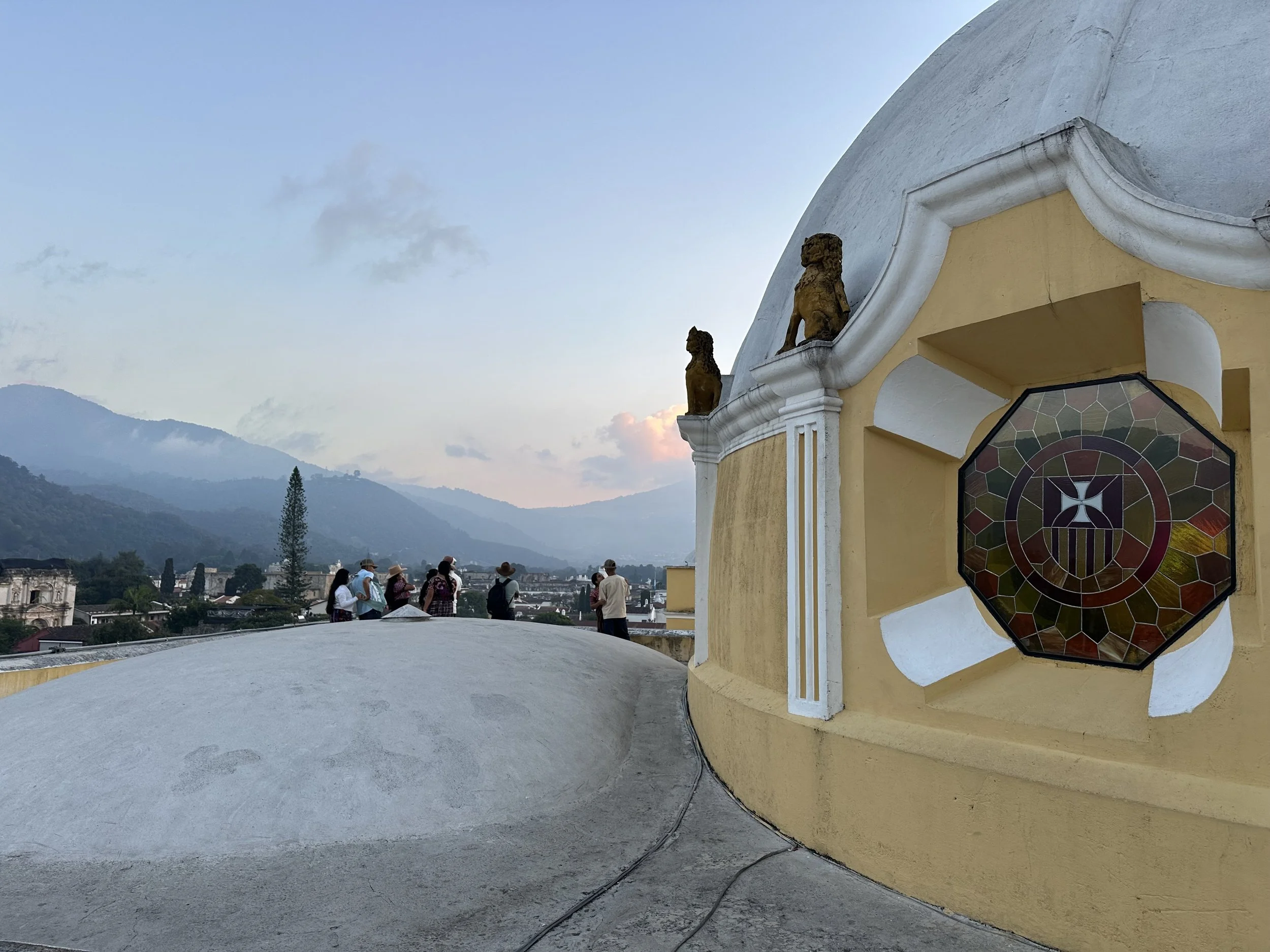
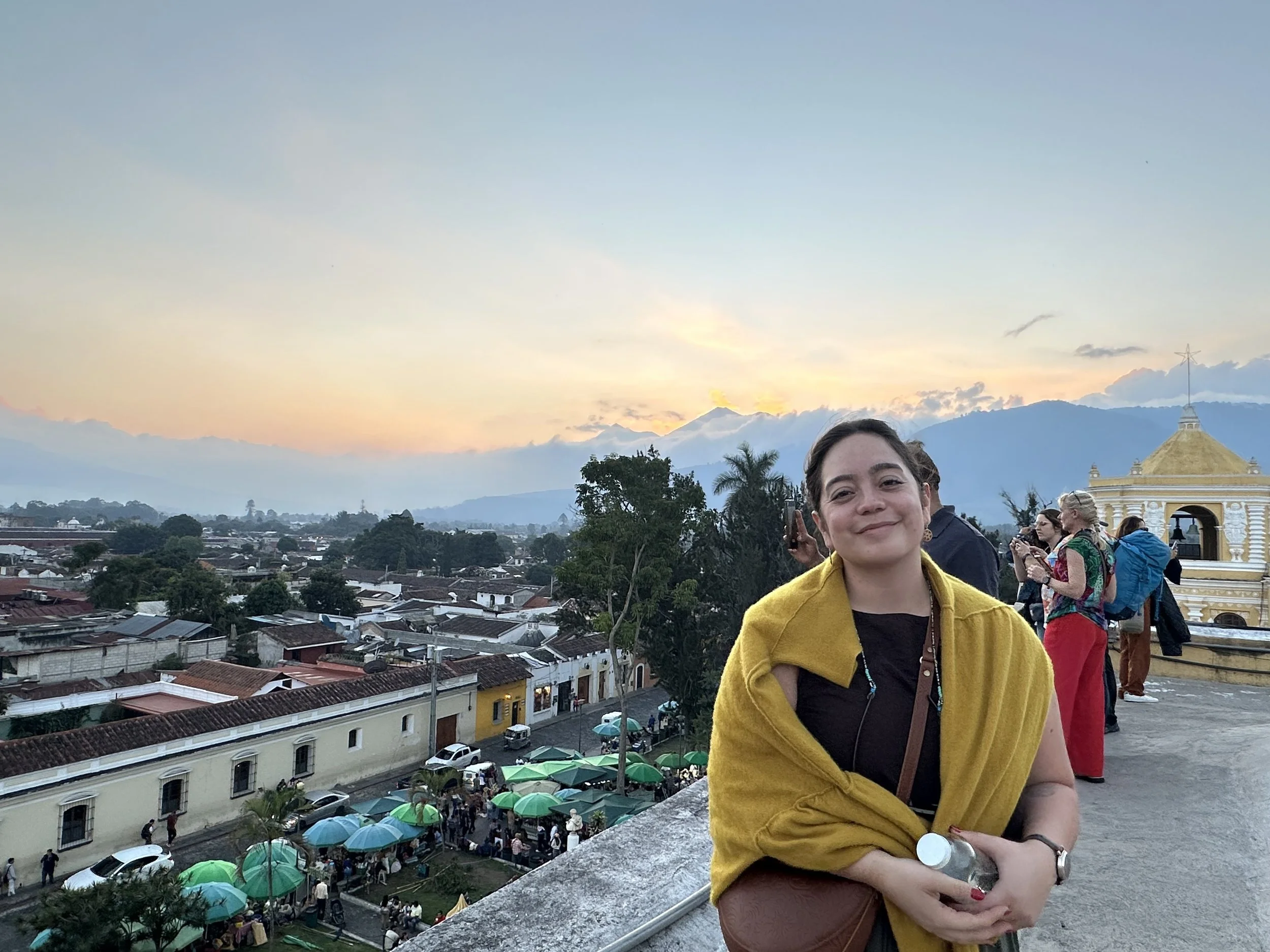
I returned to the hostel to rest for a while before heading to the Iglesia de la Merced, a Catholic church where you can climb to the roof. From there, I watched the sun set behind the volcanoes, taking in stunning views and trying to absorb it all.
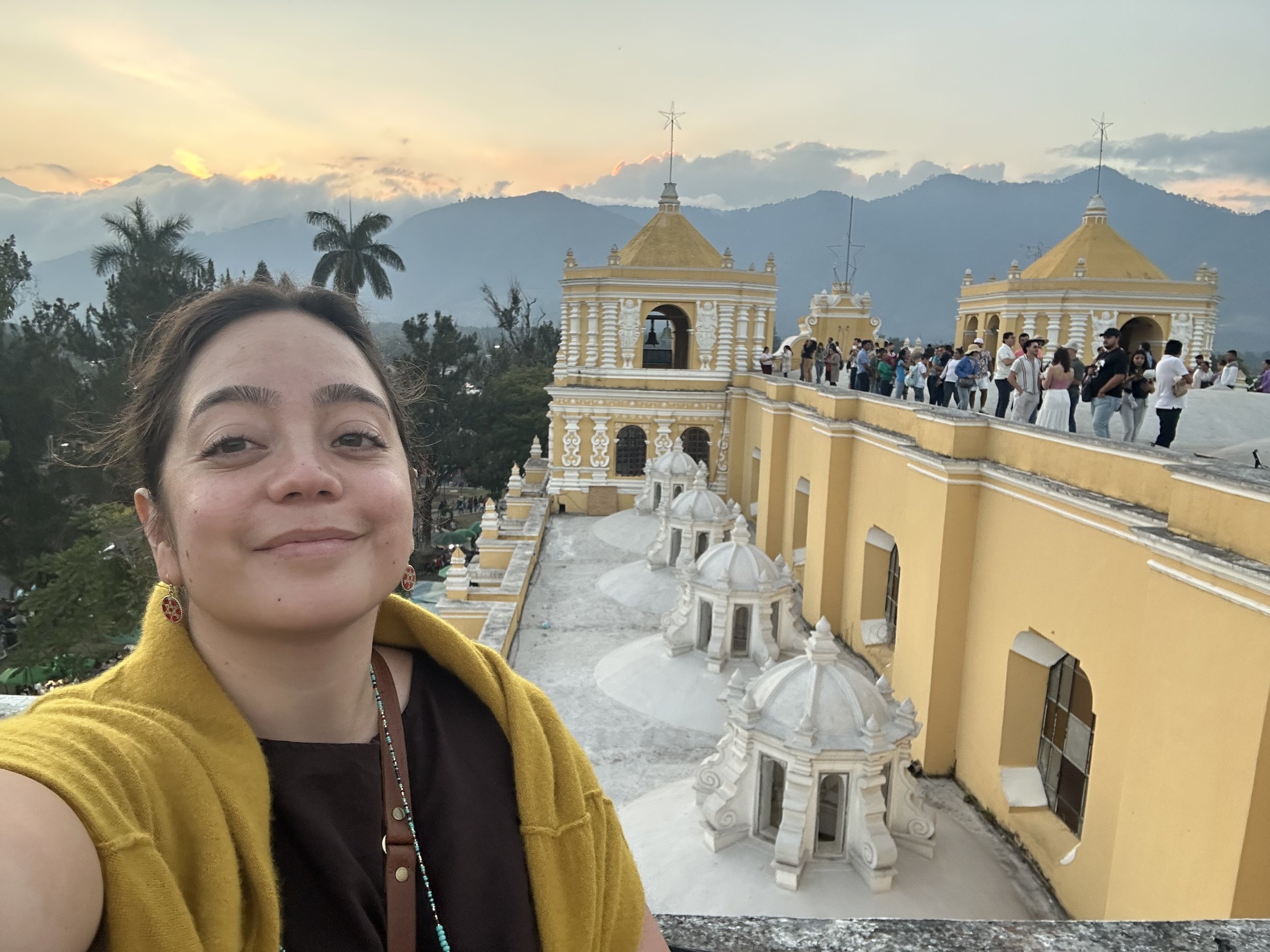
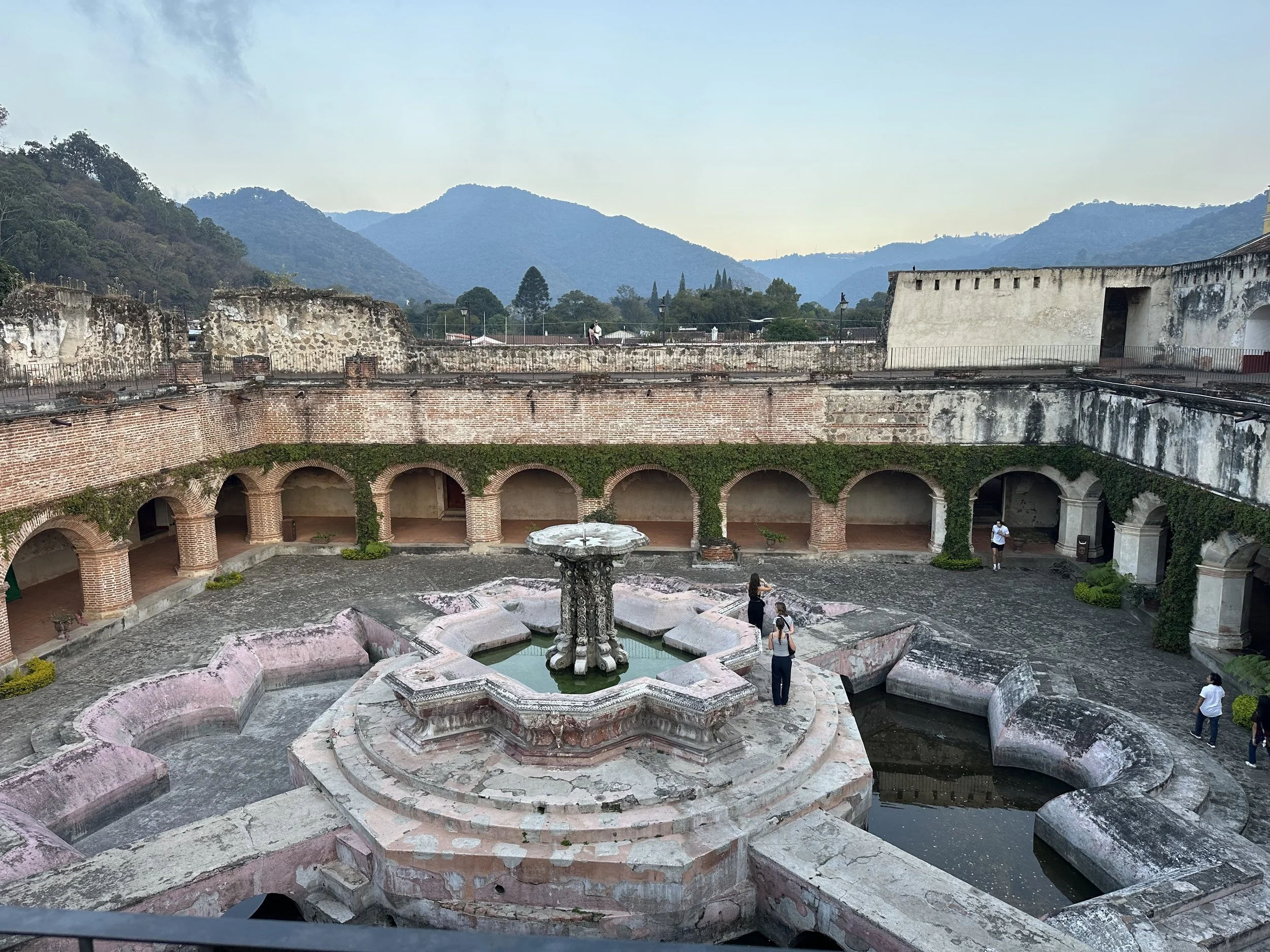
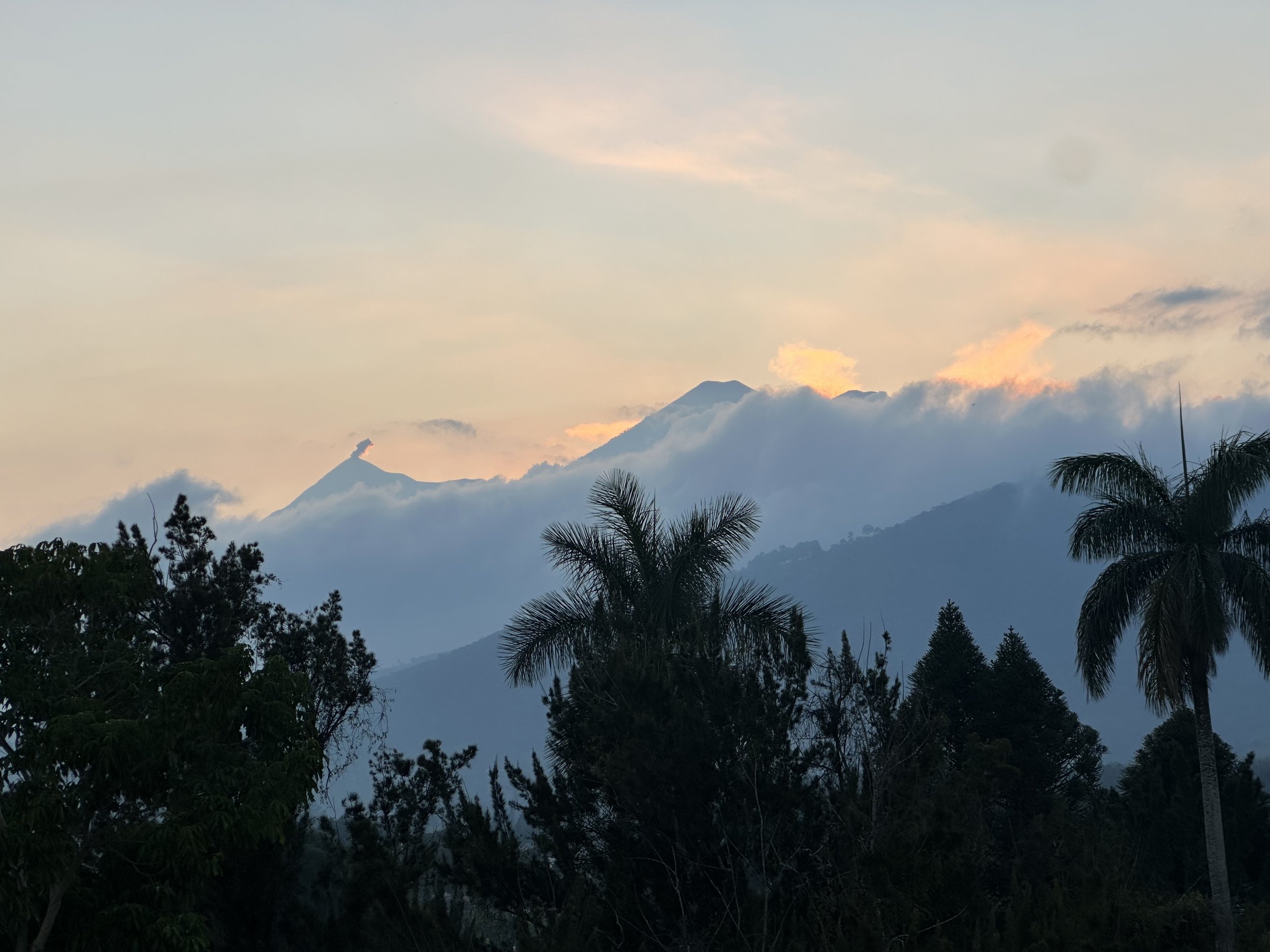
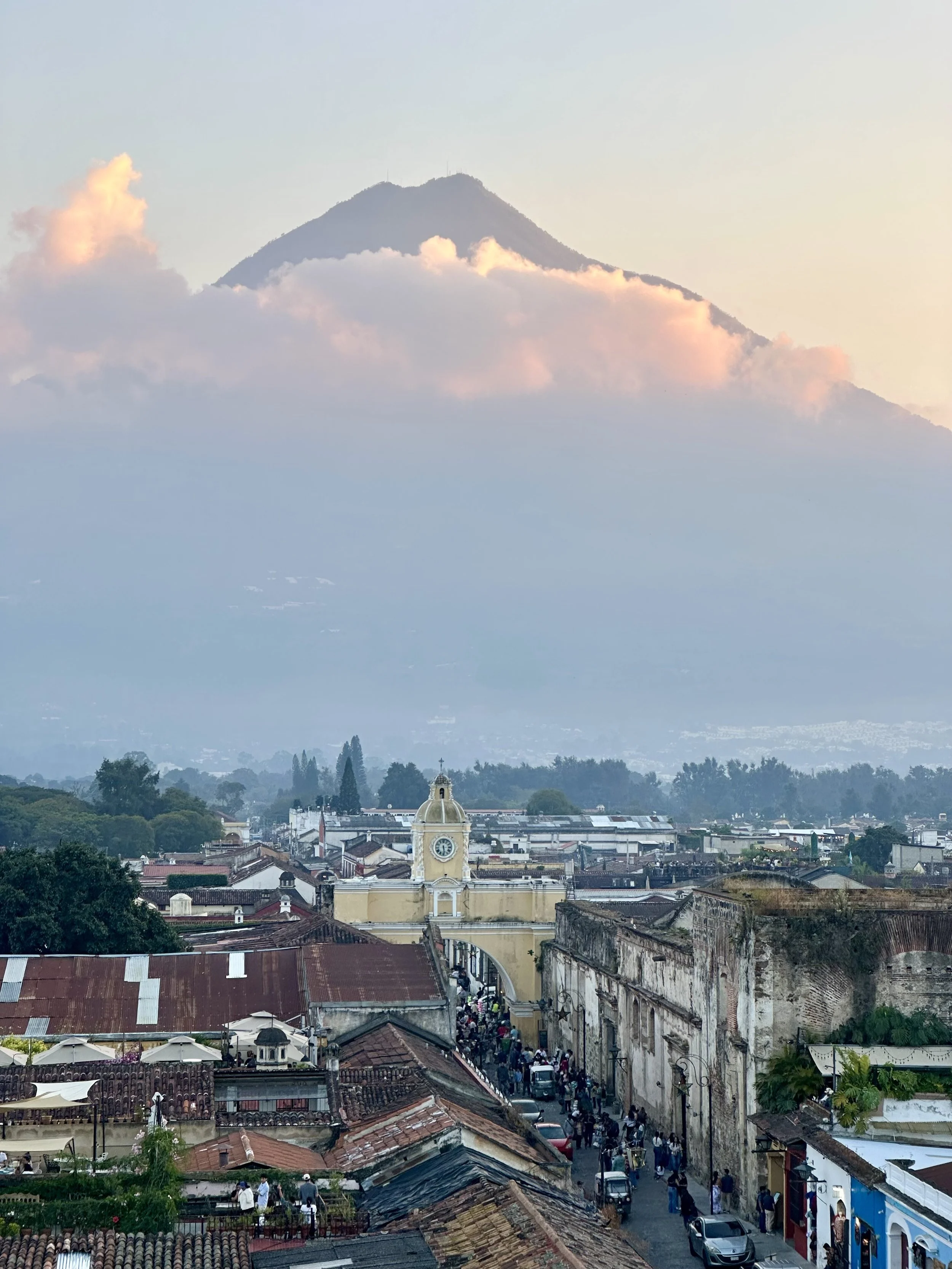
Volcan de Agua towering over the city.
